GLP-1 prescriptions for weight loss show widening access gaps across the US in 2026.
The uptake of semaglutide and tirzepatide among eligible patients jumped from 1.9% in 2021 to 16.6% in 2025, according to a study led by researchers at Boston University School of Public Health, Medical Xpress reported.
But this surge hasn’t been equal; lower prescription rates persist for men, Black or Hispanic patients, and those in lower socioeconomic status neighborhoods.
“Our study focuses on a population that is especially vulnerable to inequities in GLP-1 access,” said Dr. Andrew Stokes, an associate professor of global health at BUSPH.
Access Divides Patients by Zip Code
The analysis of nearly 512,389 commercially insured patients aged 18–64, detailed in the study published in the journal Health Affairs Scholar, shows these disparities grew after FDA approvals in 2021 and 2023.
In 2024–2025, patients seen at clinics in lower socioeconomic neighborhoods had about 35% lower odds of being prescribed semaglutide or tirzepatide, whereas early on that gap was about 15%, Le stated.

Insurance Shifts Strain on Workers
Beyond provider location, insurance structures create sharp access barriers; for instance, a survey by the Business Group on Health noted the share of large employers covering GLP-1s for weight loss dropped from 72% in 2025 to 60% this year, Newser reported.
Medicaid Coverage Creates Immediate Drops
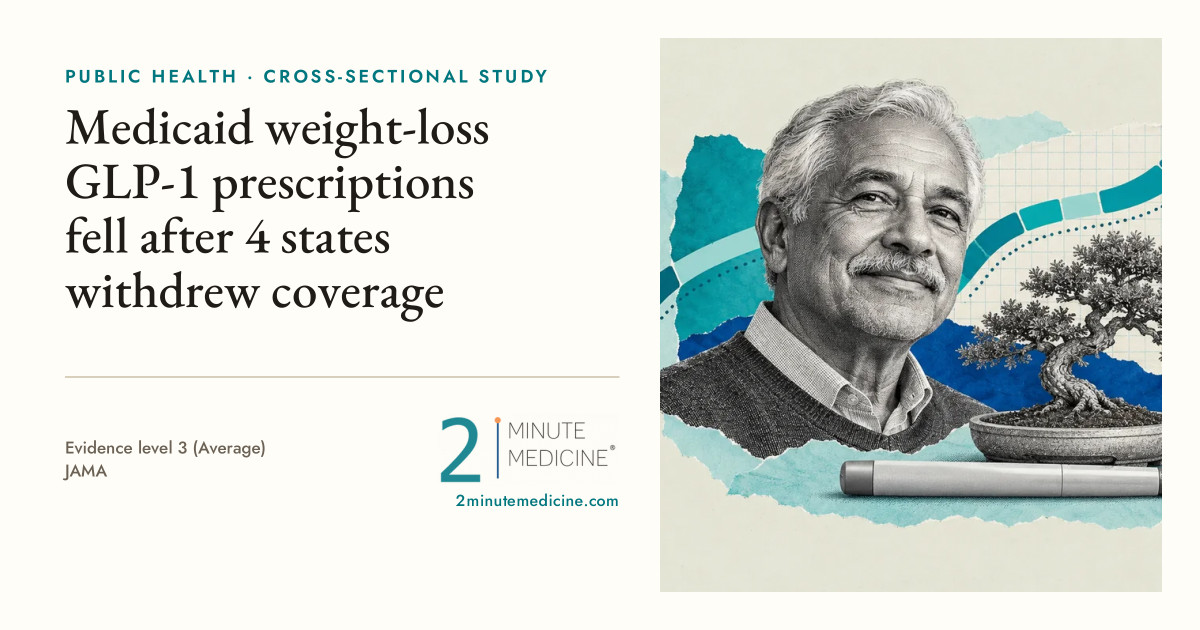
State policy changes directly impact care; for example, in January 2026, California, New Hampshire, Pennsylvania, and South Carolina withdrew Medicaid coverage for GLP-1 drugs prescribed for weight loss, News-Medical noted.
Between the final quarter of 2025 and the first quarter of 2026, quarterly prescriptions for weight-loss-approved GLP-1s fell from 2,914 to 421 per 100,000 Medicaid beneficiaries in those four states, Newsweek reported, and this decline was substantially greater than in states that maintained coverage.
The necessity of viewing obesity as a chronic disease, rather than a personal failure, is a key takeaway from the researchers, as Stokes noted, “A doctor would never tell a patient with diabetes or with heart disease that their only option is to ‘modify their dietary regimens’ or ‘exercise more’.”
Dr. Minh Trung Le, who was a research data analyst in the Department of Global Health at BUSPH at the time of the study, added that “We need to look at how drug benefits are designed, including prior authorization, step therapy and out-of-pocket costs that land unevenly on different patients.”
The reality is that while GLP-1s offer substantial effectiveness in weight management, the current framework risks deepening existing health inequities across demographics and economic strata.
Founded in 1976 as a program for working professionals with night classes, Boston University School of Public Health became an official school in 1979 and entered the top ten of U.S. News rankings in 2015. Its mission centers on improving health for disadvantaged and vulnerable populations through research, education, and service.
Effective January 1, 2026, California, New Hampshire, Pennsylvania and South Carolina withdrew Medicaid coverage for GLP-1 drugs prescribed for weight loss.
Worth a look

Israeli Settler Move to Jericho Neighborhood Leads to Palestinian Woman’s Death in Deadly Clash
For years, the lush Palestinian city of Jericho served as a quiet sanctuary in the West Bank, a...

Six Months After the Democratic Republic of the Congo Declared Its 17th Ebola Outbreak
Six months after the Democratic Republic of the Congo declared its 17th Ebola outbreak, the virus is spreading...

Aliyev Meets Levits on Energy Ties and Armenia Normalization
“At the meeting, it was noted that Azerbaijan-Latvia relations have the nature of a strategic partnership,” the Azerbaijani...

Study Reports Salmonella and Resistance in Central Oromia Dairy Products
Milk and cottage cheese sampled in Central Oromia, Ethiopia, carry Salmonella enterica and antimicrobial resistance, a study reports....