Boston’s iconic CITGO sign flickered back to life Thursday evening, six months after crews dismantled the 125,000-pound landmark piece by piece and moved it 30 feet higher and 120 feet east atop 660 Beacon Street.
The re-lighting caps an $8 million restoration paid for by CITGO Petroleum Corporation to keep the sign visible as a new seven-story Red Sox office and retail building rises on Lansdowne Street, which would have blocked the view from inside Fenway Park. Mayor Michelle Wu marked the moment by flipping a ceremonial switch as Neil Diamond’s “Sweet Caroline” played and confetti rained over Kenmore Square.
“As the city changes, as highways have gone underground, as our communities have grown, as everything continues to evolve, some things don’t change,” Wu said during the ceremony. “We continue to put our roots deep in this city. We will always have a home for every person here. We will always leave a sign on for you.”
A landmark repositioned for a changing skyline
The sign’s history stretches back to 1940, when the Cities Service trefoil first rose over Kenmore Square. The red trimark logo arrived in 1965 after the company rebranded to CITGO, and the sign has occupied the same roof since.
By 2016, when Boston University put the property up for sale, public pressure and a deal brokered by then-Marty Walsh secured its future. Federal Highway Administration and MassDOT later granted it the only federal landmark status for a sign in Massachusetts, protecting it under the Highway Beautification Act of 1965.
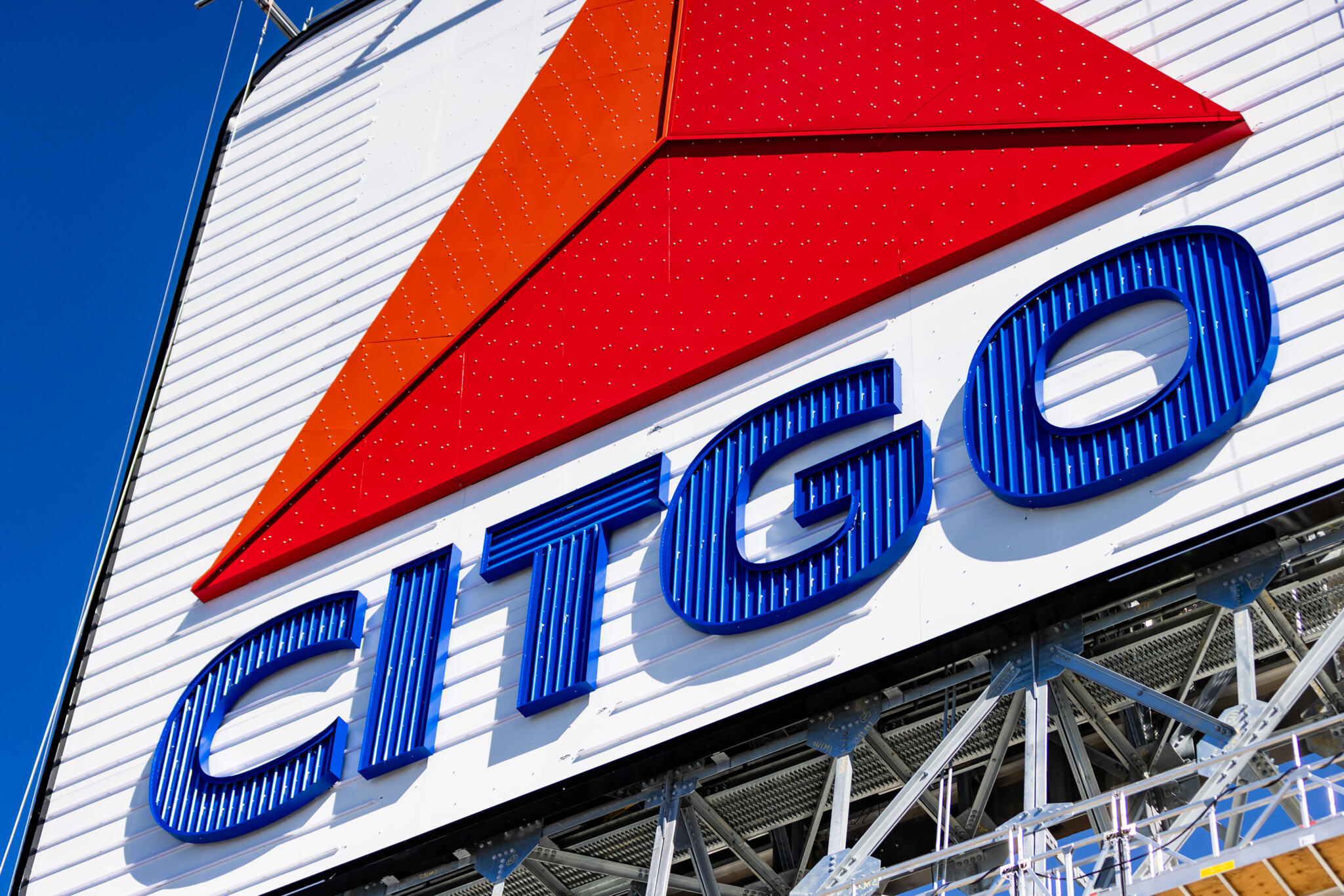
Suffolk Construction spent roughly two months taking the sign down starting in May. The plan had been to refurbish the original letters and logos, but inspection revealed decades of rot in the old iron frame and wooden planks.
“The old one was old rusted iron, and it had wooden planks. Some were there, some weren’t,” said John Coyne, a signman who worked on the neon version in the 1990s. “If you were here for the take down, you would’ve seen there was a lot of rot and stuff that got taken away besides the sign part coming down.”
Crews built a new steel truss on the building’s highest point and fabricated replica letters. The original 11-foot “C” now hangs at Cornwall’s Tavern, Kenmore Square’s oldest continuously operated restaurant. Pam Beale, co-owner of Cornwall’s and president of the Kenmore Square Business Association, recalled meeting her husband under the sign in 1967.
“He just said, ‘Yeah, just look up. You’ll see a big red triangle CITGO sign. You’ll know you’re in Kenmore Square when you get there. Then you have to look down to find me,’” she told WBUR.
Workers leave their mark on the new structure
The project blended modern safety standards with nostalgia. Coyne noted the difference: “To be honest with you, it was the safety factors. Because back then we didn’t wear belts, we didn’t wear lanyards. They sat in bosun’s chairs, planks of wood with rope, almost like a swing.”
Shaydon Smith of Suffolk Construction said ironworkers signed the final piece of steel when they topped it off, and he added his family’s names so his children can look up and see them. “Because of the pride that comes with working on a project like this. It’s a once in a lifetime opportunity,” he told WBUR.
CITGO Vice President of Supply and Marketing Karl Schmidt framed the investment as both advertising and civic stewardship. “Boston’s scrappy nature and proud history give it the authentic spirit of our American values,” Schmidt said at the May press conference.
“CITGO couldn’t be more proud to be a small piece of this tremendous story.” The company also recognizes the sign means something to the community beyond its commercial value, a point Schmidt reiterated to WBUR.
The CITGO sign is a two-sided, 60-foot-square white sign with the trimark logo that overlooks Kenmore Square in Boston. The first sign, featuring the Cities Service green-and-white trefoil logo, was built in 1940 by the C.I. Brink Sign Company and replaced with the trimark in 1965. In 1979, Governor Edward J. King ordered the sign turned off as a symbol of energy conservation.
Four years later, Citgo attempted to disassemble the weather-beaten sign but was met with widespread public affection and protest; the Boston Landmarks Commission postponed removal while the issue was debated, and following a campaign spearheaded by preservationist Arthur J. Krim, the sign was refurbished and relit in 1983.
The sign has gone dark only a handful of times — during the 1979 oil crisis and for the neon-to-LED conversion in 2004–2005. With the new structure and LED system in place, crews expect it to light the skyline for generations.
Worth a look

Las Vegas Researchers Propose Pilot Study to Turn Salty Groundwater Into Water Source
"It just keeps coming," Daniel Fischer, chief water reclamation operations officer for the Clark County Water Reclamation District,...

Ohio Republicans Send Two Abortion Bills to Gov. DeWine
Ohio Republicans sent Gov. Mike DeWine two abortion-restriction bills Wednesday, reviving measures a court already blocked and a...
Gennaro “Jerry” Balzano Sr., Federal Beef Founder, Dies at 92
Gennaro “Jerry” Balzano, Sr. died Sunday at Our Lady of Fatima Hospital in North Providence surrounded by his...

Mid-Continent Railway Museum Santa Express Runs Steam-Heated Holiday Trips
Steam heat and coal stoves still warm the coaches on the Santa Express, just as they did when...