
Nearly 300 humanitarian health facilities have shut down or suspended operations across Afghanistan, cutting off more than one million women and girls from basic medical care, UN News reported.
The closures, driven by severe funding shortfalls, compound a regulatory stranglehold that has intensified since the Taliban returned to power in August 2021. The de facto authorities have issued more than 100 edicts restricting women’s movement, education, and employment, according to UN Women.
The agency’s Chief of Humanitarian Action, Sofia Calltorp, warned that the cumulative effect threatens to deny healthcare to Afghanistan’s 22 million women and girls over the long term.
“One woman that I met in Kunar told me that she had suffered multiple miscarriages without access to healthcare,” Calltorp said. “I also met with men who spoke of restrictions preventing them from supporting women.”
The anatomy of a collapse
The healthcare crisis operates on two tracks. On one side, donor fatigue has shuttered physical infrastructure: UN Women, OCHA, and partners report that 193 focal points for survivors of gender-based violence have also closed, affecting over one million women and girls, while 3.4 million are losing access to water, sanitation, and hygiene services.
On the other, the Taliban’s Ministry for the Propagation of Virtue and Prevention of Vice is actively dismantling the clinical workforce.
In December 2024, the regime banned women from attending medical training institutes — the pipeline for future female doctors and midwives. Simultaneously, informal directives now bar male physicians from treating female patients in multiple provinces. The Guardian, cited by AhlulBayt News Agency, documented Taliban security forces raiding clinics and threatening male dentists with imprisonment for treating women.
A 37-year-old patient in Herat, identified as Farida, had her dental implant procedure halted mid-treatment when the ministry ordered her male dentist to stop seeing female patients; three months later, she still cannot eat properly.
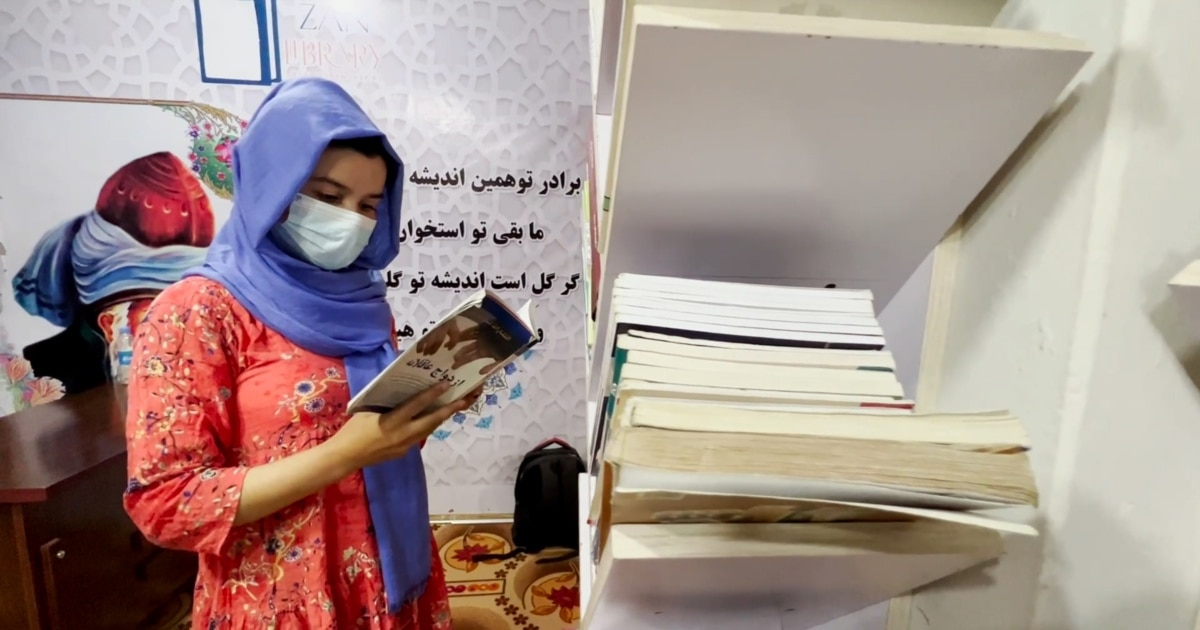
“It does not matter how simple the medical procedure is or how critical the patient’s condition may be,” a dentist told The Guardian.
A disappearing workforce
The dual ban creates a demographic trap. With women barred from medical education and male doctors forbidden from treating them, the system is bleeding the only providers culturally permitted to treat female patients.
A UNICEF assessment published April 28, 2026, projects a shortfall of up to 5,400 female healthcare workers by 2030. Médecins Sans Frontières assisted 54,300 births nationwide in 2025, including 3,210 Cesarean sections — volume that illustrates the existing demand and the impossibility of replacing that capacity.
“Taliban restrictions on treatment by male doctors, women’s medical education and access to healthcare without a male guardian were endangering millions of Afghan women.”
The Media Line
said Tahmina Safi, a former Afghan judge and co-founder of the Afghanistan Impact Network, speaking to The Media Line.
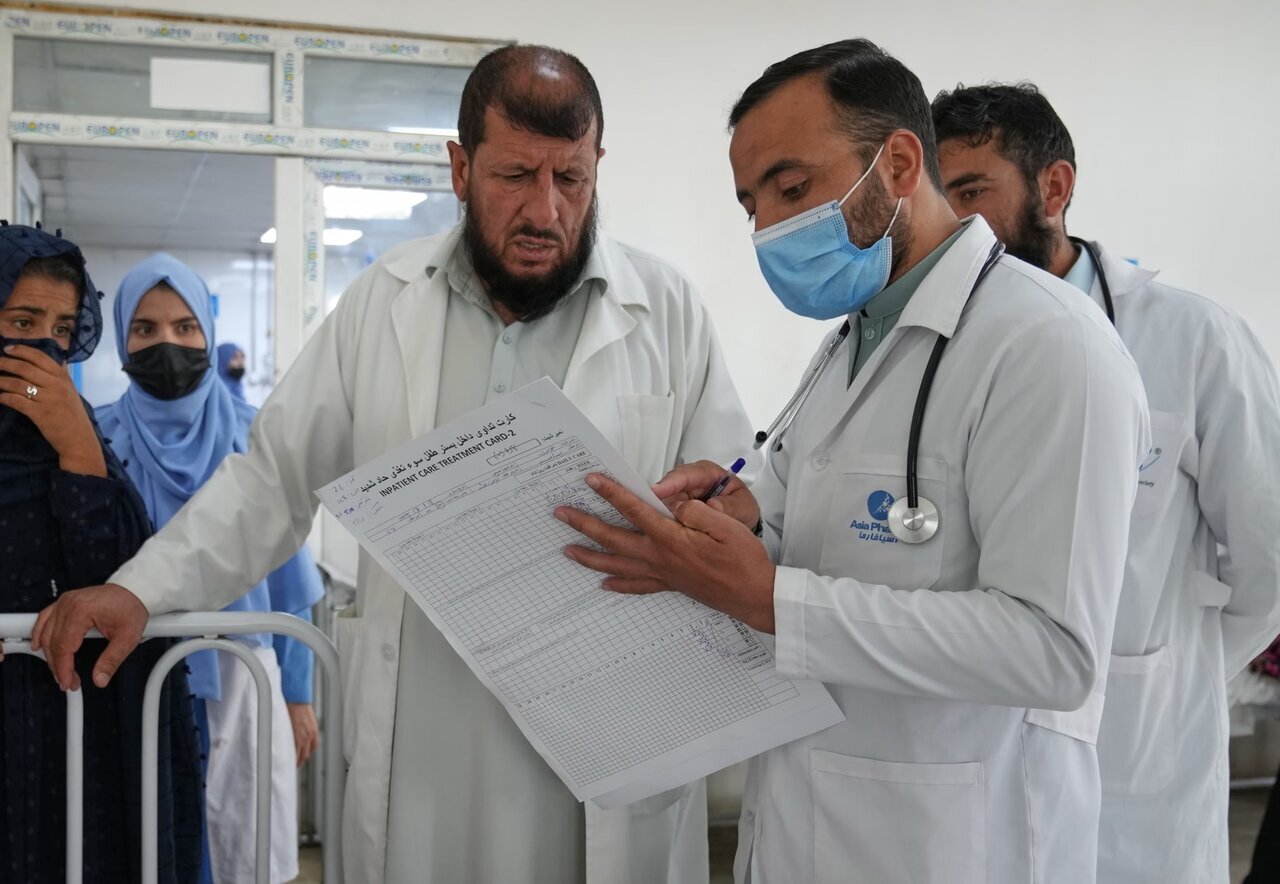
The erosion extends beyond obstetrics. Farkhenda Amiri, a former teacher in Kabul, told The Media Line she took her mother to a hospital for a heart condition but was turned away because no female cardiologist was available and male doctors could not examine her. “We had no choice but to take her back home,” Amiri said.
Legal erasure inside the home
Calltorp described a 24-year-old woman detained by her father for 18 months, abused and starved, who told her: “I feel like life is not meant for me.” The woman’s situation improved only after she and her father participated in a UN Women-supported violence prevention program run by a local women’s organization.
No exit, no sanctuary
The crisis follows women who flee. Radio Free Europe/Radio Liberty reported that Afghan girls barred from education at home — 2.4 million denied secondary school since 2021, per the UN — face exclusion in Iran and Pakistan as well.
Zahra, months from a medical degree in Kabul when the university ban hit, moved to Iran with her family. Four years later, without valid residency permits, she and her sister remain shut out of Iranian universities. “Wherever we applied to get education in Iran, we got no positive answer,” she told RFE/RL.
Iran deported 1.26 million Afghans in 2025; nearly 492,300 more were deported by October 12, 2026. In March 2025, registration slips covering an estimated two million Afghans expired, and Tehran restricted services to foreigners holding valid residency documents.
In Pakistan, Nilofar, another Afghan student, attends only an English-language course because she cannot obtain a residency permit for formal enrollment. “I came to Pakistan to get a proper education,” she said. “An English course can’t be a substitute for school.”
Internal dissent on religious grounds
Not all religious authorities accept the Taliban’s interpretation. Mufti Hedayatullah Hikmat, a Kandahar-based cleric described as supportive of the Taliban, published a detailed Pashto statement on X citing classical Hanafi texts — Radd al-Muhtar, Al-Mabsut, and Al-Binaya Sharh al-Hidaya — arguing that training female doctors constitutes a collective religious obligation (fard kifaya) when women require female providers.
He distinguished emergency permission for male doctors from the permanent duty to educate women, and urged authorities to organize medical education in line with Islamic requirements on dress and segregation. ShiaWaves reported his intervention follows the December 2024 ban on women’s medical institutes.
Diplomatic rhetoric, no leverage
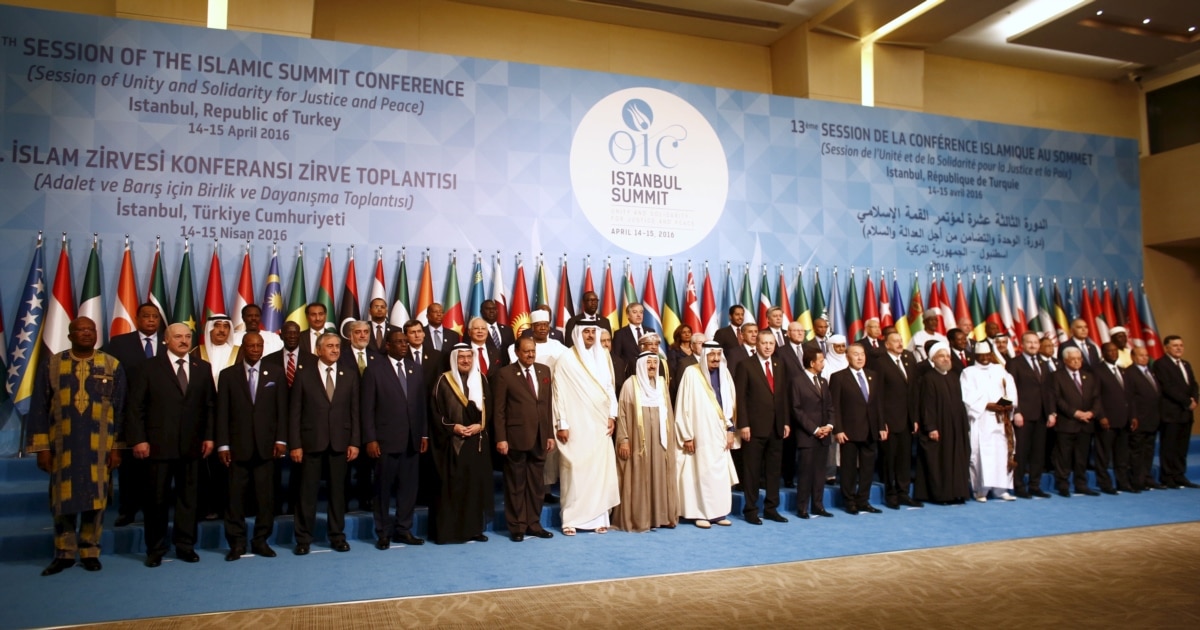
The Organization of Islamic Cooperation (OIC) has issued declarations calling the Taliban’s restrictions inconsistent with Islamic values. At a July 2024 ministerial conference in Islamabad, the OIC expressed “disappointment and regret” and stressed equal participation for women per Islamic principles. But Afghan political expert Obaidullah Burhani told VOA the OIC “lacks executive authority” and its member states lack shared will.
“I see no prospect for change,” he said. Taliban spokesperson Zabiullah Mujahid maintains women’s rights are “ensured all the rights required under Sharia.” Islamic scholar Fazl Hadi Wazin countered that the leadership’s ban on girls’ education beyond sixth grade “contradicts Islamic teaching.”
Afghanistan, a landlocked country at the crossroads of Central and South Asia, has been a historic corridor for empires from the Achaemenids and Alexander the Great to the Mongols and the British. The modern state traces its origins to the Durrani Empire founded in the 18th century by Ahmad Shah Durrani.
Since the late 1970s, the country has endured continuous conflict, including the Soviet invasion, civil wars, and the U.S.-led intervention. The Taliban returned to power in August 2021 after capturing Kabul, ending two decades of war.
“Women continue to find ways to survive, to care for their families, to support one another and to hold on to hope,” Calltorp said. “But we cannot accept this as normal.”
Related reading

Two Iranian Men Convicted of Spying on Journalists for IRGC Under National Security Act
Two Iranian men were convicted at Woolwich Crown Court on Thursday of spying on dissident journalists and a...

Percy Jackson Returns to Disney+ With ‘the Titan’s Curse’ Adaptation
Percy Jackson and the Olympians returns Friday for its third season, adapting The Titan's Curse for the first...

Xi Hosts Trump and Putin for Nuclear Trilateral in Shenzhen
China staged the first formal trilateral summit of the world's three largest nuclear powers in Shenzhen on Thursday,...

Mary Robinson Urges EU to Reject Antalya Climate Draft After Fossil Fuel References Stripped Out
Former President of Ireland Mary Robinson called on the European Union to reject the draft agreement emerging from...