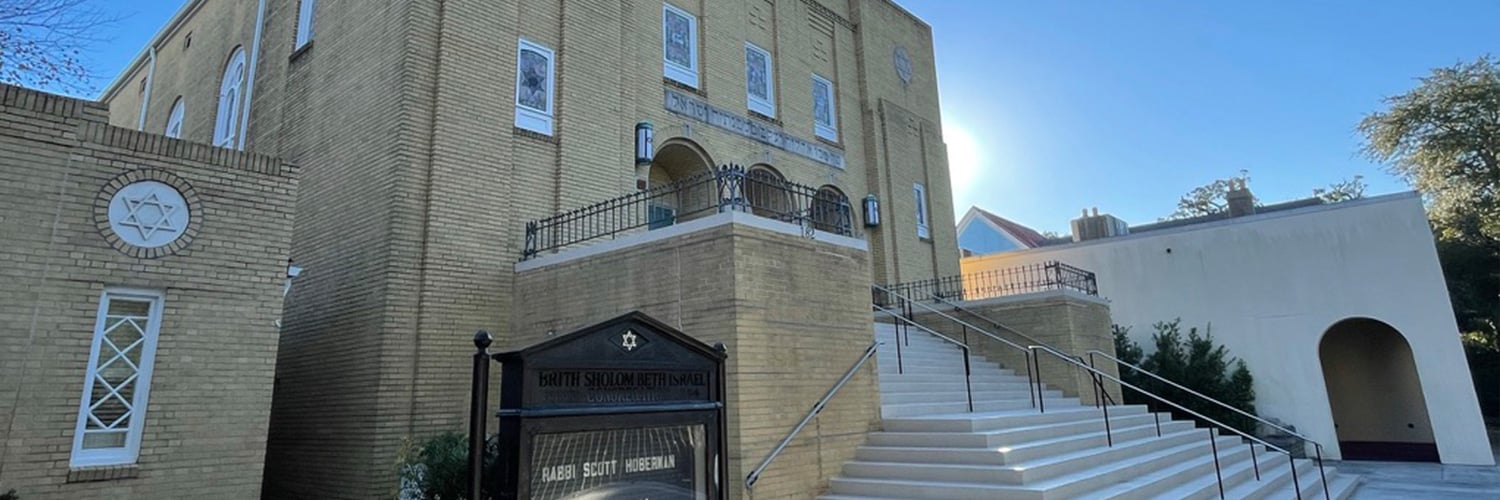
Brith Sholom Beth Israel Synagogue stands today as the oldest continuously operating Orthodox Ashkenazi congregation in the United States.
Founded originally in 1854 as Berith Shalome by immigrants from Poland and Prussia, the synagogue has weathered regional sieges, internal schisms, and structural rebuilds to remain a cornerstone of South Carolina’s religious life. Its survival across more than 170 years tells a distinctly American story of stubborn immigrant grit, community reconciliation, and architectural continuity.
From Antebellum Roots to Civil War Resilience
The story of Charleston’s Orthodox bedrock begins long before the congregation’s official charter. Jews first settled in South Carolina in the late 17th century, arriving under a 1669 colonial charter co-written by John Locke that guaranteed liberty of conscience. By 1749, an Orthodox congregation following Sephardic traditions was already active in the port city.
By 1852—the year Millard Fillmore served as the nation’s 13th president, Harriet Beecher Stowe published Uncle Tom’s Cabin, and Frederick Douglass delivered his celebrated speech, “What to the Slave Is the Fourth of July?” in Rochester—Columbia and Charleston were humming with commercial and railway expansion. It was right in that volatile antebellum environment that Ashkenazi immigrants gathered to preserve the Hebrew pronunciation and customs of their European upbringing.
They formalized their group in 1854, elected officers in 1855, and incorporated via the South Carolina legislature in 1856.
Schisms, Reunification, and Architectural Bridges
Reconstruction brought a fresh wave of Orthodox immigrants from Eastern Europe and Germany, swelling the congregation’s rolls. By 1874, a new synagogue stood on the original site, inaugurated with a gesture of cross-denominational solidarity that still echoes in the sanctuary today.
K.K. Beth Elohim, Charleston’s Reform congregation, gifted the Aron Kodesh (Holy Ark)—which houses the Torah scrolls—complete with magnificent white Corinthian columns. Those matching columns remain in BSBI’s sanctuary today, serving as physical proof of a rare era of warmth between differing Jewish denominations.
Growth naturally brought friction. In 1911, cultural and generational tensions between established members and newer Eastern European arrivals led a faction to break away and form a second Orthodox institution, Beth Israel. Decades later, in 1947, another ideological fracture occurred when members rejected a proposal to affiliate with Conservative Judaism, prompting the departure of families who would form Congregation Emanu-El.
Yet division eventually yielded to consolidation. In 1954, Brith Sholom and Beth Israel formally reunited to become Brith Sholom Beth Israel. Two years later, under the spiritual leadership of Rabbi Nachum L. Rabinovitch—an internationally respected authority on the medieval philosopher Maimonides—the unified congregation rededicated its renovated synagogue and launched the Charleston Hebrew Institute, which operates today as Addlestone Hebrew Academy.
Modern Life at BSBI
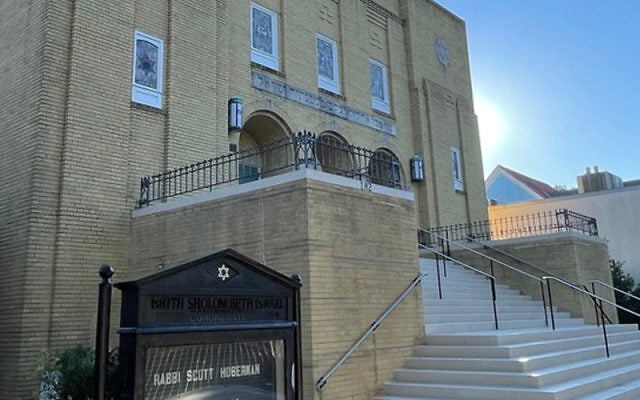
Today, the synagogue occupies a building in use since 1948 featuring an inset stone inscription of the Ma Tovu above its triple-arched brick entrance.
Worth a look

Manchester City Face Left-Back Dilemma Over Gvardiol
Manchester City defensive puzzle leaves Enzo Maresca searching for answers at left-back Back-to-back Premier League defeats have exposed...

Nevada 2026 Midterm Election: Voting details for Washoe County residents
Tuesday marks the final opportunity for eligible residents who haven't yet voted in Nevada's 2026 midterm election. Polls...

Linda Gerry, Lincoln Resident and church secretary, dies at 79
A single yellow Post-it note, stuck quietly to a computer monitor in a Lincoln home, held a familiar...

Robert H. Garner, Outdoorsman and Vietnam Veteran, Passes Away
Remembering Robert H. Garner Robert H. Garner, a lifelong outdoorsman, veteran, and family man, passed away on Tuesday,...