
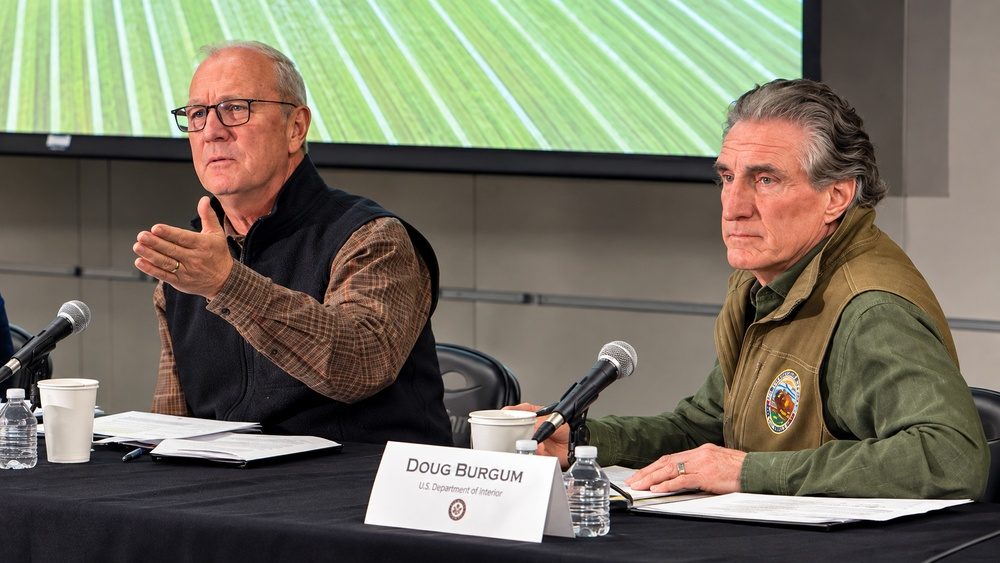
- Interior Secretary Doug Burgum and the full North Dakota congressional delegation met with about 200 landowners in Jamestown on Nov. 23.
- A federal pilot program has worked with 18 landowners — 17 in North Dakota, one in South Dakota — to redraw easement maps.
- Sen. Kevin Cramer said he has released all judicial nomination holds and may lift additional holds after the roundtable.
- The 2024 setback rule can expand restricted acreage to five times the size of the original easement without extra compensation.
Sen. Kevin Cramer hosted the meeting at the North Dakota Farmers Union headquarters, bringing Interior Secretary Doug Burgum, Deputy Secretary Kate MacGregor, and senior U.S. Fish and Wildlife Service leaders to Jamestown.
Cramer thanked the Farmers Union for reconfiguring walls to accommodate the crowd, telling attendees, “You’ve trusted me multiple times, and you’ve shown up multiple times. Each time, I feel like we’ve taken a step or two forward, maybe half a step or a step backward, and we just find ourselves in this cycle,” Cramer told the North Dakota Monitor.
Burgum said the Trump administration is committed to a durable fix. “If it doesn’t work for the landowner, it’s not going to work for your conservation goals,” Burgum said. He added that resolving roughly 16,000 easements will require more personnel, increased automation and a simplified process. Another 30 percent are in South Dakota.
“The people closest to the land, especially our farmers, ranchers and hunters, understand its challenges and opportunities better than anyone,” Burgum said.
“The people sitting at this table today—particularly Secretary Burgum, Deputy Secretary Kate MacGregor, and Deputy Fish and Wildlife Service Director Kellogg—showed up,” Cramer said.
Setback rule multiplies restricted acreage
The 2024 rule establishing setback requirements for agricultural drainage tile near protected wetlands dominated the discussion. Burgum said some setbacks have covered acreage five times larger than the original easement without additional compensation to landowners.
“It isn’t just about these wetlands areas and people wanting to drain the actual wetland. It’s the setbacks and how much extra land they are taking,” Rep. Julie Fedorchak said.
Landowners showed maps with wetlands as small as one-tenth of an acre. Sen. John Hoeven called for a predictable, transparent process for identifying easement acreage, determining drainage restrictions and allowing mitigation. “This is about using science to make the ground better, more profitable for farmers and have more habitat, good quality habitat,” Hoeven said.
Fedorchak supported adding mitigation options to the pilot program, letting farmers exchange protected acreage for land better suited for wildlife habitat. The pilot has met with 18 landowners to agree on new maps protecting a similar number of acres, though protected areas may shift to create larger habitat blocks, the North Dakota Monitor reported.
Retired ecologist Jill Shaffer countered that seasonal wetlands under one acre are critical for ducks and other wildlife. “They are your everything,” she told the North Dakota Monitor.
Ryan Pederson, who farms in Rolette County, called signing a conservation agreement with the federal government the “greatest single mistake” that ancestors of North Dakota landowners ever made. Pederson told Burgum, a former governor of North Dakota, “it is your mistake to have to deal with.”
“There are no ducks on saline divots,” Cramer said.
The U.S. Fish and Wildlife Service launched a pilot program in summer 2026 to work directly with landowners on reviewing older easement records and maps, testing the process before a broader effort. Director Brian Nesvik said the pilot allowed the Service to examine concerns and move forward with a cooperative framework that emphasizes mutually agreeable solutions, including potential revisions to mapped wetlands or easement exchanges, without reducing total protected acreage.
Cramer signals further nomination relief
No deadline was set for a final resolution. Cramer stressed the need for a solution that can withstand changes in presidential administrations. Hoeven said legislative action, executive action and potential litigation could all play a role. “Certainly, this was worthy of a good-faith effort that deserves some further relief,” Cramer said.
Related reading

Judge Denies RJ Godfrey Emergency TRO; NCAA Not Yet Served
University of Arizona forward RJ Godfrey remains ineligible to play after a Pima County Superior Court judge denied...

Matt Hayes: Michigan’s ‘Beat Ohio’ Outrage Over Kyle Whittingham Is Misplaced
USA TODAY Sports columnist Matt Hayes argues the outrage over Michigan coach Kyle Whittingham’s admission that he does...

Jerry Ellis Smith, Retired OKC Fire Captain, Dies at 87
Jerry Ellis Smith, a retired Oklahoma City Fire Department captain who also built a string of businesses and...
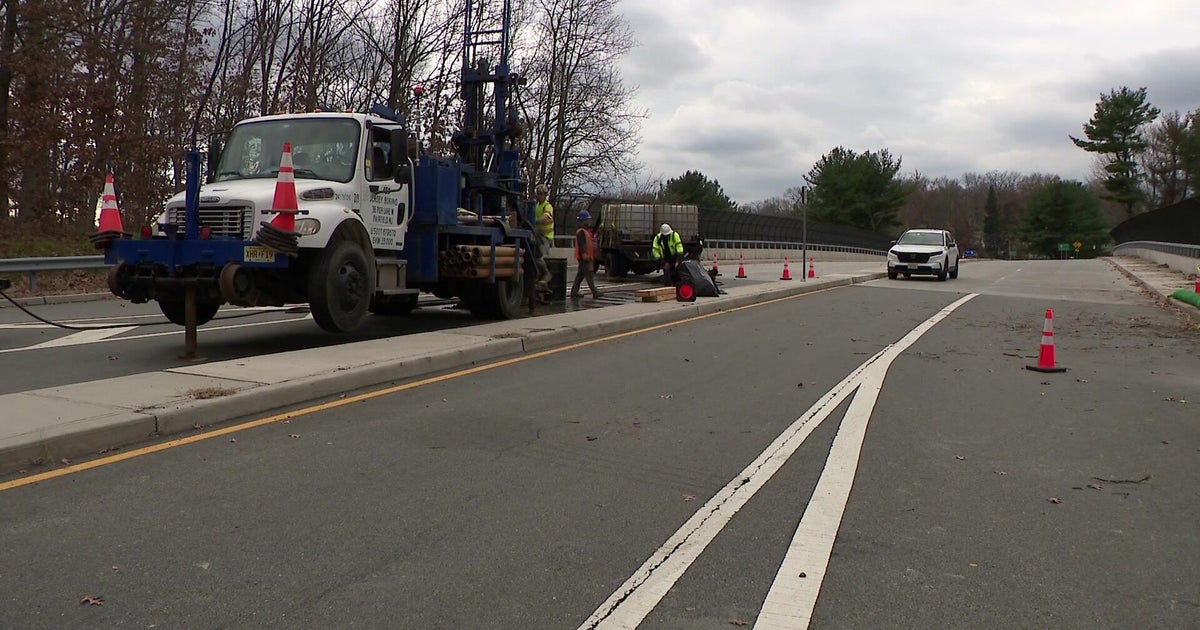
Route 15 Northbound, Weldon Road Bridge Closed in Jefferson Township After Sinkhole Opens Near Abandoned Mine Shaft
Route 15 northbound lanes and the Weldon Road Bridge in Jefferson Township remain closed after a sinkhole opened...