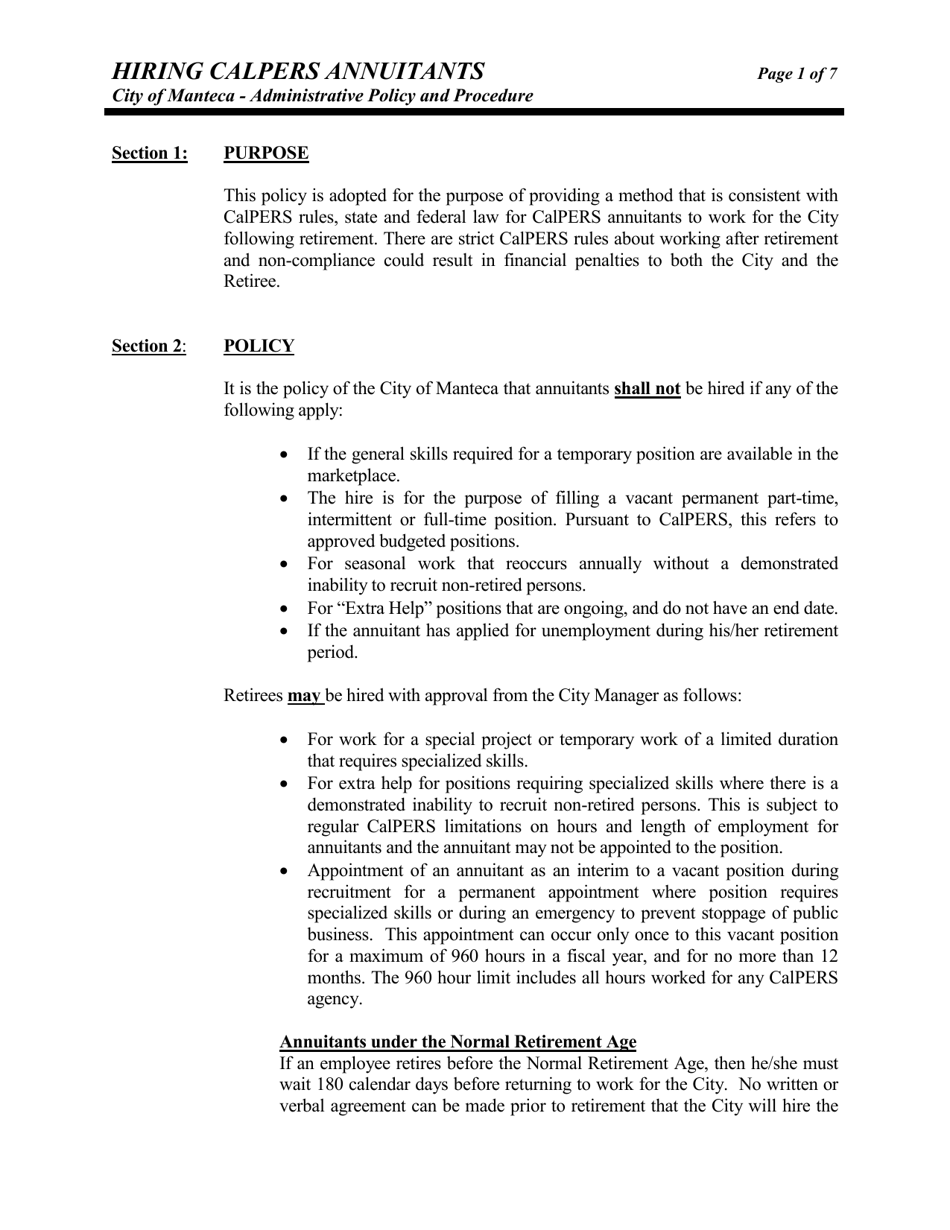
CalPERS approved two policies last week aimed at curbing costly pension fund violations, imposing a two-year hiring limit for retired annuitants and clarifying retirement ages for public safety workers.
The proposals, which remain subject to public comment, would allow government employers to hire retired annuitants for two years with up to three one-year extensions. This replaces the previous “limited duration” standard, which critics say lacked clear boundaries. A second rule would designate an employee’s retirement age as the one set by the agency where they spent the majority of their career, resolving a conflict with federal tax law.
“These proposed regulations would give employers and retirees a more consistent framework to follow and help prevent avoidable violations,” CalPERS President Theresa Taylor said in a written statement. “Just as important, they would make the approval and reporting process more transparent and accountable.”
Law enforcement officials warned the hiring limit could undermine public safety operations. County sheriff offices utilize annuitants in many ways, in cold cases, specialty units and court services, Cory Sazillo, legislative director for the California State Sheriffs’ Association, told the board last week.
The concern stems from real-world consequences. Sacramento laid off 41 reserve police officers last year after a CalPERS audit found the city had exceeded work-hour limits. A city spokesperson said none of the officers were rehired.
CalPERS administers the Public Employees’ Retirement Law and holds sole fiduciary responsibility under Proposition 162, giving it authority to set binding regulations for retired annuitant employment across state and local agencies.
The board’s approved policies last week replace the vague “limited duration” standard with a defined two-year hiring limit plus up to three one-year extensions, enforceable through audits like the one that found Sacramento exceeded work-hour limits and triggered 41 reserve officer layoffs.
Under its regulatory power, CalPERS also clarified that retirement age for public safety workers is determined by the agency where the employee spent the majority of their career, resolving conflicts with federal tax law. The pension fund’s audit and enforcement role was further shaped by August legislation signed by Gov.
Associations representing cities, counties and special districts backed a defined limit but requested hardship extensions for positions that remain unfilled. “A clear standard serves employers and retirees better than ambiguity, and it serves the system’s interest in preventing abuse,” the agencies wrote in a letter to the board.
Gov. Gavin Newsom signed legislation in August requiring CalPERS to provide better notice during audits—a bill supported by the California School Employees Association. Meanwhile, several retirees are suing the pension fund in San Francisco Superior Court over repayment demands, including one retiree who received a letter seeking $1 million in pension income.
Worth a look
National Native American Hall of Fame Inducts 2026 Class of Six Leaders in Oklahoma City
Six Native leaders were inducted into the National Native American Hall of Fame on Saturday at the Chickasaw...

Oregon King Tides Through Thursday Bring Flooding Risk, 30-40 Foot Waves
“We have been having 30 to 40-foot-plus waves measured along the coast up and down the entire coastline,”...

Texans’ David Montgomery Rushes for 107 Yards in Return; Marlin Klein Effective Blocking in Win Over Colts
The Houston Texans' running game showed improvement with David Montgomery's return from a groin injury, as he rushed...

Judge Requires Koshes to Notify Hartford Sgt. for Rehab Bid
“lightly pushed him,” the police report says of the moment Orange police Sgt. Frank Koshes placed his hand...