Walking into Clyde’s Prime Rib in Portland feels like stepping through a portal to a Detroit that no longer exists, the white tablecloths and dark paneling echoing a genre of dining that once anchored entire neighborhoods.
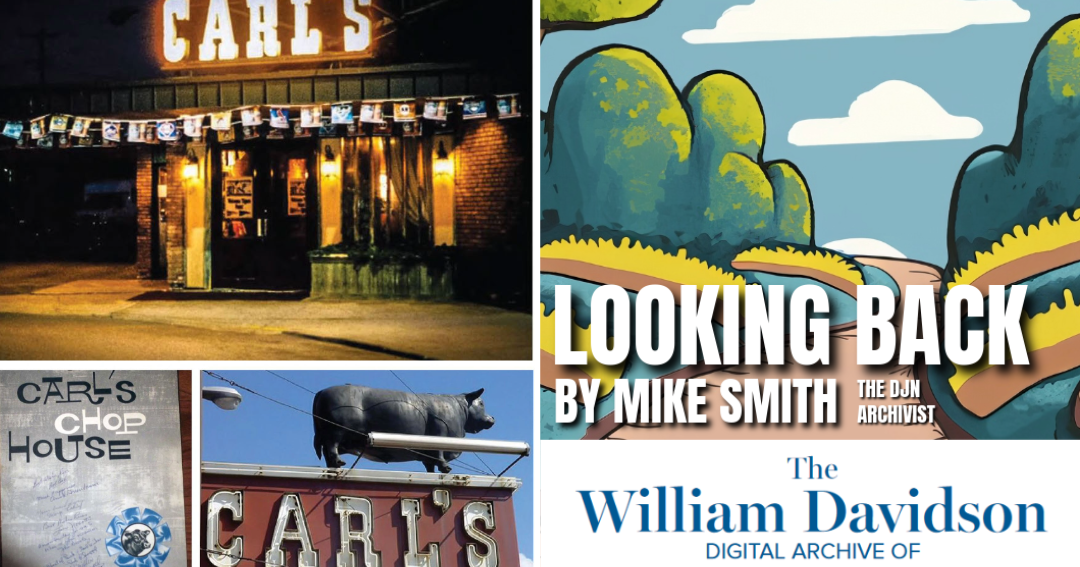
That portal leads straight to Carl’s Chop House, the Grand River Avenue institution that fed generations of Detroiters — CEOs and line workers, politicians and families — from the early 1920s until its lights went out for good in 2008, the Detroit Jewish News reported.
Carl Rosenfield opened the Grand River Chop House in the early 1920s and renamed it Carl’s Chop House in 1933, a move local lore still attributes to a winning poker hand against his partner, though that story remains unverified. By the 1950s through the 1980s, the restaurant could serve nearly 1,000 customers at once across a massive dining room and banquet halls, operating every day of the year except Christmas.
“Carl’s Chop House retains the elements that made it legendary,” Danny Raskin wrote in his “Best of Everything” column on October 18, 2002.
Raskin, who began writing for the Jewish News in 1942 and launched his column in 1964, documented the restaurant for decades until his death at 102. More than 1,200 pages in the William Davidson Digital Archive of Detroit History mention Carl's, showing its cultural weight.
Rosenfield himself remained a fixture on the floor well into his 90s, personally checking tables until he sold the business in 1990. He died the following year at 95. Without him, the supper club era already waning, Carl’s struggled; it closed for remodeling in 2008 and never reopened, razed two years later.
Carl’s Chop House began in the early 1920s as the Grand River Chop House, then moved across the street and was renamed in the 1930s after Rosenfield won full ownership from his partner in a poker game. Before his restaurant career, Rosenfield was a well-known tire merchant and at one point owned a lighthouse near Port Sanilac.
A sirloin steak dinner cost $1 at opening; by the 1960s the restaurant served thousands daily and planned to expand its 850-seat dining room to 1,200. The only day it ever closed was Christmas, Rosenfield’s birthday, and he supported local farmers by buying cattle from the Michigan State Fair.
“Remembering Carl’s Chop House,” Raskin wrote in a July 17, 2020 column.
Worth a look

African Union Launches AfCRA to Challenge Rating Costs
The African Union launched the Africa Credit Rating Agency (AfCRA) on October 7 in Abuja, Nigeria, aiming to...

Diamondbacks Acquire Johan Oviedo From Red Sox for Luke Dotson, PTBNL
The Arizona Diamondbacks acquired right-hander Johan Oviedo from the Boston Red Sox on Friday, sending left-handed pitching prospect...

Chicago Tribune Editorial: Mamdani’s NYPD Overhaul Is Pragmatic, Not Political
In an editorial published this week, the Chicago Tribune argues that New York City Mayor Zohran Mamdani's plan...

Bob’s Discount Furniture Secures Third Jacksonville Site at The Markets at Town Center
Bob's Discount Furniture has secured a location, filling the former West Marine space at The Markets at Town...