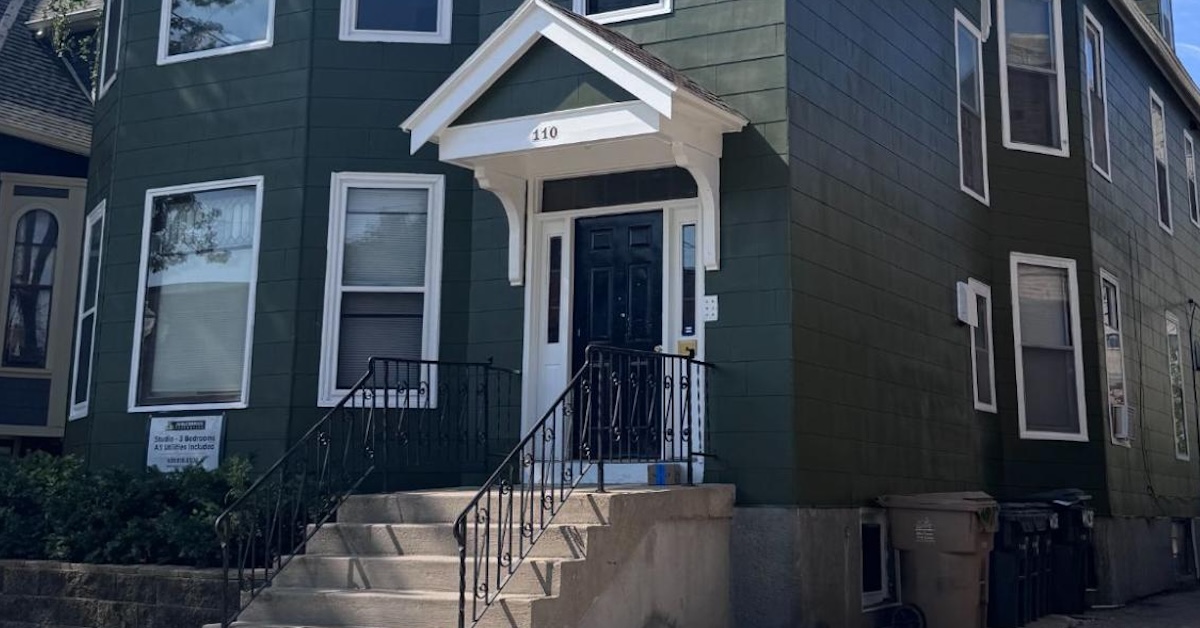
A UW–Madison student and his roommates at 110 S. Hancock St. will recover $36,646 in rent after the city found the landlord failed to fix 13 of 67 building code violations by a November deadline.
The rent abatement covers the lease period from March 2025 through February 2026. The award came after a December city letter confirmed a default judgment when a November reinspection showed outstanding violations, including standing water in the basement, loose stair guardrails, and basement and rear entry doors that would not latch or open properly.
The case began when a roommate woke up on five separate occasions to find a bat in her bedroom. Unsure how to proceed, the student contacted the Tenant Resource Center, which directed him to schedule an appointment with the City of Madison Building Inspection to pursue rent abatement under a city ordinance that allows tenants to recover rent when owners do not resolve code violations.
“If you don’t know your rights and responsibilities, you can get taken advantage of,” said Diego Colorado, a staff member at the Tenant Resource Center. “The more knowledgeable you are, just in general, the better your capabilities of potentially having to stand up for yourself are.”
Building Inspection catalogs 67 violations
City inspectors documented 67 total violations across the building and its exterior. Beyond the bat infestation, the notices cited cracks in the basement ceiling allowing standing water, unsecured guardrails on staircases, and basement and rear entry doors that failed to open or latch properly.

J.D. McCormick Properties repaired most violations after the initial August 2025 inspection and a city-ordered deadline. However, the default abatement award letter states the owner did not meet the deadline to rectify 13 of the 67 violations.
Landlord blames historic district rules and inspector vacation
Colin Smith, vice president of development for J.D. McCormick, said the company was unaware of the issues until the August inspection. He attributed the missed deadline to difficulties obtaining approval for repairs because the building sits in the First Settlement Historical District and to scheduling delays after their initial inspector went on an extended vacation.
Smith also said tenants had propped open the basement door with rocks to carry laundry in and out, which caused the door to break. The company unsuccessfully argued to reduce the abatement amount.
“These tenants kind of used the rules and pushed as hard as they could to get as much money as they could,” Smith said. “I think they kind of took advantage of us and the situation.”
Students face power gap in tight market
The student, who requested anonymity due to an ongoing dispute over his current housing, said he felt the landlord exploited the tenants’ inexperience.
“I do feel like the landlords were taking advantage of the fact that they were renting to students who weren’t going to stand up for themselves,” he said. “They let their properties get into this really bad state. It clearly had been going downhill for a long time.”
A UW–Madison Department of Planning and Landscape Architecture report notes Madison’s vacancy rate is currently below a healthy range, giving landlords some collective leverage and reducing pressure to improve tenant living conditions.
The Tenant Resource Center helped launch the Eviction Diversion and Defense Partnership in 2021 to provide tenants with legal representation and navigation services. In 2024, more than 83% of households facing eviction that received EDDP representation had their cases dismissed.
The center also operates four locations across Dane County, including offices in Sun Prairie and on the Madison College Goodman South Campus, and offers all services in English and Spanish, with a dedicated Zoom room at its Winnebago Street office for tenants attending virtual hearings.
The Tenant Resource Center, a nonprofit defending housing rights in Dane County for 45 years, operates a main office at 2510 Winnebago St. with walk-in counseling and free legal advice for qualifying tenants. Satellite offices at the UW–Madison Student Activity Center and Madison Area Technical College provide legal information but not legal advice, Colorado said.
Keep reading

African Union Launches AfCRA to Challenge Rating Costs
The African Union launched the Africa Credit Rating Agency (AfCRA) on October 7 in Abuja, Nigeria, aiming to...

Diamondbacks Acquire Johan Oviedo From Red Sox for Luke Dotson, PTBNL
The Arizona Diamondbacks acquired right-hander Johan Oviedo from the Boston Red Sox on Friday, sending left-handed pitching prospect...

Chicago Tribune Editorial: Mamdani’s NYPD Overhaul Is Pragmatic, Not Political
In an editorial published this week, the Chicago Tribune argues that New York City Mayor Zohran Mamdani's plan...

Bob’s Discount Furniture Secures Third Jacksonville Site at The Markets at Town Center
Bob's Discount Furniture has secured a location, filling the former West Marine space at The Markets at Town...