
Carson City residents could soon have direct veto power over major municipal expenditures following the collapse of a controversial $30 million city hall project. A recently formed grassroots political action committee has officially launched a petition drive to force voter approval on expensive municipal installment purchases.
The Push for Direct Voter Authority
The political action committee Let Carson Vote filed its formal petition with the Carson City Clerk-Recorder, as reported by CarsonNow.org. The proposed charter amendment aims to rewrite local oversight rules. Under the initiative, any installment-purchase agreement obligating the city to pay $10 million or more in the aggregate would require a public vote rather than simple sign-off from the Carson City Board of Supervisors.
Organizers face a strict deadline and specific signature thresholds. According to Nevada Appeal, the political action committee has until April 17, 2027, to collect signatures from 15 percent of the registered voters who participate in the November 3, 2026, general election. City Clerk-Recorder Scott Hoen noted that during the November 2024 general election, 13,068 people voted for president in Carson City, meaning the baseline requirement sits near 4,660 valid signatures. If successful, the measure would likely appear before voters on the June 2028 primary ballot.
“Unfortunately, a lot of the public doesn’t pay attention to what’s going on in their own cities. And most of the people we talked to had problems with this city hall,” Mary Sanada, Treasurer of Let Carson Vote, told KRNV.
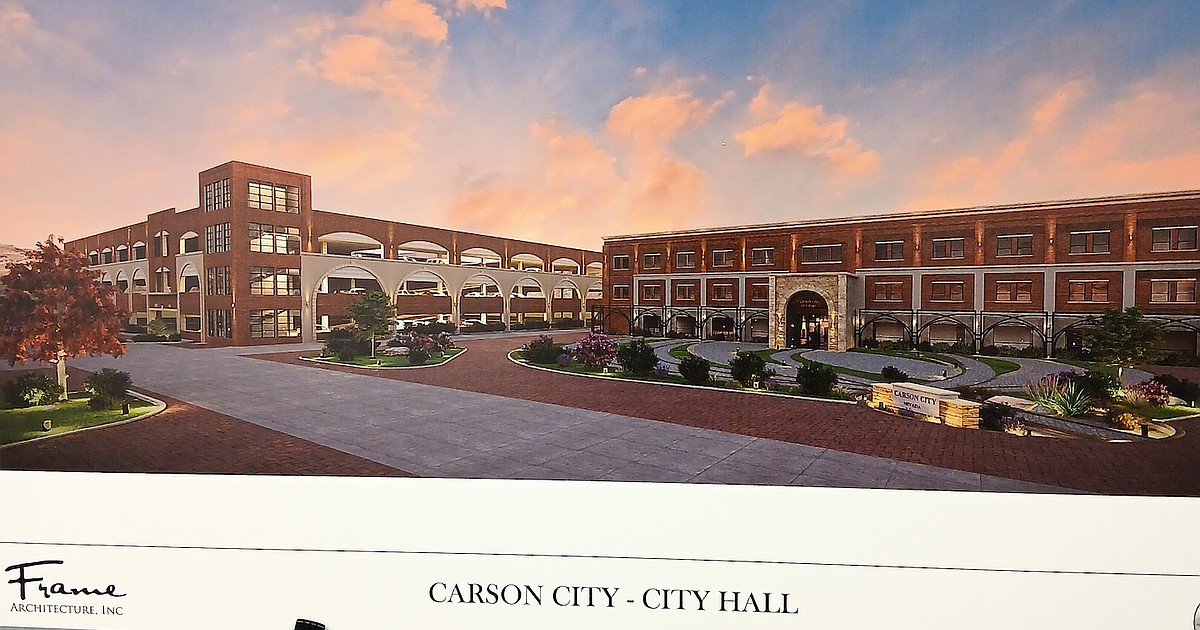
The petition language features strict anti-evasion clauses. No set of related installment-purchase agreements can be broken up or proposed separately to dodge the $10 million cap. Furthermore, the measure mandates that any resulting ballot question must feature a clear, concise statement describing the agreement and its cost without argument or prejudice.
How a Failed $30 Million Deal Sparked Reform
The push for municipal oversight stems directly from negotiations over a proposed civic complex. Back in February 2025, the Hop and Mae Adams Foundation approached city officials with plans for a new city hall, parking garage, and town square. The initial footprint targeted properties including parking lots behind the current city hall and the Nugget Casino.
By July 2026, the Board of Supervisors voted to approve a term sheet for a $30 million lease-purchase agreement. The plan involved a city hall running between $28 million and $30 million, alongside an $8 million parking garage where the city’s $4 million share would be funded by selling the existing city hall alongside other municipal funds.
Momentum stalled as financing realities set in. On October 16, 2026, the city announced that the deal had fallen through because final terms could not be met. Mayor Lori Bagwell noted that the city ultimately could not make the financing work. Steve Neighbors, a trustee for the foundation, pointed out that rising interest rates since June complicated the math, though he maintained a blended rate for tax-exempt bonds and commercial loans might have met the city’s 5 percent requirement.
The collapse leaves the local government scrambling for office space, particularly as officials navigate spatial constraints for a third justice of the peace and municipal court judge. While the Board of Supervisors discusses next steps during upcoming meetings, the Carson City Manager’s Office has declined to comment on the Let Carson Vote petition.
If validated by a 15 percent sample of the electorate, the charter amendment would bypass the state Legislature entirely, going straight to the ballot box to redefine how Nevada’s capital city handles multi-million-dollar commitments.

Cal Poly Football Suffers 61-7 Loss Against No. 3 Montana State
Mustang Defenseless as No. 3 Montana State Routs Cal Poly 61-7 Saturday afternoon in Bozeman proved to be...

Turnovers and Penalties Sink Arkansas in 34-10 Loss to Missouri
Razorbacks Fall to Tigers as Turnovers and Penalties Sink Fayetteville Showdown Saturday night at Reynolds Razorback Stadium yielded...

Author reflects on faith and sobriety via communion of saints
Faith, Recovery, and the Communion of Saints in a New Essay In a recent personal essay published by...

Juan Atkins, Pioneering Detroit Techno Legend, Has Died at 64
Juan Atkins, Architect of Detroit Techno, Dies at 64 Juan Atkins, the pioneering Detroit musician and DJ who...