Nine years of teaching Church social doctrine to high schoolers never once produced a student arguing for a monarchy, Casey Vandenberg recalls.
That American instinct — a reflexive allergy to crowns and tyrants — collides every November with the liturgical calendar’s final Sunday: the Solemnity of Jesus Christ, King of the Universe.
Vandenberg, now Director of Evangelization for the Diocese of Lansing, frames the tension plainly. Americans read “king” and hear coercion; the Gospel reads “king” and means the one who washes feet. “My kingdom does not belong to this world,” Jesus tells Pilate in John 18:36, a line Vandenberg returns to as the interpretive key. The distinction — between political dominion and sacrificial service — is the hinge on which the feast turns.
A feast born in the shadow of dictators
The solemnity itself is barely a century old. Pope Pius XI instituted it in 1925, the year Mussolini’s Blackshirts marched on Rome and Stalin consolidated power in Moscow, as detailed in the Evangelist. The Great War had toppled the Habsburgs, the Hohenzollerns, the Romanovs, and the Ottomans. The Lateran Treaty would soon strip the Vatican of its remaining temporal territories.
In that vacuum, Pius XI asked in his encyclical Quas Primas: Who is in charge? His answer — Christ reigns “in the hearts of men” by reason of intellect, truth, and a charity that “exceedeth all knowledge” — was a direct rebuke to the totalizing claims of fascism and communism alike.
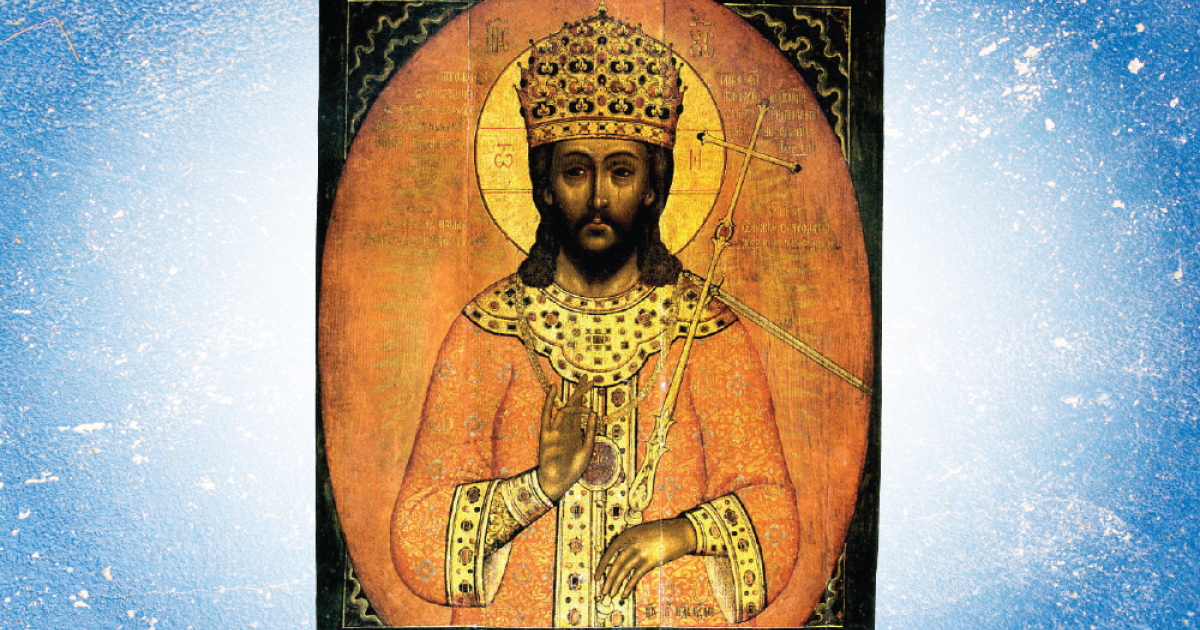
“He is King of hearts, too, by reason of his ‘charity which exceedeth all knowledge.’”
That historical pressure has not evaporated. The Evangelist said that the feast arrives this year at the close of a “Year of Grace,” inviting the same examination of conscience Pius XI demanded: have we allowed Christ to rule heart, mind, will, and soul — or have we planted a different standard?
Two standards, one choice
St. Ignatius of Loyola called it the “Two Standards”: the banner of Christ or the banner of the world. The Evangelist quoted the Gospel scene from Luke 23 where the crucified thief asks only to be remembered, and Jesus answers, “Truly I tell you, today you will be with me in paradise.”
That exchange, the outlet argued, crystallizes the kingdom’s logic — no conquest, no tribute, only a dying man promising paradise to a criminal who recognized him.
Vandenberg echoes the contrast. “The Son of Man did not come to be served but to serve and to give his life as a ransom for many,” he cites from Matthew 20:28. Faith Magazine reproduced the same passage, underscoring that for Jesus, leadership is service, and wielding power means sacrificing for the good of others. The reign proclaimed on this Sunday is not about control but “abundant life” (John 10:10).
Why the title still sticks
If the word “king” still snags on modern ears, Vandenberg suggests the fault lies in the listener’s dictionary, not the title itself. The Diocese of Lansing reported his argument that accepting this kingship does not restrict freedom but teaches us to “use our freedom well to reach our ultimate fulfillment.”
The Evangelist put it differently: once we choose God over mammon, “the haze of self-deception is lifted” and we become “the heart, the hands and the voice of Christ in the world, especially to the poor, the weak, the forgotten and the oppressed.”
Vandenberg grew up in the Diocese of Lansing and returned there after nine years teaching theology at Lansing Catholic High School. An adult convert, he traces his path through a Lutheran upbringing, a college course on Aquinas, and the pull he felt before the tabernacle at the Basilica of Saint Adalbert in Grand Rapids. He is a parishioner at Saint Mary Cathedral in Lansing.
That servitude — freely chosen, not imposed — is the paradox the feast holds out. A king who dies for his subjects. A kingdom not of this world that claims every heart in it.

Oregon King Tides Arrive Monday: Photo Project Asks Public to Capture Flooding
The first King Tides of the season arrive on the Oregon coast Monday, launching a winter cycle that...

Vermont Police Hunt ‘Dangerous’ Man After Vehicle Thefts in Two Counties
Vermont State Police are hunting a 34-year-old man they call dangerous after a string of vehicle thefts spanning...

Liam Gleason Posthumously Honored with USILA Howdy Myers Man of the Year Award
The United States Intercollegiate Lacrosse Association posthumously presented the Howdy Myers Man of the Year Award to Liam...

The Elle: Former West Hartford Synagogue Reimagined as 49-Unit Housing Development
"This is our first adaptive re-use," said Jill Corrado, executive director of the West Hartford Housing Authority. "It’s...