The Vanishing Gilded World of the Cahen d’Anvers Sisters
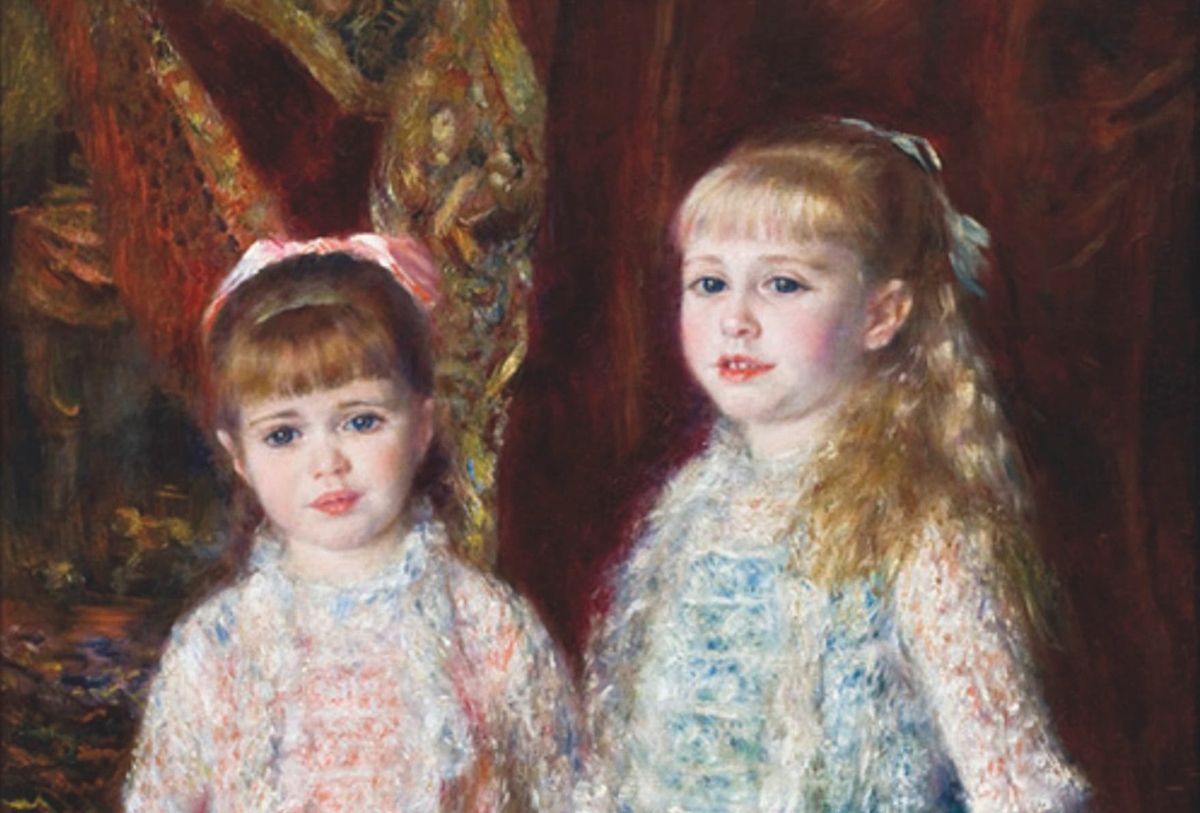
In 1881, the Parisian art world was captivated by the sight of two young girls, Alice and Elisabeth Cahen d’Anvers, rendered in oil by Pierre-Auguste Renoir. Their double portrait, Pink and Blue, captured a fleeting moment of Belle Époque innocence. Yet, as detailed in Catherine Ostler’s new book, The Renoir Girls, this canvas serves as a fragile window into a life of immense privilege that would eventually be shattered by the systematic brutality of the Holocaust.
I’ve just finished the book ‘The Renoir Girls’ by Catherine Ostler, we meet a French Jewish family who lived at the glittering heart of Belle Époque Paris. Their world was one of breathtaking opulence, yet threaded through it all was the quiet knowledge that, as Jews, their… pic.twitter.com/5cM8QT7js8
Hyperallergic recently highlighted how Ostler’s research traces the trajectory of these sisters from the opulent salons of their banker father, Louis, to the tragic reality of their later years. The girls lived in a sphere of high society where art and politics were inseparable. Their mother, Louise, was a renowned salonnière whose guest list included Marcel Proust and the art critic Charles Ephrussi. This world, however, was built on an unstable foundation of wealth and assimilation that could not protect them from the rising tide of European antisemitism.
The Illusion of Safety in an Era of Rising Antisemitism
While the Cahen d’Anvers family moved through the highest echelons of French life, they were never fully insulated from the prejudice of their era. Even as they restored historic chateaus and donated to the French state, the political climate of the late 19th century—marked by the Dreyfus Affair—exposed deep-seated hostilities. The antisemitic rhetoric of the time was not merely a fringe sentiment; it permeated the social circles in which the family moved.
Ostler notes that despite the legal protections afforded by the Napoleonic Code, the social reality for the haute Juiverie was fraught with peril. Renoir himself, in a letter to a friend, grumbled about the family’s payments, reflecting the casual, insidious nature of the antisemitism that shadowed the era. The sisters’ attempts to integrate—through conversion, marriage into the aristocracy, or Anglican ceremonies—offered no defense against the eventual occupation of France by Nazi forces.
The Tragic Aftermath and the Fate of the Art
The glittering carousel of the Belle Époque came to a violent halt in the 1930s. The family’s assimilation, which had been a point of pride and a strategy for survival, proved ineffective against the racial laws of the Nazi regime. Four members of the family ultimately perished in concentration camps. Elisabeth, who had converted to Catholicism decades earlier, was betrayed by a village official while in hiding and died on her way to Auschwitz in 1944. Her story stands as a stark reminder that no amount of cultural contribution or social standing could shield individuals from the industrial-scale hatred of the era.

The paintings themselves have mirrored the displacement of the family. Pink and Blue resides today at the Museu de Arte de São Paulo Assis Chateaubriand, where it remains a celebrated work. In contrast, La Petite Irène, a portrait of the sisters’ older sibling, carries a more troubled provenance. Looted by the Nazis and eventually purchased by the Swiss arms dealer and war profiteer Emil Georg Bührle, the work now hangs in the Kunsthaus Zürich. This movement of art across borders and through the hands of profiteers underscores the broader, unresolved history of cultural theft during the Holocaust.
For those interested in the historical context of the era, the United States Holocaust Memorial Museum provides extensive documentation on the erosion of rights for Jewish populations during the 1930s and 1940s. The story of the Cahen d’Anvers family serves as a profound historical anchor, illustrating the immense cost of political instability and the enduring, often uncomfortable, silence of the objects left behind after a family’s destruction.

Interactive Brokers, S&P Global and Blackstone benefit from volatility
Market Volatility Drives Trading Surge for Interactive Brokers and Financial Peers The post-election market landscape has triggered a...

Mistrial Declared in Cheyenne Attempted Murder Trial of Adrian Maggos
Mistrial Declared in Cheyenne Street Shooting Case The four-day trial of Adrian Maggos ended in a sudden, quiet...

Milwaukee Brewers face decision on William Contreras extension
William Contreras is set to earn $15.5 million in 2027, and with his contract approaching free agency in...

Six Men Indicted in Lowcountry Marijuana and Cocaine Conspiracy
Six Men Indicted in Federal Drug Conspiracy Case Federal prosecutors have unsealed a sweeping indictment against six men...