
Irish credit union members are on high alert Thursday after regulators confirmed a cyberattack compromised payment data for hundreds of thousands of account holders, with the breach kept quiet for more than a month.
Deputy Central Bank Governor Mary-Elizabeth McMunn told reporters Thursday that consumers must maintain “heightened vigilance” against phishing attempts, as the sector grapples with a breach that exploited a vulnerability in a shared online banking platform between October 2 and 4. The attack targeted 40 to 50 credit unions — roughly a quarter of the sector — potentially exposing IBANs, BICs, and payment references of online account holders, The Irish Times reported.
“We’re already operating at a level where fraud and scams are only growing,” McMunn said at the launch of the Central Bank’s latest Financial Stability Review. “It’s most unusual that banks or any of the providers will come and look for those very specific details from you.”
The breach originated in the systems of Wellington IT, a Belfast-based technology provider that supports 43 of Ireland’s largest credit unions and holds a 51% share of the Irish market, according to the Irish Examiner. An automated attack made approximately five million requests to the platform over three days in early October, accessing saved payee records. Wellington IT informed affected credit unions only on Tuesday, November 18 — six weeks after the intrusion.
Delayed Disclosure Draws Political Fire
Minister of State Robert Troy, who holds responsibility for the credit union sector, called the notification delay “simply not acceptable.” He confirmed he has written to Wellington IT seeking an immediate meeting. The Data Protection Commission (DPC), the Central Bank, the Department of Finance, and An Garda Síochána are all investigating.

“The public were probably most vulnerable to this in the last month, when they weren’t aware their data had been breached,” said a cybersecurity source speaking to The Journal. The outlet also reported that the stolen payment references could enable extortion attempts, as hackers may know the stated purpose of specific transactions.
Scope Extends Beyond Credit Union Members
The data compromise reaches further than the credit union membership base. Anyone who has received a payment from a credit union account — including individuals and businesses banking with mainstream lenders — may have had their IBAN, BIC, and payment reference details exposed, The Journal reported.
Claddagh Credit Union in Galway confirmed that unauthorized access occurred to information relating to saved payment recipients, potentially including names, IBANs, BICs, and payment references. The credit union stressed that member accounts and balances were not compromised and that the vulnerability has been closed, the Connacht Tribune reported.

Cara Credit Union, with branches across Kerry, issued a similar statement confirming it was affected. Killarney, Listowel, and Rathmore credit unions said they were not impacted, according to Radio Kerry.
Sector Snapshot
| Metric | Figure | Source |
|---|---|---|
| Credit unions affected | 40–50 (of 184 registered) | Central Bank / The Irish Times |
| Wellington IT market share | 51% of Irish market | Irish Examiner |
| Total sector assets | €21.85 billion | Irish League of Credit Unions / The Journal |
| Total sector members | 4 million (Ireland and Northern Ireland) | Irish League of Credit Unions / The Journal |
Regulatory Warning on AI and Global Risks
The breach disclosure coincided with the Central Bank’s second Financial Stability Review of 2026, which flagged rising risks from global AI investment concentration. Governor Gabriel Makhlouf said Ireland’s small, open economy with a large financial sector is “particularly exposed to risks stemming from the rest of the world.”
“The reality is that risks from the global environment are rising,” Makhlouf said. He said that while Irish household and business balance sheets are “healthy,” some cohorts remain “vulnerable.”
On ECB policy, Makhlouf said he was “not comfortable” with inflation figures at the last meeting and warned that if data deteriorates before the December meeting, a rate hike conclusion would be “inevitable.” Energy prices driven by Middle East conflict remain the primary inflation driver, with volatility likely continuing into 2027, the review stated.
Credit Unions Contact Members, Central Bank Issues Fraud Guidance
Affected credit unions are contacting potentially impacted members directly. The Central Bank has urged consumers to consult its website for fraud prevention guidance and to contact their financial service provider immediately if they receive suspicious communications. Wellington IT said it has engaged external security experts to assist with the investigation and response.
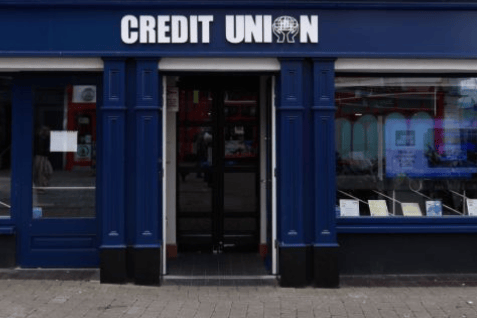
“We recognise the importance of this matter to our customers and their members and are treating it with the utmost seriousness,” a Wellington IT spokesperson said.
The Data Protection Commission has received breach notifications. Tánaiste Simon Harris told the Fine Gael parliamentary party Wednesday that the incident is a “sharp reminder” that cyber resilience must be at the heart of national resilience.
Wellington IT began in 1983 as a drinks distribution business before a co-founder — then a credit union board member — spotted a gap for a core financial system, leading to the creation of what is now Scion.
The firm integrated its Capital 2000 platform with Tullamore Credit Union in 1990, a relationship that continues today, and delivered Ireland’s first Windows-based credit union banking system, Locus, in 2000. Volaris Group, part of Constellation Software, acquired Wellington IT in 2014, and the company now operates as part of Vencora.
Disclaimer: The information provided in this article is for educational and market analysis purposes only and does not constitute financial, investment, or legal advice. Always consult with a certified financial professional before making investment decisions.

Burlington Diocese Urges Families to Ask Youth Where God Is Calling Them
“Speak, Lord, for your servant is listening,” the boy Samuel answered in the night, and the ancient text...

North Little Rock Parks Staffer Creates Free-Book Nook for Kids at Community Center
North Little Rock Parks and Recreation staffer Rachel Collins has turned a corner of the department’s office at...

VA Signs First Wyoming NADL Agreements With Wind River Tribes
The Department of Veterans Affairs (VA) Native American Direct Loan (NADL) program recently signed the first NADL Memoranda...

NDOT Begins Pilot Installing Retractable Bollards on Broadway
Nashville began threading steel barriers into Lower Broadway on Thursday, a physical answer to a crash that killed...