Anthropic’s initial public offering priced at $83 per share Wednesday, raising roughly $81.3 billion and valuing the AI company near $1.5 trillion, the largest IPO on record.
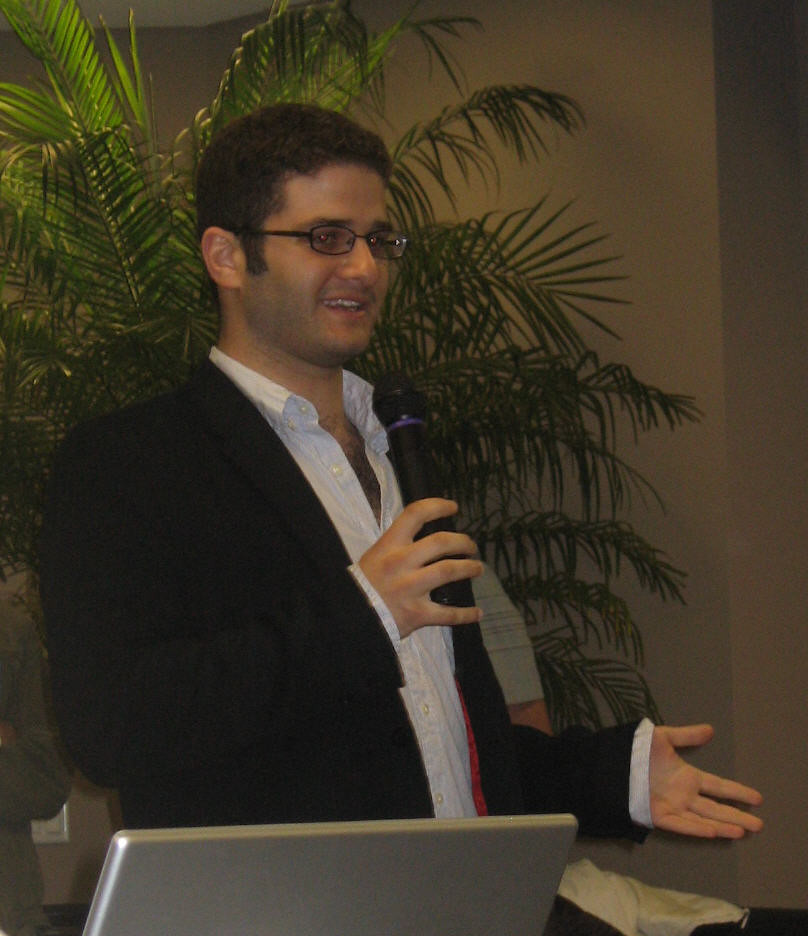
One of its earliest backers, Facebook co-founder Dustin Moskovitz, is not celebrating. He joined Anthropic’s $124 million Series A round in May 2021. That stake grew to around $500 million by November 2025 and is now worth billions. Yet he said the moment fills him with worry.
Moskovitz wrote on Bluesky that he and Cari Tuna invested to promote safety, not racing. He said AI is moving too fast and that Anthropic and everyone else on the frontier should slow down and stop racing.
Investor Who Wanted a Safety Lab
Moskovitz’s path runs through the effective altruism movement, where he and his wife Cari Tuna have directed over $8 billion to charity, with another $20 billion committed. He met Anthropic co-founder Dario Amodei through Holden Karnofsky, who helped arrange a $30 million donation to OpenAI in 2017.
When Amodei and colleagues left OpenAI in 2020 to start Anthropic, Moskovitz saw a chance to “create a race to the top (of ethics) by having a real safety lab at the frontier”, he wrote on Bluesky.

His involvement went beyond capital. As a board observer, he pressed executives on commercial strategy for the Claude chatbot and demanded specific safety plans, according to people who attended those meetings. He also brought operating experience from Asana, which went public in 2020 and reached a $25 billion valuation.
Anthropic was supposed to be different. Founded by Amodei and other OpenAI employees concerned that AI wasn’t being developed for the good of humanity, the company’s priority would be AI safety. Moskovitz helped get it off the ground. He was one of the few people in Anthropic’s board room with extensive business credentials in the company’s early years, having spent years running Asana, the workplace software company he founded.
Dustin Moskovitz, an Early Anthropic Investor, Feels a Bit Uneasy About the IPO – The New York Timeshttps://t.co/TlUFqYgDGT
In 2025, Moskovitz and Tuna moved their Anthropic holdings into a nonprofit vehicle, citing conflict-of-interest concerns. The move addressed what Crypto Briefing called “a complicated look”: owning a large piece of a frontier AI lab while funding organizations that scrutinize such labs.
The couple’s philanthropy has backed work on existential risks from advanced AI. Anthropic’s own S-1 filing devoted more than 80 pages to those risks — unusual depth for a prospectus. Moskovitz has described his funding of Anthropic as an action that “might well be an action that ended the world”.
Public Pressure and Private Pleas
On Bluesky, where Moskovitz calls himself an “overly online board observer”, he has documented his dissent. In April he wrote that the IPO was “problematic” and that he had “tried to advise them to delay”. By September, his tone turned sardonic: “And one $2T IPO is proceeding as scheduled.” Allies have expressed alarm at his frankness, according to DNYUZ.
Eric Ries, who advises Silicon Valley companies on management practices, said Moskovitz feels “tremendous pressure and responsibility to get it right” — a sense of his place in history that makes the payday feel like a warning light rather than a victory lap.
NEWS — Dustin Moskovitz, one of the biggest Democratic donors and the big funder of effective altruism, made a critical, early investment in Anthropic. He should be happy today. But he's not. Behind the scenes on Moskovitz's deep worries about the IPO, and his fights with Sam… pic.twitter.com/OCPvJ1q4Um
Governance Structure Under Scrutiny
Anthropic’s public benefit corporation status and its Long-Term Benefit Trust — a five-member body including former Federal Reserve chair Ben Bernanke — were designed to balance shareholder returns with the mission of developing safe AI for humanity. The trust’s members are financially disinterested experts who do not own Anthropic stock.
However, governance experts say the trust’s authority was watered down before the IPO. A founder-controlled board committee can overrule the trust’s four board appointments, Harvard Law professor Jesse Fried told The Irish Times. Douglas Chia, a senior fellow at Rutgers Law School, said “I don’t know if I can really compare it to anything else” among publicly traded companies.
Moskovitz, born in 1984 in Gainesville, Florida, left Harvard after two years to build Facebook, becoming its first chief technology officer. In 2008 he departed to co-found Asana, taking it public in 2020 and stepping down as chief executive in 2025 while retaining a controlling stake.
Forbes named him the youngest self-made billionaire in 2011; by April 2026 his net worth was estimated at $10.2 billion. With Cari Tuna he launched Good Ventures in 2011, which has distributed roughly $5 billion and helped create Open Philanthropy, directing funds toward global health and AI safety research.
The stock debuted on Nasdaq under the ticker ANT on November 19, 2026. Early investors were projected to see returns exceeding 300x at the IPO price. Moskovitz’s stake sits in a nonprofit vehicle tied to charitable work, raising the possibility that profits from Anthropic’s rise could eventually fund research scrutinizing companies like Anthropic.
Related reading

Fiona Harvey Chooses Crown Court Hearing on Harassment Charge
Fiona Harvey, the woman who says she inspired the Martha character in Netflix's Baby Reindeer, elected Crown Court...

SNL’s ‘Sister’ Sketch Satirizes Gender Gap in Family Caregiving Data
On November 14, John Mulaney hosted Saturday Night Live for a seventh time and debuted a pre-taped commercial...

Scottish Government Plans First Kilt Bond Issuance This Financial Year
The Scottish government plans to issue its first sovereign bonds, nicknamed "kilts", within the current financial year, aiming...

Jessie Buckley Wears Archival Prada at Ivors Composer Awards
Jessie Buckley returned to the red carpet on Tuesday at London's Grosvenor House, marking a stylistic pivot as...