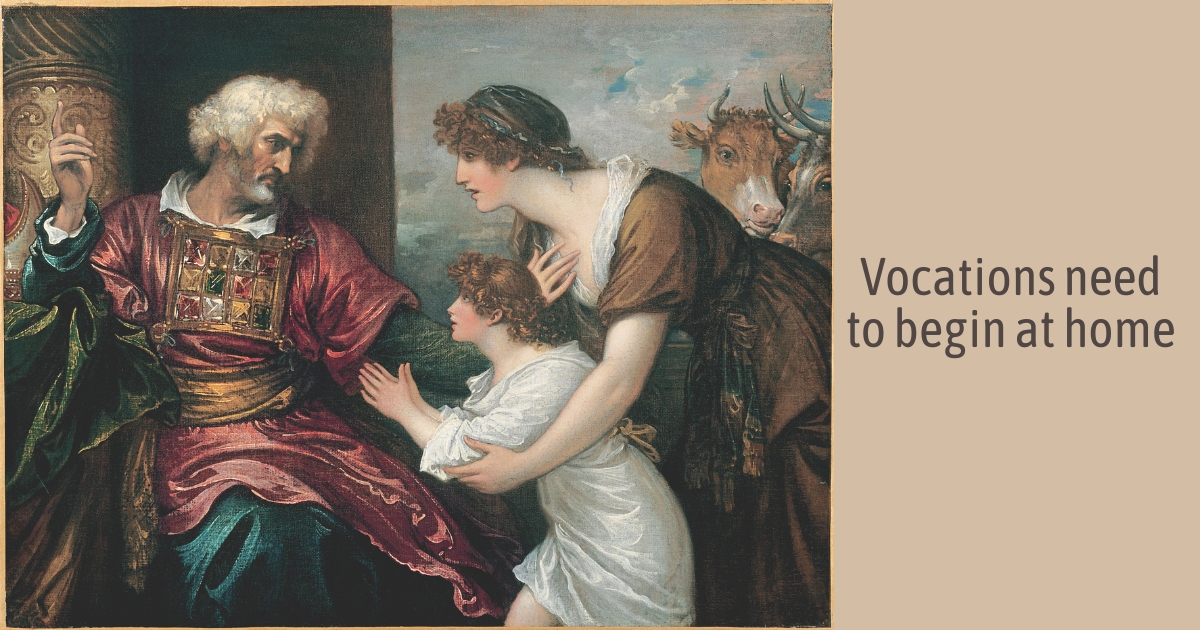
“Speak, Lord, for your servant is listening,” the boy Samuel answered in the night, and the ancient text still frames the question the Roman Catholic Diocese of Burlington is pressing on Vermont families today.
In a pastoral reflection, the diocese argues that the search for a vocation cannot wait for a seminary discernment program or a campus ministry retreat.
It has to start at the kitchen table, in the carpool line, in the ordinary moments where parents and grandparents ask a different kind of question: not “What are you going to do with your life?” but “Where do you think God may be leading you?”
The shift in language is deliberate. Diocese officials say the standard interrogation about college majors and career tracks piles pressure on teenagers who are already juggling school, relationships, and an uncertain economy. Reframing the conversation around a divine call, they suggest, relieves the burden of self-invention and replaces it with a posture of listening.

“We can begin by praying for them by name, asking God to help them hear His voice clearly and to give them the courage to respond,” the reflection reads, echoing the role Eli played in the temple at Shiloh.
The biblical parallel is explicit: Hannah prayed for a son and entrusted him to the Lord; years later, Samuel heard his name called but did not recognize the voice until an older mentor taught him how to answer.
That mentorship model is what the diocese wants to replicate in every parish. The reflection calls for families and faith communities to become places where a young person can say, “I need to pray about this,” or “I wonder if God may be calling me here,” and know they will be heard, encouraged, and accompanied. It is a vision of vocation as a communal project rather than an individual achievement.
The practical steps outlined are deliberately low-barrier: bring vocation into ordinary conversations, make room in daily life for silence so children see adults listening in prayer, and live out one’s own calling — whether to marriage, priesthood, religious life, or single life — with visible fidelity. “Modeling a life dedicated to God, day after day, bears witness more than we realize,” the text says.
Established in 1853, the Roman Catholic Diocese of Burlington traces its roots to the arrival of Samuel de Champlain in 1609 and now serves 110,000 Catholics across Vermont. The diocese operates 68 parishes with 36 active priests, 44 permanent deacons, and 15 religious, alongside 12 Catholic schools educating roughly 2,500 students. Through Vermont Catholic Charities, it assisted more than 3,000 Vermonters last year with social services and homes for the aged.
The reflection does not pretend the culture makes this easy. Secular milestones — graduation, first job, marriage license — come with ceremonies and checklists. A vocational discernment often comes with silence. The diocese is betting that the Samuel story still works: a mother’s prayer, a mentor’s guidance, a young person finally saying, “Speak, Lord.”
- Maine Task Force Recommends Doubling Homestead Exemption, Expanding Tax Credits
- Three Storms Target New England Over Next Week, Including Thanksgiving
- Kinale Girls Wins East African Rugby Title, Supplied Nine Players to Kenya Youth Olympic Gold Squad (world-today-news.com)
- Netherlands Plans Youth Helmet Mandate for E-Bike Passengers From September 2027 (archyde.com)
Maine Task Force Recommends Doubling Homestead Exemption, Expanding Tax Credits
A Maine task force spent more than a year hunting for property tax relief and finished Tuesday with...
Three Storms Target New England Over Next Week, Including Thanksgiving
Three storms are lining up to hit New England over the next week, with the first arriving late...

NHC: 60% Chance Tropical System Forms Off Southeast Coast This Weekend
Forecasters give a 60 percent chance that a subtropical or tropical system will form off the Southeast coast...

Walz Proclaims Rural Health Day as MDH Warns of Provider Gaps, Medicaid Cuts
Governor Tim Walz proclaimed Thursday as Rural Health Day in Minnesota, a designation that arrived alongside a stark...