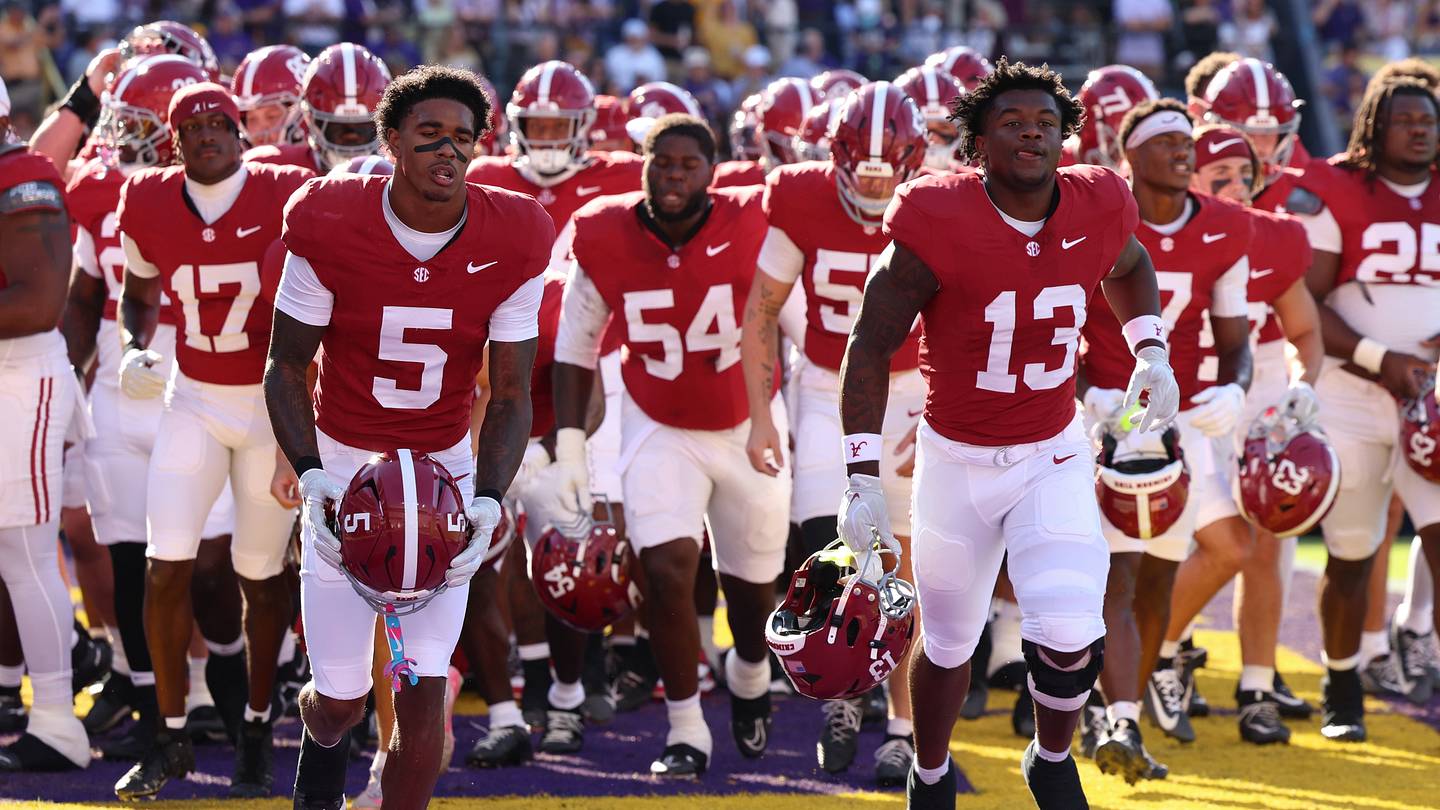
If you were expecting the College Football Playoff selection committee to apply the same logic to this week’s rankings as they did last week, the latest update provides a stark reality check: when it comes to Alabama, the rules simply do not apply.
In a report published by Sports Illustrated, the committee’s persistent favoritism toward the Crimson Tide remains on full display, creating a double standard that feels increasingly difficult to justify.
Consider the trajectory of the Indiana Hoosiers, who were penalized heavily just seven days ago. Despite not playing a game, the one-loss Hoosiers plummeted five spots in the CFP Top 25, dropping from No. 4 to No. 9. The committee’s reasoning was that the teams Indiana had previously defeated were struggling, which supposedly weakened their overall résumé.
Yet, this week, Alabama—a two-loss team—saw every single one of the five SEC opponents they had previously beaten lose their respective matchups. Kentucky fell to Florida, South Carolina was routed by Arkansas, Mississippi State dropped its sixth straight game, Texas A&M lost to Tennessee, and LSU was defeated by Texas. Despite this total collapse of their strength-of-schedule metrics, Alabama remained unmoved at No. 3.
The committee chair, Hunter Yurachek, defended the decision with a straight face, asserting that Alabama’s strength of record was not negatively impacted by the collective failures of the teams they had beaten. He even pointed toward Alabama’s victory over Vanderbilt as a point of credit.
“We’ve seen throughout this college football season after a big win like Alabama had at LSU, a team will let down and lose those games,” Yurachek told Sports Illustrated, while notably overlooking the fact that LSU currently holds a 6–4 record and is unranked.
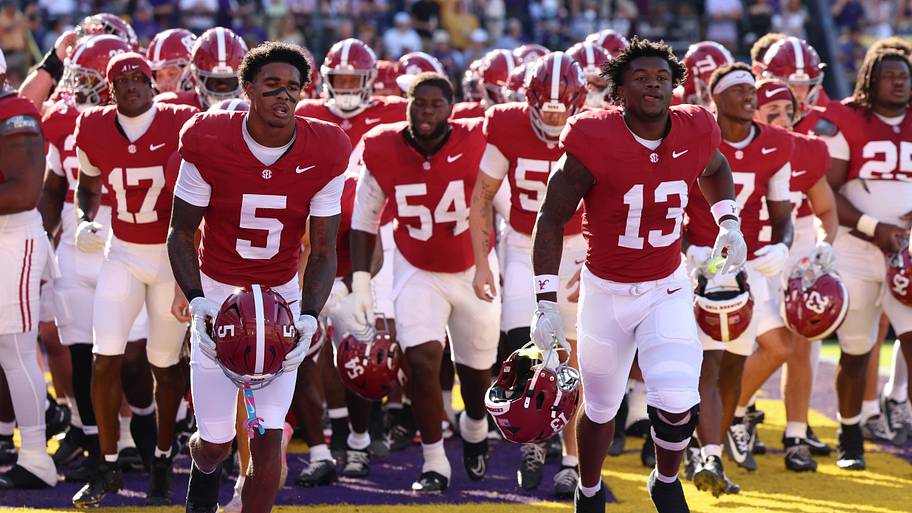
This creates a significant disconnect for teams like Texas and Tennessee, who find themselves in the shadow of the Crimson Tide despite having more compelling on-field results. Texas, also sitting at 8–2, holds objectively superior wins yet remains ranked at No. 5.
Tennessee, which defeated Alabama by 16 points in a game that was a decisive second-half mismatch, actually dropped one spot to No. 9 despite securing a 15-point road victory. The committee’s criteria appears to shift whenever it conflicts with the established standing of the SEC power.
| Team | Record | CFP Rank |
|---|---|---|
| Alabama | 8–2 | 3 |
| Texas | 8–2 | 5 |
| Tennessee | 9–2 | 9 |
| Indiana | 9–1 | 9 |
The situation has drawn public frustration, most notably from Indiana head coach Curt Cignetti. After previously voicing his displeasure with the perceived lack of respect for his team, Cignetti’s critiques are now bolstered by the clear inconsistency in how the committee treats Big Ten versus SEC résumés.
By filling the lower half of the Top 25 with SEC teams, the committee has effectively created a self-sustaining echo chamber. As noted by Sports Illustrated, these teams continue to provide each other with “quality wins” by virtue of their presence in the rankings, a cycle that excludes high-performing Big Ten programs like Wisconsin, Illinois, and Penn State.
Yurachek defended the committee’s reliance on these internal rankings, stating, “If you beat a team that’s ranked in our Top 25, that’s significant for us.” This logic, however, creates a circular dependency where the committee’s own choices dictate the value of the schedule, rather than the objective difficulty of the opponents.
While the SEC has moved to a nine-game conference schedule—a change the committee has explicitly cited as a factor in their deliberations—the current reality remains that the path to the playoff is being shaped by subjective preference rather than transparent metrics.
For Alabama, the road ahead is relatively clear. Following their recent game against Chattanooga, the Crimson Tide are set to face Auburn on Nov. 28. A victory there would effectively lock up a CFP bid, and potentially a top-four seed, regardless of any outcome in the SEC championship game.
It is a position of immense security, one that stands in sharp contrast to the volatility faced by other programs in the top ten. For now, the committee has made its stance clear: the metrics matter, but only when they don’t get in the way of the status quo.
Worth a look
- Steve Young Reveals Fear Was His ‘Deepest Transaction’ in BYU-Idaho Devotional
- UIC Hosts Chicago State for Chicago Crosstown Challenge Wednesday at Credit Union 1 Arena
- South Korean Welfare Committee Increases Budget to Provide Oral Health Screenings for Seniors on Medical Aid (world-today-news.com)
- Wolff Marks Mercedes 2026 F1 Double With Vodka Shot (archyde.com)

Steve Young Reveals Fear Was His ‘Deepest Transaction’ in BYU-Idaho Devotional
The deepest transaction in Young's life was fear, and Young had been living in it the whole time...

UIC Hosts Chicago State for Chicago Crosstown Challenge Wednesday at Credit Union 1 Arena
UIC opens the doors of Credit Union 1 Arena on Wednesday night for the second installment of the...

Privately Funded Waikīkī Fireworks Startle Oʻahu South Shore Residents
"I was really surprised," said Gwen McCleland, a hostess at Tiki's Bar. "I had no idea they were...

A January Review on Trip.com Turned a Routine Hotel Stay Into a Literary Event
A January review on Trip.com turned a routine hotel stay into a literary event, describing the Country Inn...