
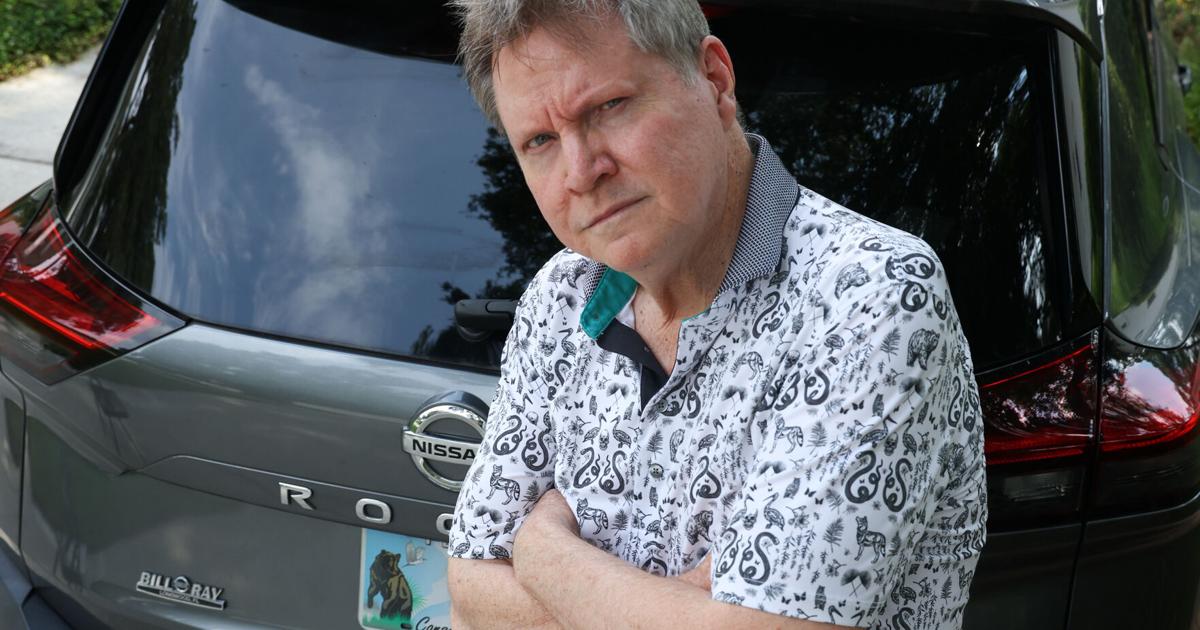
Longtime Apopka environmental activist Chuck O’Neal sued state wildlife officials on Monday over the secret surveillance of his driving records.
In a lawsuit filed in federal court in Tallahassee, O’Neal accused the Florida Fish and Wildlife Conservation Commission and four of its investigators of violating federal privacy laws by pulling his personal motor vehicle data 28 times. The founder of the nonprofit environmental group Speak Up Wekiva also claims the agency infringed on his First Amendment rights and violated state public records laws.
The core of the legal challenge targets the misuse of the Department of Highway Safety and Motor Vehicles’ Driver and Vehicle Information Database, known as DAVID. Federal law restricts access to the database under the Driver’s Privacy Protection Act, permitting queries only during legitimate criminal investigations.
“It should be an open and shut case on the driver’s information,” O’Neal told the Orlando Sentinel by phone on Tuesday.
Activists first uncovered the agency’s actions over the summer, prompting widespread public outrage. Environmentalists believe the FWC captured their license plate numbers and tracked their movements across the state using automated license plate reader networks like Flock cameras.
The FWC authorized a black bear hunt last year after a decade-long prohibition lasting from 2015 to 2025, and officials approved another hunt for next month. O’Neal has frequently challenged these decisions by speaking at agency meetings, filing lawsuits to halt bear hunts, and campaigning against a constitutional ballot measure designed to protect hunting and fishing rights.
A spokesperson for the FWC stated the agency had no comment on the lawsuit because it had not yet received the legal filing.
State officials initially defended their database searches by claiming they were conducting a criminal investigation into individuals who protested outside commissioners’ places of business. An agency official later conceded no criminal investigation existed, citing general concerns for public safety instead.
To justify the inquiry, the agency released redacted online media threats. Environmentalists countered that the FWC attempted to smear them with anonymous remarks, noting that an unredacted document later showed zero name matches between the commenters and the activists whose records were checked.
According to O’Neal’s lawsuit, the agency pulled personal data for at least 50 other environmentalists. DAVID profiles contain sensitive personal details, including social security numbers, medical histories, disability records, home addresses, and accident reports.
O’Neal also accused the agency of maintaining an institutional practice targeting critics. The lawsuit alleges the FWC has “a policy of utilizing the DAVID database to obtain information regarding individuals that publicly criticize the FWCC or its commissioner.”
Public records requests yielded little cooperation from the state. One search discovered 85,832 emails between board members and investigators, which the FWC acknowledged were unrelated to any criminal investigation. Another request for 556 emails stalled after the agency cited excessive staff time requirements.

O’Neal paid $151 for the requested correspondence, but four months passed without the agency turning over the files or responding to notices of intent to sue.
“They are not revealing any of it. They are not being compliant at all,” O’Neal said.
“This is how you bring about justice unfortunately. You have to sue to get records,” he said.
Keep reading
Boston Blue Recasts Blue Bloods Villain Amaury Nolasco as Arturo Muñoz for Dec. 11 Midseason Finale
CBS has recast the role of cartel leader Arturo Muñoz for the December 11 episode of Boston Blue,...

Study: 3D-Printed Arthroplasty Guides Achieve Millimeter Accuracy in Pediatric Jaw Surgery
Children with severe temporomandibular joint ankylosis achieved immediate jaw openings exceeding 30 millimeters after surgery guided by patient-specific,...

Portland City Worker Strike Enters Second Week as $4M Contract Gap Persists
Portland's City of Portland Professional Workers union entered its second week of striking Monday as the contract gap...

Skylar L. Burton, 22, of Colchester, Dies; Visitation Dec. 5
Skylar L. Burton, 22, of Colchester, died Saturday at Great River Hospice House in Burlington, Iowa; visitation is...