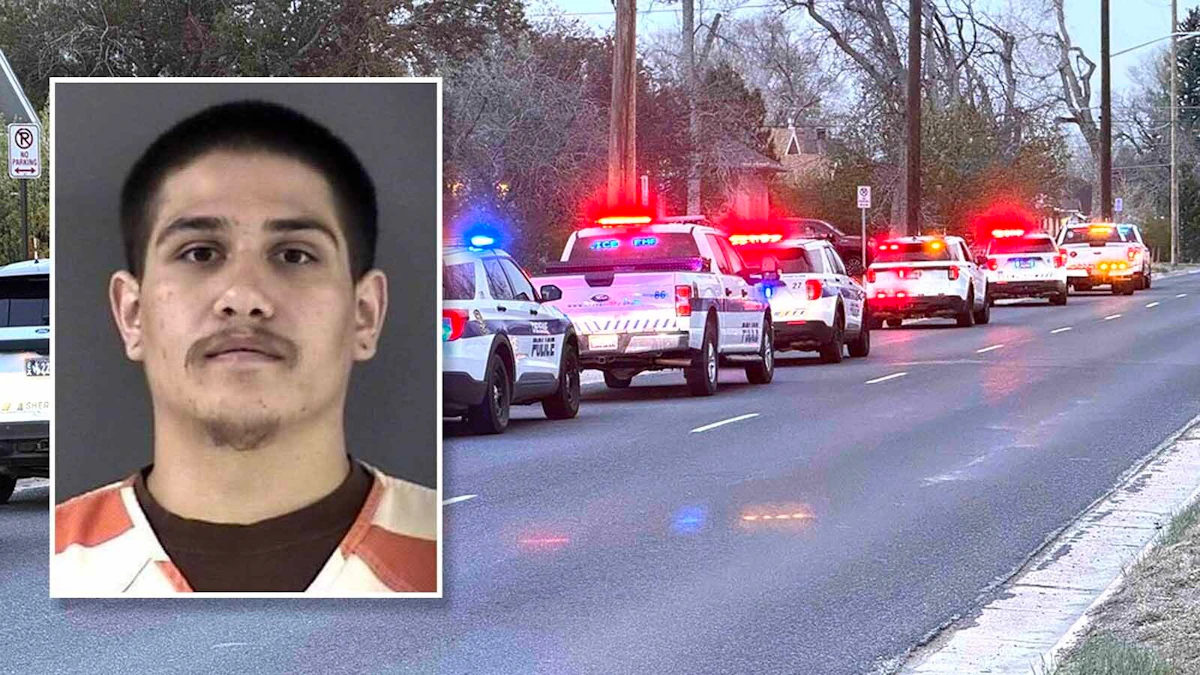
Adrian Maggos Trial Hinges on Self-Defense After Victim’s Plea for Son
In a Cheyenne courtroom on Wednesday, the defense for Adrian Maggos unexpectedly rested its case without calling a single witness, putting the entire burden of proof on the prosecution as a murder trial neared its closing arguments. The trial, stemming from a street shooting on April 30, took a stark turn when jurors watched video of the victim, Matthew Kerlee, 31, bleeding on the pavement and pleading for his 4-year-old son, cowboystatedaily.com reported.
The state’s case against Maggos, charged with attempted second-degree murder, rests on a sequence of events captured on neighborhood door cameras and the victim’s own words. The central question for the eight-man, four-woman jury is whether Maggos acted in self-defense or was the aggressor who escalated a confrontation into a life-altering act of violence. The stakes are immense: a conviction carries a potential prison sentence of 20 years to life.
A Desperate Plea on the Pavement
The most jarring moment of the trial came when prosecutors played a six-minute video of police and EMTs working on Matthew Kerlee in the early-morning hours. Kerlee was conscious on his back, bloody from a gunshot wound to the chest and a pistol-whipping. When asked who shot him, he answered, “Adrian.” Emergency workers tried to keep Kerlee awake. He was asked if he had any kids, and he told them about his 4-year-old son. “Please tell him I’m sorry for being such a f***-up,” Kerlee implored. “Please tell him.”
Dr. James Gates, the general surgeon who treated Kerlee, testified that the victim’s injuries were life-threatening. A 9-mm bullet entered Kerlee’s left chest at a downward angle, piercing his diaphragm, stomach, and colon before exiting his lower back. Gates stated that while the wound was severe, Kerlee was no longer actively bleeding when he arrived at the hospital.
The Defense’s Aggressive Cross-Examination
Defense attorneys Stacy Kirven and Cassie Craven worked to dismantle the prosecution’s narrative during their cross-examination of state witnesses. They focused on inconsistencies and alternative explanations, building a case that their client acted out of fear. Lead detective James Eddy testified that police found two different brands of 9-mm cartridge casings at the scene, suggesting more than one gun might have been involved.
“You never swabbed the gun for DNA?” Kirven asked Eddy, referring to a 9-mm pistol that Maggos’s brother had handed over to police. The detective confirmed they had not, because the lab had already determined it was not the weapon used to shoot Kerlee.
The defense painted a picture of Kerlee as the aggressor. Kirven pointed to text messages from Parres Mondragon to Maggos on April 19, where she threatened Kerlee would “beat your ass.” She also noted that on the night of the shooting, Kerlee had tested positive for methamphetamine, fentanyl, THC, and alcohol, suggesting his state of mind was erratic and threatening. While Kerlee admitted throwing the first punch—a miss—he was acting to defend Mondragon, whom he treated like a sister, Kirven argued.

The Prosecution’s Case of Intent
Prosecutor Steven McManamen countered by presenting Maggos as the primary aggressor throughout the entire encounter. He described how Maggos was yelling at and shoving Mondragon in his driveway, leading Kerlee to intervene. Witnesses who fled but later spoke to police testified that Maggos was wearing a dark hoodie with a gun in a “kangaroo” pocket, a detail Eddy confirmed had a hole through which a bullet could be fired without revealing the weapon.
The defense rested its case without calling a single witness, putting the entire burden of proof on the prosecution as a murder trial neared its closing arguments.
The timeline of the shooting, as captured on door cameras, was crucial to the prosecution’s case. The audio showed a gunshot, followed by Maggos yelling and using an ethnic slur against Kerlee. About 20 seconds later, a second gunshot was heard, after which Kerlee yelled, “F***! I’ve been shot!” and fell. McManamen argued that after Kerlee was already down and no longer a threat, Maggos pistol-whipped him, proving malicious intent.
Judge Denies Acquittal Motion
After both sides rested, Kirven filed a motion for acquittal, arguing the state had failed to prove Maggos “maliciously and purposefully” intended to kill Kerlee. She argued the evidence only supported a lesser charge. Judge Nathaniel Hibben denied the motion, stating that either side could present a winning argument to the jury. He noted that a possible lesser charge, such as attempted manslaughter, could still be considered by the panel.
The trial is set to resume Thursday morning with jury instructions and closing arguments. The jury is expected to begin deliberating late in the morning or after lunch. The decision they reach will hinge on which version of events they find more credible: the prosecution’s portrait of a premeditated attack or the defense’s claim of a desperate act of self-defense in a volatile situation.
Matthew Kerlee survived, but he carries physical and emotional scars, while Adrian Maggos faces the prospect of spending the rest of his life behind bars. The verdict will be a judgment on the events of April 30 and on the nature of self-defense and the limits of acceptable violence in American society.
Related reading

Utah State UMAC Wins Multiple CASE Excellence Awards
Utah State University Marketing and Communications (UMAC) received multiple awards in the 2026 Circle of Excellence - Region...
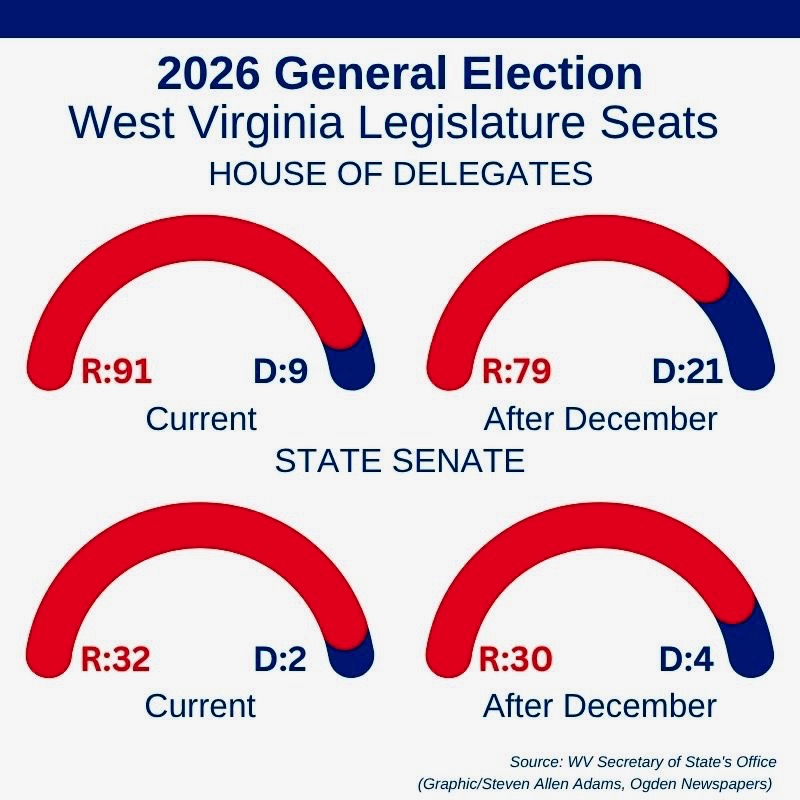
W.Va. Democrats Gain Seats in State Legislature Election
Democratic candidates in West Virginia delivered a powerful rebuke to the state's Republican supermajority Tuesday night, dramatically increasing...
Infant Dies in Wisconsin Measles Outbreak, State’s First Since 1990
A Wisconsin Infant's Death Marks a 36-Year Measles Milestone An infant has died from measles in Wisconsin, ABC7...

Steve Martin and Martin Short to Perform in Virginia Beach on April 10
Steve Martin, Martin Short bring comedy to Virginia Beach after COVID cancellation Steve Martin and Martin Short are...