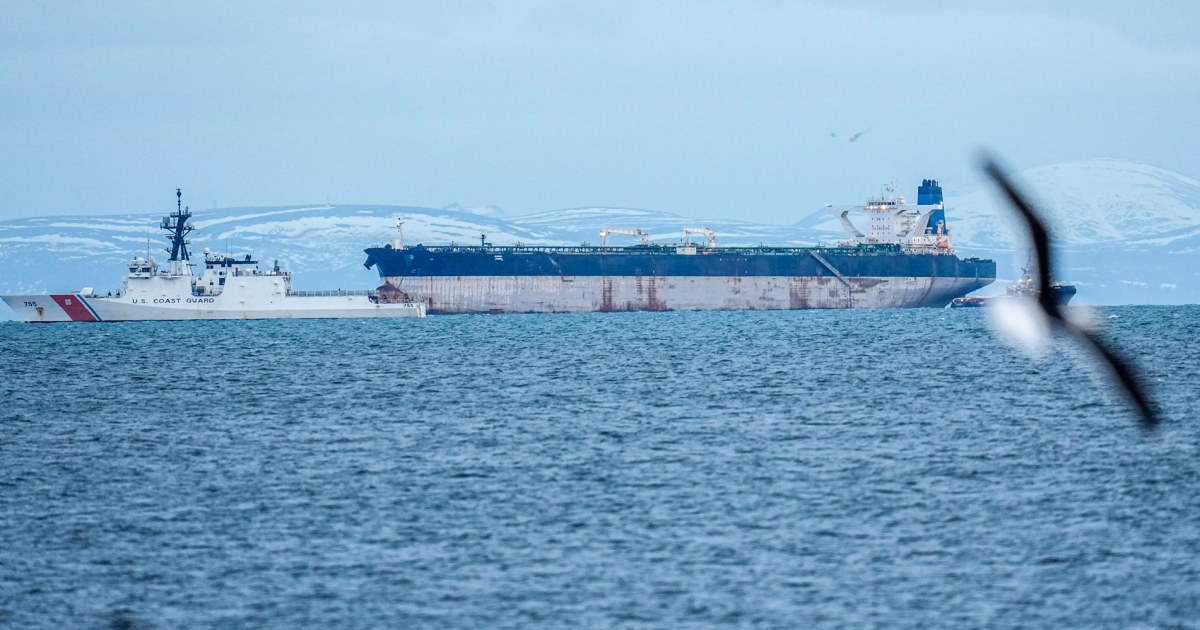
$9.1 Million Sale of Seized Russian Tanker Sparks Legal Firestorm
The U.S. government’s sale of a seized Russian oil tanker for scrap metal at a price lawyers call “economically irrational” has ignited a fierce legal battle, with the ship’s owner accusing the Justice Department of conducting the deal “behind closed doors” to thwart any effort to recover the vessel. The tanker, originally named Bella 1 but later renamed Era, was sold for just $9.1 million, a figure the owner’s attorneys insist is a fraction of its true value and a deliberate move to circumvent the courts, NBC News reported.
A “Economically Irrational” Deal
The legal confrontation centers on the U.S. sale of the vessel to a maritime scrap dealer. Lawyers for Burevestmarin LLC, the Russian owner, filed court papers arguing the deal was fundamentally flawed. They claim the ship, which has “substantially greater value” as an “operating commercial vessel,” was sold for well below its scrap metal value of $21 million. “As discussed and previously briefed, the Government posits a world in which it can — while withholding notice to known interested parties and while aware of challenges to the Court’s jurisdiction — engage in precisely this kind of economically irrational sale for its own convenience,” the owner’s lawyers wrote, describing the transaction as part of the government’s “self-interested and unreasonable decisions.”
The Justice Department was ordered to respond to these allegations by 9 a.m. on Friday. Representatives for the DOJ and the scrap dealer named in the documents could not be immediately reached for comment. The government has previously defended its actions, citing the immense financial burden of maintaining seized vessels. DOJ attorney Rajbir Datta told the court in July that “the government has spent $60 million in maintaining this and doing all kinds of mechanical fixes to the asset itself.”
Ship Seized After North Atlantic Chase
The vessel’s history is as complex as the legal fight over its fate. The ship was seized by the U.S. military in the North Atlantic in early January 2026 after a weekslong chase on the high seas. According to Charter97.org, the tanker was first detained in waters south of Iceland on January 7. The U.S. authorities claimed the vessel, which they believed was carrying illegal Iranian oil, was caught fleeing an American blockade of Venezuela. Attorneys for Burevestmarin dispute this claim.
Throughout its ordeal, the ship’s identity shifted. Originally named Bella 1 and flying the Panamanian flag, it was later registered in Russia and renamed Marinera during its attempt to evade capture. Charter97.org identified the owner as a businessman from Crimea, Ilya Bugay, and noted that Russian authorities accused the U.S. of an “illegal use of force,” forcing the Russian Foreign Ministry to personally ask U.S. President Donald Trump to release the crew. The vessel was ultimately purchased by the Dubai-based recycling company Global Marketing Systems (GMS) and sent to the Indian port of Alang for dismantling, the outlet reported.
A Double Standard on Sanctions?
A root issue in the court battle is whether American authorities are correctly applying sanctions, a question complicated by what the ship’s owner alleges is a legal double standard. The core dispute is whether transporting Iranian oil automatically benefits the sanctioned Islamic Revolutionary Guards Force (IRGC). This question is further muddied by the Trump administration’s simultaneous decision to permit the international sale of Iranian oil to help relieve domestic fuel prices.
Burevestmarin’s lawyers are fighting the Justice Department’s efforts to seize other ships they own, highlighting what they see as inconsistent government actions. In the case of another vessel, the Galileo (formerly named Veronica), the attorneys noted that on March 20, 2026, the same day the government alleged the Galileo was a source of influence over the IRGC, it also “expressly licensed the international sale of Iranian oil.” This, they argue, creates a legal contradiction. For a third vessel, the Skipper, the owner’s attorneys claim the seizure was improper because it occurred on the “high seas,” outside U.S. or foreign territorial waters.
“The Government posits a world in which it can — while withholding notice to known interested parties and while aware of challenges to the Court’s jurisdiction — engage in precisely this kind of economically irrational sale for its own convenience.”
— Lawyers for Burevestmarin LLC, the tanker’s owner
The outcome of this case will be closely watched, not only for its implications for this specific vessel but for how the U.S. government handles the legal and financial risks of enforcing international sanctions. The clash pits the government’s stated need to avoid massive maintenance costs against the owner’s claim of a fundamental right to due process and fair market value for a seized asset. With the Justice Department now forced to answer the allegations in court, the true nature of the $9.1 million sale—and the motives behind it—is set to be put under intense scrutiny.
Keep reading

Coordinated bomb threats disrupt at least 25 flights across Europe
European Airspace Paralyzed by Coordinated Bomb Threats Coordinated bomb threats against passenger airliners disrupted European skies on Thursday,...

Shuhaily has yet to receive official transfer letter from Home Ministry
To date, he has not been found guilty of any offence. He can therefore continue to carry out...
Ethopia’s Minister: Ethiopia Overtakes Morocco to Become Africa’s Fifth-Largest Economy
Morocco has been surpassed by Ethiopia, which now ranks as Africa’s fifth-largest economy, following a substantial GDP rebasing...

Trump Accepts Midterm Results as Democrats Secure Blue Wave Victory
Trump Accepts Defiant Midterm Results as Democrats Seize Congress President Donald Trump accepted the results of the 2026...