In the high-stakes environment of the Fargodome, Clearbrook-Gonvick head coach Casey Kroulik found himself staring at the scoreboard in disbelief during the first quarter. With only 89 seconds elapsed in the Section 6 9-Player Championship, his Bears had already put 16 points on the board. As reported by the Bemidji Pioneer, Kroulik turned to his assistant in that moment and remarked, “I looked at our other coach and I go, ‘We have 16, and it hasn’t been two minutes yet.'”
That lightning-fast start set the trajectory for a dominant 60-21 victory over Blackduck on Wednesday, November 5, 2026. For Clearbrook-Gonvick, the win was historic, marking the program’s first section title since 1995. The result was a definitive statement by the fourth-seeded Bears, who relied on a potent combination of speed, discipline, and a collective “family” mindset to dismantle a second-seeded Blackduck team that struggled to contain them throughout the first half.
Speed as a Strategic Advantage on the Turf
The game plan for Clearbrook-Gonvick centered on exploiting a perceived speed advantage. While acknowledging that the Drakes held a size edge, coach Kroulik identified the climate-controlled environment of the Fargodome as an equalizer. By forcing the game into a sideline-to-sideline track meet, the Bears successfully fatigued their opponents. The strategy paid immediate dividends: Ryan Gerlofs opened the game with a 75-yard kick return for a touchdown, and Avery Ostenaa followed on the very first offensive play with a 27-yard scoring run.
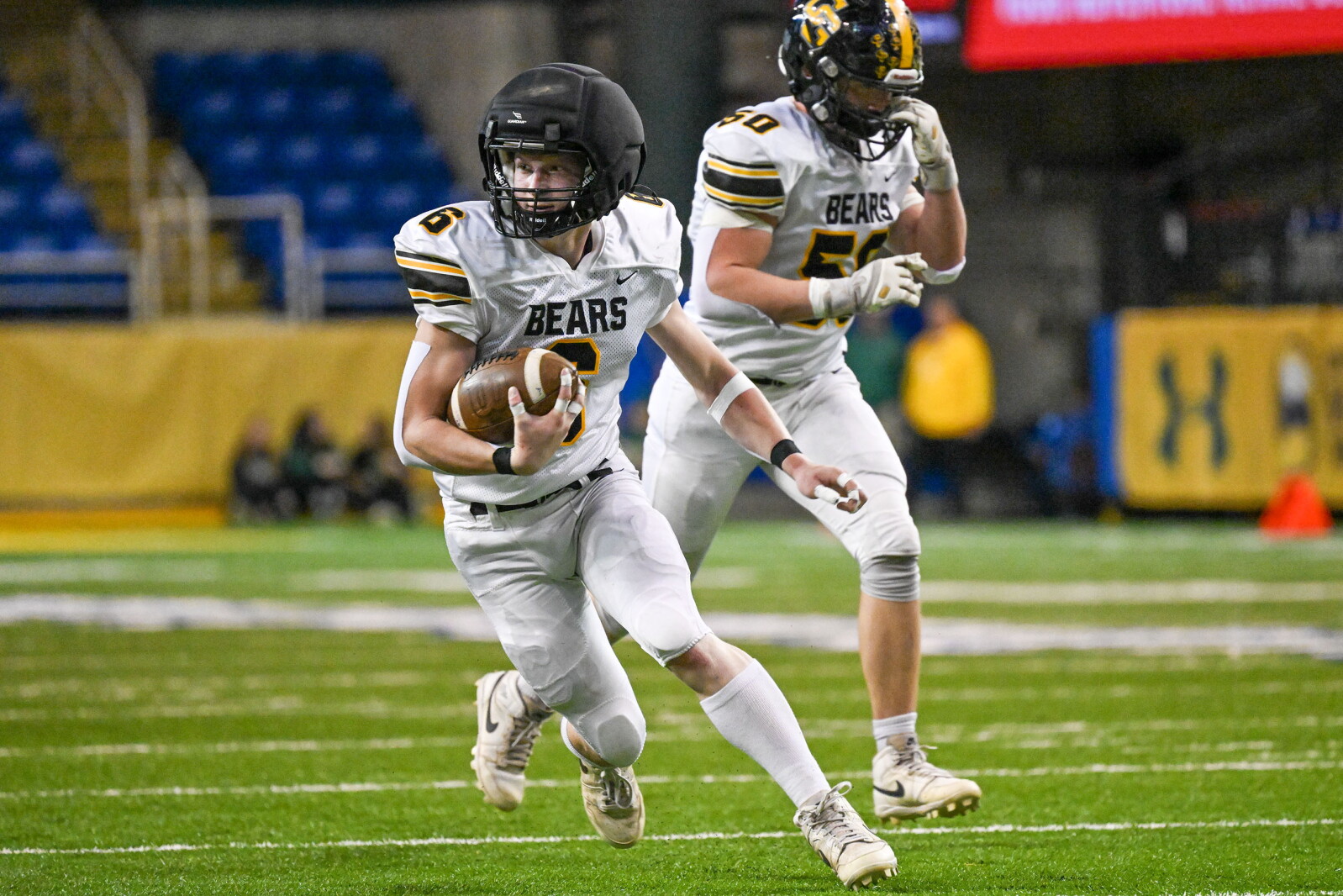
Ostenaa, celebrating his 17th birthday, proved to be the focal point of the offense. He finished the evening with five touchdowns, four of which occurred before halftime. Despite his individual performance, Ostenaa was quick to redirect credit toward the offensive line. “I’ve said it before, it’s more my linemen than it is me,” Ostenaa told the Bemidji Pioneer. “They block with their whole life, and they put every piece of strength they have in them to move those guys out of the way to get me able to go down the field.”
The Road to the Fargodome
This championship run was not without its hurdles. The Bears entered the tournament as the fourth seed, a position that required them to travel to face top-seeded Fosston in the section semifinals. The context of that matchup was significant, as Fosston had defeated Clearbrook-Gonvick 26-16 just weeks earlier. Kroulik credits that specific loss as the catalyst for the team’s late-season surge.
“That first Fosston loss is kind of where the three weeks of our best practice of the year started, and everything started to improve after that,” Kroulik said. “The kids were excited about it because they wanted that opportunity to go back and show that they’re better than that.”
The Bears did exactly that, securing a 38-26 win over the Greyhounds to earn their spot in the title game. The victory against Blackduck, which resulted in a 39-point margin, stands as the team’s most decisive win of the 2026 season. It is a stark contrast to the “brick walls” the program faced in previous years, specifically when competing against perennial powers like Fertile or Stephen while stationed in Section 8.
Community and the “Family” Culture
Beyond the statistics, the atmosphere in the Fargodome reflected a deep community investment. The stands were filled with supporters, including several fathers who were members of the 1995 championship squad. This connection to the past, combined with a unique internal culture—which Kroulik jokingly attributes to “Friday night pizza parties” and shared sprints—has fostered a tight-knit group that has remained injury-free during their postseason push.
As the team looks toward the 9-Player State Tournament, they carry the momentum of a group that has learned to maximize its specific assets. While they remain an undersized team compared to some of their upcoming competition, their ability to execute at high speed on turf has proven effective. For a community that waited over three decades for this moment, the focus now shifts to whether this “family” can sustain their rhythm on the state stage.

PBC Runners of the Year Named: Nasrudin Mohamed and Gabrielle Jourdain
Augusta University Dominates Peach Belt Conference Cross Country Honors As the Peach Belt Conference (PBC) prepares for its...

Black Panther In Concert Live at Des Moines Civic Center
Marvel Studios’ Black Panther in Concert is coming to the Des Moines Civic Center, offering a live orchestral...

Bellarmine vs. Indiana Men’s Basketball Play-by-Play Highlights
Bellarmine Men's Basketball Faces Indiana in November 5th Matchup According to the official box score provided by Bellarmine...
Donna Lasinski Named President of Chicago Cultural Stadium Project
Chicago’s Cultural Stadium Initiative Appoints New Leadership The long-discussed vision to reshape Downtown Chicago into a "Cultural Stadium"—a...