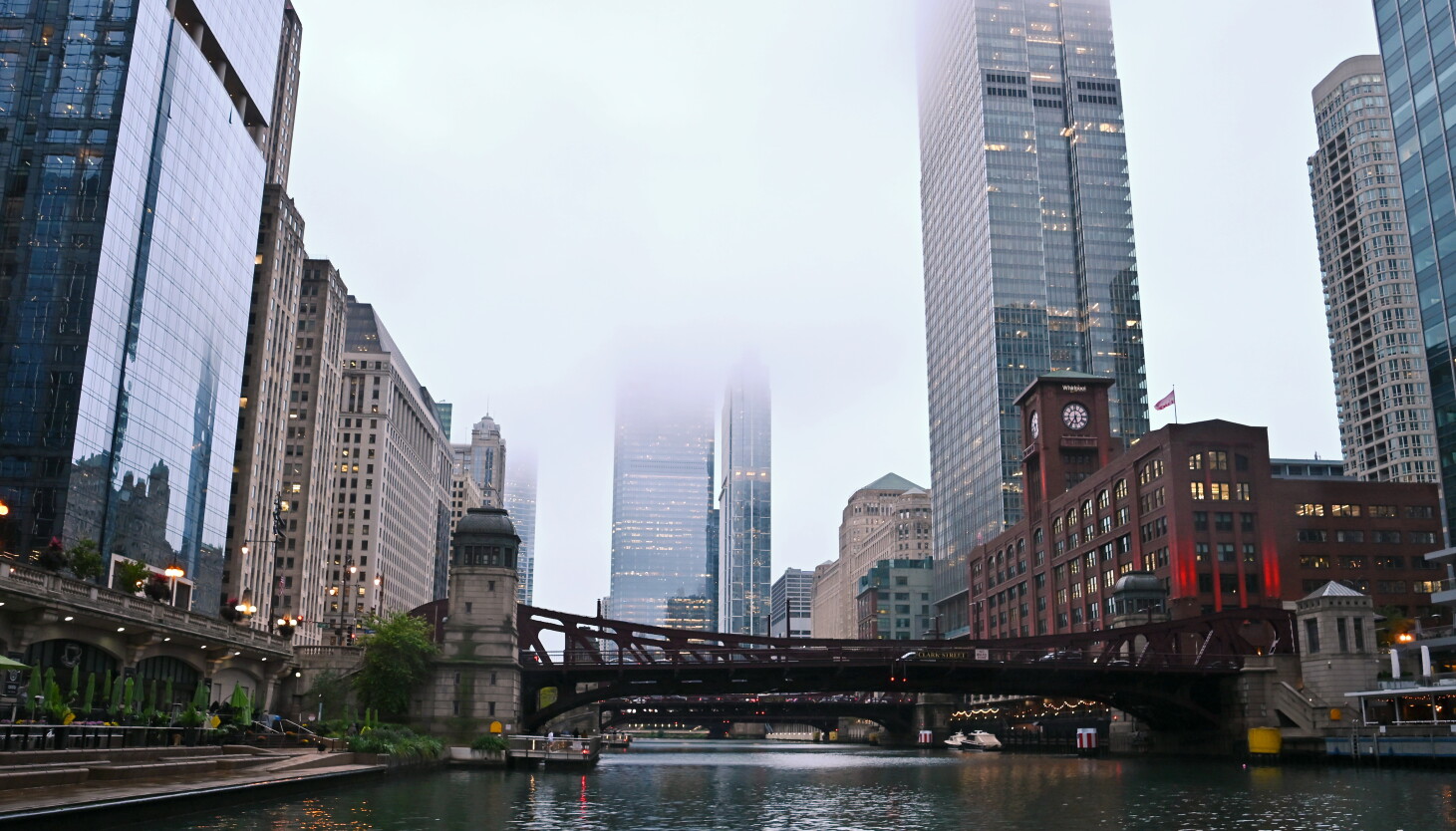
Chicago’s Cultural Stadium Initiative Appoints New Leadership
The long-discussed vision to reshape Downtown Chicago into a “Cultural Stadium“—a dense, arts-focused hub designed to weave performance and creativity into the daily flow of the Loop—is shifting from an abstract concept to an active development. As reported by WBEZ Chicago, the initiative announced this week that former Michigan state representative Donna Lasinski will serve as its inaugural president, a move backed by $2 million in combined private, corporate, and government funding.
The project, initially conceived by Lou Raizin, the president and CEO of Broadway In Chicago, seeks to fundamentally alter how residents and tourists interact with the city’s core. By repurposing underused infrastructure and service corridors, the organization aims to turn the Loop into a year-round destination for arts programming, rather than a traditional business district that empties out after five o’clock.
From Concept to Concrete Reality
Lasinski, who has served as the project’s senior adviser since April, brings a background in public service and education to the role. According to her professional history, she founded the education company ThinkStretch LLC in 2008 and served as a trustee on the Ann Arbor Public Schools board between 2014 and 2016. Her appointment marks a transition point for the project, which has spent years in the planning stages but is now beginning to manifest in physical space.
Former state representative Donna Lasinski (D-Mich) is taking the helm of a Loop revival project with some ambitious proposals — like concerts on Lower Wacker Drive and architecturally significant public toilets. https://t.co/U2RzQ8E495
The financial foundation for this expansion is a $2 million gift from Abby O’Neil, a founding board member of the Harris Theater, and Carroll Joynes, a co-founder of the University of Chicago’s Cultural Policy Center. This capital is intended to scale the organization’s reach, building upon pilot programs that have already begun to take root in the city center.
Transforming Alleys and Public Spaces
One of the most visible aspects of the initiative is the “Midblock” project, which aims to convert overlooked alleys and service corridors into public gathering spaces. A tangible example is currently visible at 181 N. Clark St., where a mural featuring a giant koi pond by local artist Ryan Tova Katz now adorns the roof of a parking garage.
Another project, “Poetry Way,” is currently in development in the alley situated between the Joffrey Tower and the Chicago Theatre. This collaboration between the Poetry Foundation and the Joffrey Ballet launched during the Chicago Loop Alliance Arts Fest in October, with a permanent debut scheduled for March 2027.
The scope of potential development remains broad. According to the Cultural Stadium website, other concepts being explored include:
- The Link: A proposal to convert a portion of Lower Wacker Drive into a dedicated music venue.
- The Vault: A plan for a large canopy and pedestrian walkway covering LaSalle Street between Jackson Boulevard and Adams Street.
- The Pause: An effort to upgrade public restroom facilities in the downtown area.
The Human and Economic Stakes
The push for a Cultural Stadium arrives as Downtown Chicago continues to grapple with the shifting demands of post-pandemic urban life. By focusing on “The Community”—a proposed program to transform vacant retail and office spaces into affordable studios and rent-free residencies for working artists—the initiative is attempting to solve two problems at once: the high vacancy rates in commercial real estate and the rising cost of living for the city’s creative class.

While the project promises to revitalize the downtown core, it faces the inherent challenge of integrating high-density arts programming into an established urban grid. The city has already begun dipping its toes into similar infrastructure projects, such as the recent installation of its first public restroom in West Town, which provides a small-scale test case for the more ambitious “Pause” project envisioned for the Loop.
For families, the value proposition has already been tested. A “Cultural Umbrella” pilot program funded by a $50,000 grant from the Department of Cultural Affairs and Special Events allowed more than 400 children and their parents to attend free events at institutions like the Adler Planetarium, the Chicago Children’s Theatre, and the Joffrey Ballet. Whether the project can sustain this momentum as it moves from pilot grants to large-scale infrastructure remains the central question for its new leadership.
Keep reading
Mississippi Senate Race Too Close to Call as Vote Counting Continues
In Mississippi, the wait for a final tally in the U.S. Senate race is testing the patience of...

Spring Lake Park Mayoral Race Ends in Tie Between Nelson and Roth
A Game of Chance Decides the Future of Spring Lake Park The mayoral race in Spring Lake Park,...

Marquette to face Detroit Mercy on ESPN+ this Friday
Marquette Prepares for Detroit Mercy at Al McGuire Center In a column for Anonymous Eagle, the site reported...

Oaktree Place Provides Specialized Memory Care in Clinton Township
Oaktree Place and the Evolution of Clinton Township Senior Care Located at 38571 Union Lake Road in Clinton...