Each fall, a cattle drive moves through the streets of Sterling Ranch, a master-planned community southwest of Denver, bringing hundreds of residents to the sidewalks to watch a herd pass rows of newly built homes, Colorado Public Radio reported.
The event doubles as a rotational grazing strategy that reduces wildfire fuel on the 3,500-acre property, said Gary Debas, Sterling Ranch’s manager.
“They are our fire mitigators,” Debas told CPR. “These cows will eat about 30 pounds of dry matter each day. So not only do they eat that fuel load for fires, but they also aerate the soil and their droppings are fertilizer.”
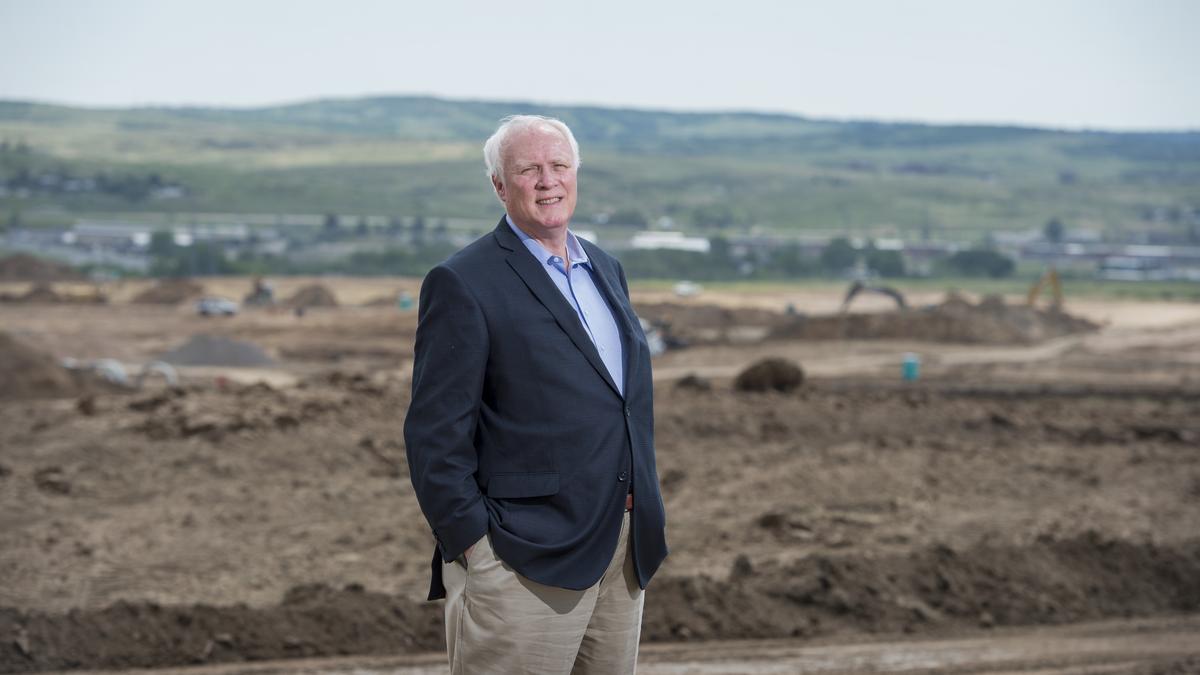
Co-founder and owner Harold Smethills said the vision was never to build just another generic suburb. “You came to Colorado, to the West,” he said. “You can live in a box over a train station anywhere in the world. Live on Sterling Ranch, you’re in the West.”
Smethills’ family has owned the land for more than two decades, operating it as a working cattle ranch. When complete, the development in unincorporated Douglas County is expected to include about 12,000 homes along with pools, parks and libraries.
“This is a working cattle ranch. We birthed almost 200 baby cows over here last spring, and they grew up here,”
Residents have adopted a celebrity cow named Milkshake. “She’s our celebrity cow, we call her,” Debas said. “We adopted her three years ago, and she’s had two babies now. She’s just the star of the show in Sterling Ranch.”

Jimmy Rakowski, who has lived in the neighborhood for four years, said he and his friends wore inflatable cow costumes for the second year in a row. “Well, every year we try to go with the theme. This is two years in a row. It seemed to be a crowd hit,” he said.
Sterling Ranch spans 3,539 acres in unincorporated Douglas County, southwest of Denver, and was first designated a census‑defined place for the 2020 count, when 1,789 residents were recorded. Construction began in early 2016 with eight builders, and the master plan envisions nine villages over roughly 20 years, with nearly 40 percent of the land preserved as open space, including two wildlife corridors and 30 miles of trails linking to Chatfield and Roxborough state parks.
Lynn Moffitt, a resident since 2021, said the mix of heritage and modern amenities defines the community. “It embodies this community,” she said. “Our general manager is a rancher. Our owner is a rancher. It just shows that you can have heritage while having all this really new, nice, modern stuff.”
Worth a look

NetChoice Sues Indiana Over HEA 1408 Social Media Age Verification Law
NetChoice filed a lawsuit yesterday challenging the social media provisions of HEA 1408, an Indiana law that will...

Salt Lake City Tops U.S. Metros for Home Price Cuts at 31.8% in October
Salt Lake City led the nation in October with 31.8% of active listings seeing a price cut, topping...

Wife Pays Thousands for Family Visits From Argentina; Expert Urges Joint Financial Policy
In a column for MarketWatch, Quentin Fottrell argues that a husband’s frustration over his wife funding relatives’ trips...

Louisiana Democrat Jamie Davis Narrowly Loses Senate Race, Falling About 25,000 Votes Short
Louisiana Democrat Jamie Davis fell 25,000 votes short of flipping a Senate seat that would have given the...