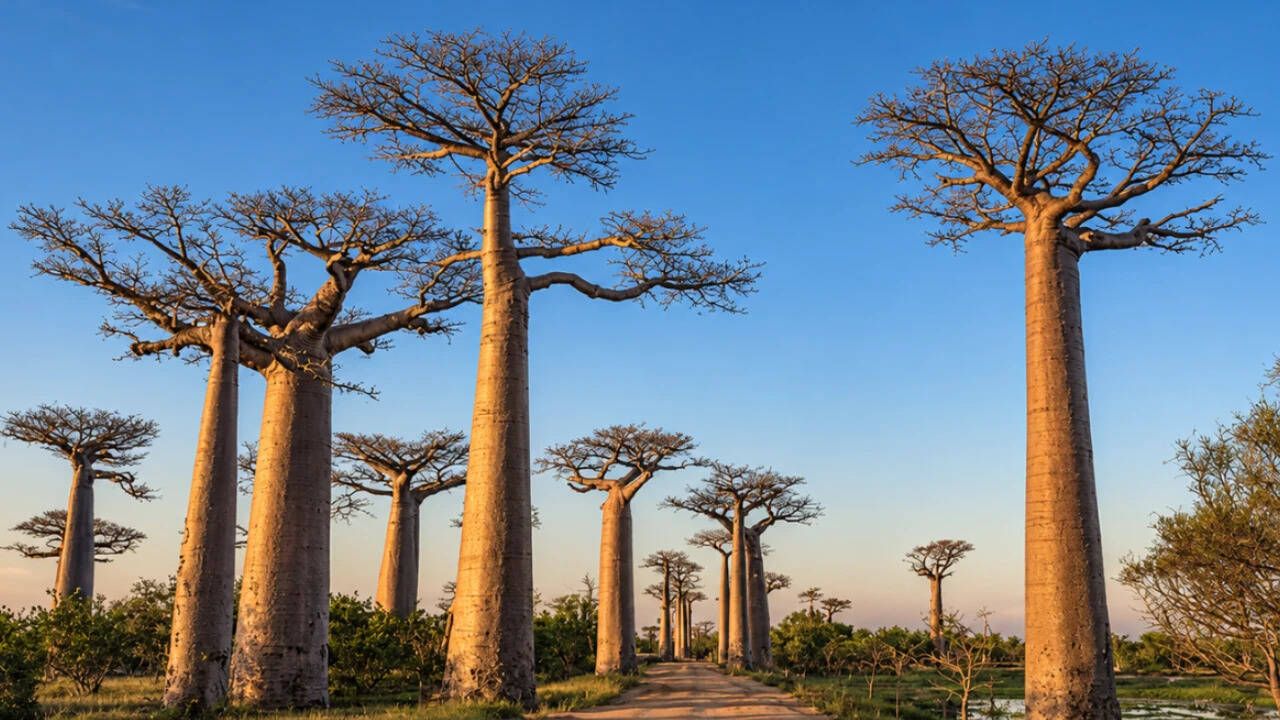
“A baobab isn’t just part of an ecosystem, it is an ecosystem in itself,” said Wambui Ippolito, a Kenyan landscape designer and horticulturist, describing the five ancient trees now fighting for survival at a reserve in northeastern South Africa after a months-long ordeal that began with an illegal export attempt.
The trees, estimated at 200 to 300 years old and weighing between 19 and 29 tonnes each, arrived at the Timbavati Private Nature Reserve this week after spending more than three months lying on their sides in a Durban warehouse parking lot, The Guardian reported.
South African authorities intercepted the shipment on July 17 after the exporter failed to produce valid permits required under the National Forests Act, which lists every baobab as a specially protected species.
The seizure has exposed a pipeline stretching from the Waterberg region of Limpopo province to the Black Sea coast of Georgia, where billionaire Bidzina Ivanishvili — the country’s former prime minister and founder of the ruling Georgian Dream party — operates the Shekvetili Dendrological Park.
Reporting by Daily Maverick traced the intended destination to Ivanishvili’s private arboretum, Fortune noted, adding that requests to his lawyer and Georgia’s embassy in Pretoria went unanswered.
“It is very unusual to see baobabs being used as ornamental plants … mainly because they are exceptionally difficult to dig out of the ground and transport, and then to successfully re-establish.”
David Newton, programme office director for east and southern Africa at Traffic, the wildlife trade monitoring NGO, told The Guardian.
The case echoes a 2022 episode in Kenya, when eight baobabs were uprooted on the Kilifi coast for the same park. Kenyan President William Ruto initially halted that export after environmentalists condemned it as biopiracy, but the Kenya Forest Service later authorized the shipment. All eight trees died by August 2024, with the park blaming delays attributed to Ivanishvili’s political opponents, Fortune reported.
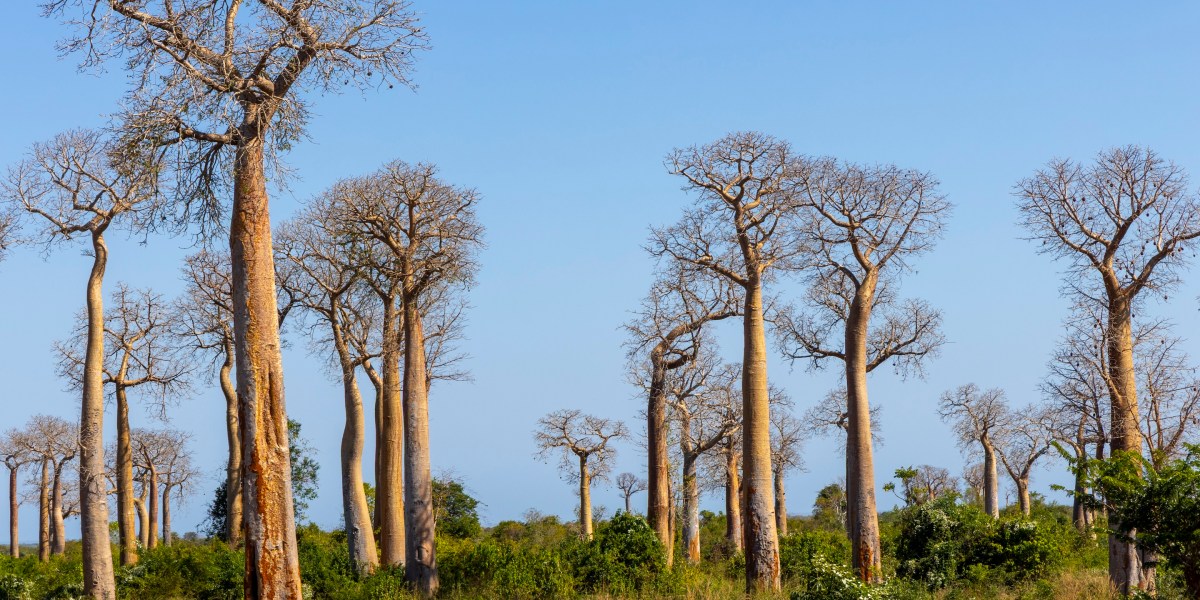
“We also did not want to see a repeat of what happened in Kenya,” Dr. Sarah Venter, founder of the Baobab Foundation and leader of the South African rescue effort, told Daily Maverick. Venter treated the trees at the freight company’s premises before transport, removing affected wood and applying lime sulphur to prevent rot, according to the South African Government News Agency.
The rescue mission faced logistical and financial hurdles. Moving five abnormal loads — each tree up to 4.5 metres in diameter and 12.5 metres tall — over 900 kilometres required specialized trucks and donor funding secured by the Baobab Foundation after departmental costs fell outside market rates, the Department of Forestry, Fisheries and the Environment (DFFE) said in a statement.
The convoy departed the Africa Global Logistics warehouse in Mobeni on November 11 after a five-day vigil documented by Daily Maverick, during which journalists camped beside the trees while drivers scrambled for paperwork amid a global Microsoft email outage and weekend travel bans on abnormal loads.
By the time they left Durban, all five trees had sprouted leaves and flower buds — a surprising sign of vitality after months without soil. “I think we got here just in time and I’m quite positive about their future,” Venter said, speaking to Daily Maverick as the trees were replanted this week in pre-dug holes, stabilized with cables and ringed by electric fences to deter elephants.
Baobabs, known as the “tree of life,” function as biodiversity anchors. Bats, bush babies, grey-headed parrots, and southern ground hornbills shelter in their cavities; elephants, monkeys, and warthogs feed on their fruit. Their shallow root systems allow for relatively quick regrowth if replanted correctly, Venter noted. “Baobabs easily reach 1,000 years old, so they’ve got a few hundred years ahead of them if they survive,” she told The Guardian.

Beyond ecology, the trees carry profound cultural weight. “It has always been a sacred tree in Africa. It doesn’t matter where you go: Senegal, Mali, Ghana – wherever you go, if there is a community around a baobab tree, that tree is sacred,” Ippolito said. “Somebody’s great-great-great-great-great-grandparents sat under that tree, and it is part of human history in that area.”
The DFFE has opened a criminal case against the owner of Divine Landscapes, the company allegedly responsible for the illegal harvest and transport. Horticulturalist and exporter Corné Maré appeared in Durban Magistrate’s Court in September; the case is postponed to January 15, 2027, according to The Citizen and Geo News. Conviction under Section 15(1) of the National Forests Act carries a fine, up to three years’ imprisonment, or both.
The seizure comes as South Africa pushes for stronger global enforcement. On October 23, parties to the UN Convention against Transnational Organized Crime voted 83 to 12, with 27 abstentions, to begin negotiating a new protocol on environmental crimes including flora and fauna trafficking — a resolution co-sponsored by South Africa, Fortune reported.
Edwin Pierce, warden of the Timbavati Nature Reserve, called the rescue “something quite special.” The ordeal will be featured on the investigative program Carte Blanche, and Dr. Venter said South Africans have sent a clear message: foreign nationals will not be allowed to remove protected fauna and flora without consequence, The Citizen reported.
The pipeline leads to the Shekvetili Dendrological Park, operated by Bidzina Ivanishvili, who made his estimated $7.6 billion fortune in Russia during the 1990s after the Soviet collapse by acquiring privatized banking and metals assets.
Born in 1956 in the Imereti village of Chorvila, he founded the Georgian Dream party in 2012, served briefly as prime minister, and has been regarded as the country’s de facto leader since. Since December 2023 he has held the specially created post of honorary chairman, granting him the right to nominate the prime ministerial candidate.

The next court date is set for January 15, 2027.

White House Seizes Press Phones in Shenzhen, Fueling Speculation of North Korea Detour
White House officials seized the phones of reporters aboard Air Force One in Shenzhen on Thursday evening, an...

Snap Releases Easy Lens CLI for AI Lens Creation
Snapchat moved Lens creation into the AI coding tools developers already use, rolling out Easy Lens CLI on...

Missile Debris Damages Saudi PIF Tower, Coalition Says
A missile strike damaged the headquarters of Saudi Arabia's $900 billion sovereign wealth fund on Thursday, marking the...

Trump, Xi, Putin Hold First Trilateral Summit; No Breakthrough on Arms Control, Ukraine, Iran
The first trilateral summit between the leaders of the world's three largest nuclear powers produced no breakthrough on...