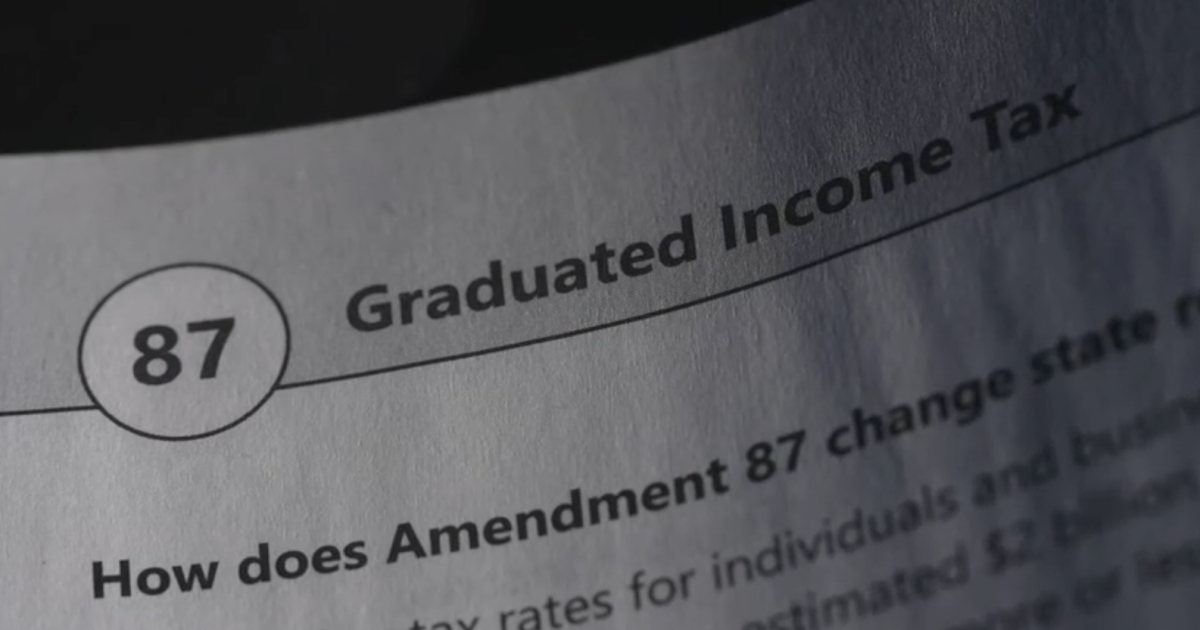
The Colorado Supreme Court has cleared the way for voters to decide a contentious tax overhaul this November, rejecting a late-stage appeal that sought to strip Amendment 87 from the ballot and nullify votes already cast.
In a swift, one-page ruling issued on Friday, the state’s highest court affirmed a previous Denver District Court decision upholding the ballot measure. The order dictates that votes cast on Initiative 2025-2026 #195, also known as Amendment 87, will be counted, with a full written opinion to follow in due course.
Michael Andre Hancock, an Arapahoe County resident, initiated the legal fight in September, naming Secretary of State Jena Griswold alongside Amendment 87 backers Chris deGruy Kennedy from the Bell Policy Center and Kiyana Newell representing New Era Colorado as targets.
Weighing Administrative Oversight Against Voter Access
The core of the legal dispute hinged on whether technical missteps during petition circulation should invalidate the signatures of more than 130,000 Colorado voters. Legal counsel representing the plaintiff contended that letting the initiative move forward maintains an environment where petition gatherers face minimal responsibility for breaking regulations.
UPDATE: The Colorado Supreme Court has rejected the lawsuit that attempted to throw out voter signatures that put Amendment 87 on the ballot.“The District Court's October 21, 2026 Order rejecting Appellant's Verified C.R.S. § 1-40-118(1) Protest and Complaint is AFFIRMED.… https://t.co/h6OexhjWtW”
Jason Dunn, an attorney for the plaintiff, called Friday’s ruling disappointing, noting it leaves a system where there will be little accountability for those who collect signatures and fail to follow the rules. Yet the Colorado Secretary of State’s Office pushed back during court proceedings, maintaining that those oversights were not grounds for rejecting valid voter signatures.
Proponents of the measure framed the court’s decision as a victory for civic participation. Chris deGruy Kennedy, co-chair of Protect Colorado’s Future and President of the Bell Policy Center, acknowledged there were administrative oversights during the initial registration of a small number of paid circulators. However, he emphasized that the campaign fully disclosed every paid circulator after petitions were turned in.
“Twice now, Colorado courts have said that more than 130,000 voters who signed this petition deserve to have their signatures count, and that Coloradans deserve to decide this question for themselves,” deGruy Kennedy said in a statement.
Secretary of State Jena Griswold welcomed the quick affirmation from the bench, noting that the ruling ensures every voter in this contest will have their voice heard.
How Amendment 87 Reshapes the State Tax Code
If approved by voters, Amendment 87 fundamentally alters Colorado’s fiscal landscape by replacing the current flat 4.4% state income tax with a graduated income tax bracket. The measure is designed to lower state income taxes for individuals and small businesses making less than $500,000 annually, while raising rates for high-earning residents and corporations.

According to data from the Colorado Department of Revenue, 3% of individual taxpayers and 5% of businesses fall into the higher-earning threshold that would see increased tax obligations. State analysts estimate that earners making below $550,000 would experience an annual tax cut ranging from $175 to $325. Conversely, taxpayers above that threshold would see tax increases ranging from $1,175 to $55,925.
All newly generated revenue from the graduated structure would bypass the state’s current spending cap under the Taxpayer Bill of Rights (TABOR). Instead, these funds would flow directly into the Colorado Futures Account, earmarked for public education, health care, and early child care programs.
The Clash Over Economic Impact and Competing Ballot Measures
Opponents of the measure argue that the structural shift will harm the state’s economic competitiveness. Advance Colorado noted that Colorado ranked as the third most expensive state to live in during 2025, warning that higher levies on top earners and businesses could drive affluent residents elsewhere. Advance Colorado stated that while the proposal is framed as a “tax the rich” initiative, it is ultimately designed to significantly expand overall government revenue and spending without voter approval after its passage.
Adding to the complexity at the ballot box, Amendment 87 runs parallel to Proposition 136, a separate measure that could cap individual and corporate taxes at 4.4%. Because both measures appear on the same ballot, state officials acknowledge a potential policy collision. According to the 2026 Blue Book, if voters approve both initiatives, the resulting legal and legislative conflicts will have to be sorted out by the state legislature or the courts, as the exact outcome is unclear.
With the Supreme Court clearing the final legal hurdle before election day, the power now shifts to the electorate to determine the future of the state’s income tax structure.

Villa Vie Odyssey Passengers Stranded in Cambodia After Cruise Suspends Operations
California Sisters Stranded in Cambodia After Residential Cruise Halts Operations Two California sisters and over 200 other passengers...

Week 8 Fantasy Football WR/CB Matchups to Target and Avoid
As the NFL season reaches Week 8, defensive coordinators have accumulated seven weeks of film on every receiver...

Wyoming Women’s History House Celebrates 25 Years With Courtyard Rededication
Twenty-Five Years of the Wyoming Women's History House in Laramie Twenty-five years ago, the Wyoming Women’s History House...

In-Person Absentee Voting Surges in Wisconsin as Mail-In Ballots Decline
As the final weekend before Election Day approaches in Wisconsin, voters are dramatically altering how they cast their...