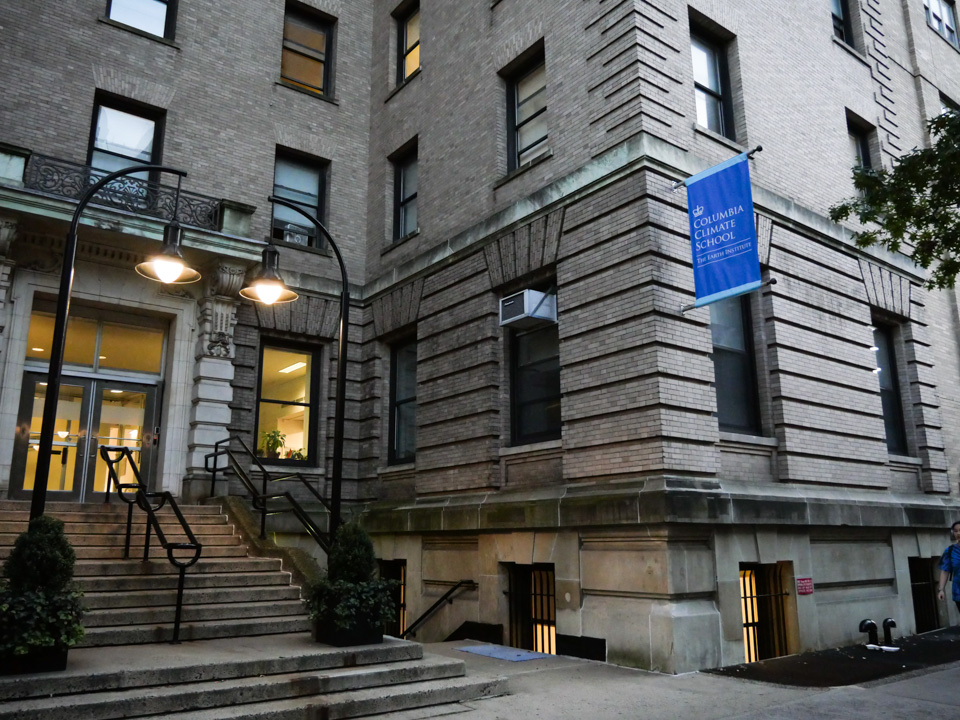
Columbia University’s Senate approved two advanced certificates for the Climate School on Nov. 13, expanding graduate options as federal visa restrictions and loan limits squeeze international enrollment, Columbia Daily Spectator reported.
The energy solutions certificate will run as a 24-credit specialization inside the existing 52-credit, in-person Master of Science in climate, starting with a projected class of 20 students in fall 2027. The disaster management certificate will operate as a stand-alone, 79-percent-online program with two mandatory one-week intensives in New York City, targeting 15 to 40 mid- and senior-level professionals over four years.
Columbia identified expansion of non-degree offerings and new degree programs in emerging fields as a strategy to address reliance on international students in an Oct. 1 compliance report tied to a $221 million settlement with the Trump administration. In 2025, international students made up 39 percent of Columbia’s enrollment, the highest share in the Ivy League.
“Downward pressures that we’re really still adjusting to,” said Jason Smerdon, professor of climate and vice dean of academic planning at the Climate School, describing the visa and loan constraints.
The Journalism School has already paused its Master of Arts program.
This year the Senate also approved a dual-degree program between the Journalism and Climate schools, a Master of Science in biogenic buildings at the Graduate School of Architecture, Planning and Preservation, and an online part-time Master of Science Journalism program.
The energy solutions certificate spans four semesters plus a required summer practical experience. Courses combine climate science and energy engineering with finance, law and commerce, some offered jointly with the School of Engineering and Applied Science.
“Thinking about energy in all of its facets, how we generate it, how we distribute it, how we use it, is a really critical part of addressing the climate challenge,” Smerdon told Columbia Daily Spectator. He said the goal is “professionals in every space who have expertise in sustainability and climate.”
The disaster management certificate draws on existing master’s-level courses while adding executive-focused content, disaster finance and client-based applied learning. Each student will complete a “Resilience Initiative,” analyzing project-level climate risks for an organization and proposing an “actionable response.”
“It’s hitting everybody. It’s hitting companies. It’s hitting balance sheets. It’s hitting bottom lines in very, very measurable ways in lives, livelihoods, and economic factors,” said Jeff Schlegelmilch, director of the National Center for Disaster Preparedness at the Climate School.
He told Columbia Daily Spectator the program aims to give graduates “the skills to understand how these different areas of science intersect to inform how we approach disasters.”
Alix Schroder, Climate ’20, director of academic initiatives at the Climate School, said climate expertise had become increasingly important in both commercial and policy sectors.
“We really hope that we’re providing that education for students to really go out and have an impact on the world. And that’s our guiding principle,” she told Columbia Daily Spectator.
Related reading
Man City Slump After Seven Wins as Defensive Issues Persist Under Maresca
Forbes reported that City's early pace — seven wins from seven — has given way to a slump...

Fargo-Moorhead Diversion Nears Completion, but FEMA Flood Map Certification May Lag Until 2030
The Fargo-Moorhead Area Diversion project is on track for substantial completion this fall, positioning the $3.2 billion system...

Review: Bismuth’s “Love Bless America” Documents Abrams, Udoh Collaboration
In a review for Newcity, critic Michael Weinstein argues that Pierre Bismuth's exhibition "Love Bless America" at the...

Madison Stages 15 Holiday Productions From ‘Charlie Brown’ to ‘Nutcracker’
Madison stages will host at least fifteen ticketed holiday productions between Saturday and Dec. 20, including five at...