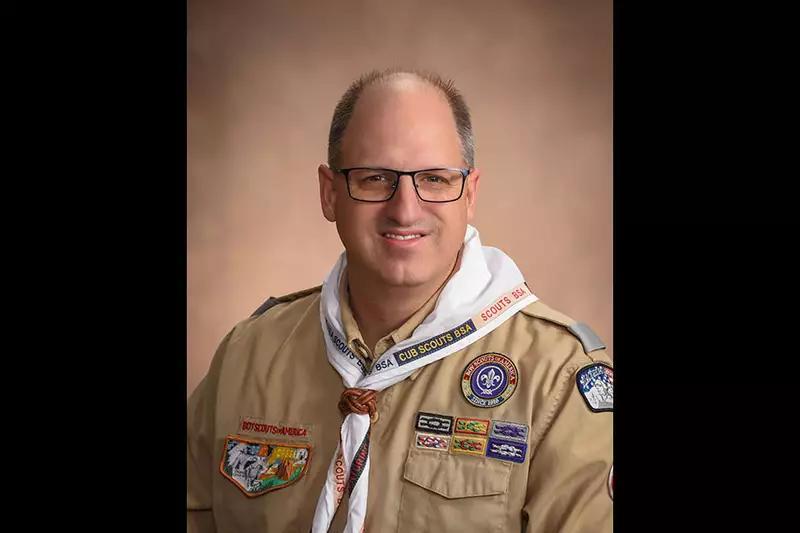
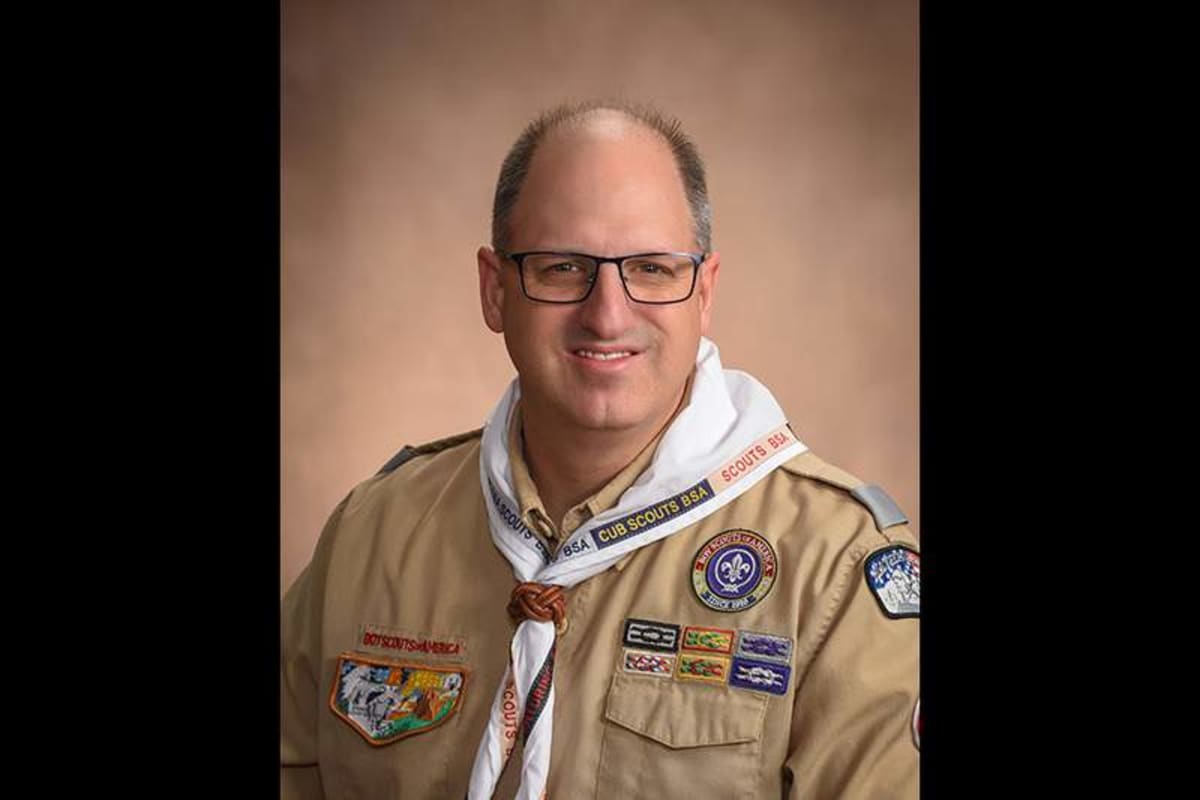
Corey Davis takes over as Scout executive of the Grand Teton Council on December 1, stepping into the role Clarke Farrer held for nearly 20 years before retiring this September.
The transition caps a rare two-decade tenure in a profession where three-to-five-year stints are the norm. Farrer, who arrived in Idaho Falls in 2007 after directing camps across the West and leading councils in Texas and Alaska, told EastIdahoNews.com he stayed because he fell in love with the community. “I would have been 20 years in the spring,” Farrer said. “That’s an unusually long tenure for a Scout executive.”
Davis brings 25 years of professional Scouting experience across four states. A Salt Lake City native, Eagle Scout and Vigil Honor member of the Order of the Arrow, he graduated from Utah State University with a degree in fish and wildlife management intending to become a fishery biologist.
“My initial intention was not to make a career as I wanted to be a fishery biologist,” Davis told EastIdahoNews.com. “As I got into it … seeing the lives of youths change through our programs … it became obviously a lifelong career for me.”
His résumé reads like a road map of the Mountain West and Midwest: district executive for the Sioux Council in Sioux Falls, program and field director there, assistant Scout executive for the Jayhawk Area Council in Topeka, Scout executive of the Black Hills Area Council in Rapid City, then director of support services and director of field service for the larger Bay-Lakes Council in Appleton, Wisconsin.
The selection board cited that breadth. “I’ve seen a lot of different things and a lot of different ideas,” Davis said. “That was one thing that the selection board was looking for in a candidate.”
Farrer’s path mirrors Davis’s in striking ways. After earning Eagle in New Jersey, Farrer worked summer camps through college, telling his wife he would “just do it for a couple of years, and then I’d get a real job. And it turns out I was good at the things required to be successful as a career Scouter,” he told EastIdahoNews.com.
Having met Davis previously, Farrer endorsed the choice: “He’s excited to be here. I’m excited to have him come.”
The handoff occurs against a backdrop that nearly erased the council. The Church of Jesus Christ of Latter-day Saints, which had chartered the vast majority of units in eastern Idaho, left Scouting America in 2019 shortly after the organization began admitting girls.
Grand Teton Council District Director Elias Lopez told EastIdahoNews.com in 2025 that membership plummeted 95 percent, from 23,000 youths to roughly 1,500. “I just felt like I had an obligation to do that,” Farrer said of his decision to stay through the collapse. Nearly a decade later, he said finances and membership have both returned to growth, giving him confidence to retire.
Davis’s first priorities target the gaps left by that exodus. He wants to launch units in towns that currently have none, shorten drive times for families commuting to existing troops, and expand the Exploring program — career-oriented posts such as Explorer Post 117 at the Bonneville County Sheriff’s Office. “That’s an untapped resource, and that’s another way that I plan on growing Scouting programs through eastern Idaho,” Davis said.
He also plans a parent-education push to broaden awareness of what the program now offers.
Grand Teton Council was formed in 1993 by the merger of the Tendoy Area Council, based in Pocatello, and the Teton Peaks Council, based in Idaho Falls. The council serves eastern Idaho, western Wyoming, and southwestern Montana, operating six camping properties that include three Scout camps, a whitewater high-adventure base, and two Cub Scout day camps.
Treasure Mountain Scout Camp in Alta, Wyoming, opened for its first season in 1936, while Little Lemhi Scout Camp near Irwin, Idaho, was founded in 1959 and Island Park Scout Camp was established in 1974.
Scouting remains a family enterprise for Farrer. His grandson recently earned Eagle, marking a fifth generation of Eagle Scouts in the family. His wife, daughter and sons stay active in various volunteer roles.
“Scouting’s in my blood. It’s in my family. It’s what we do. It’s what we love, and we do it because it blesses the lives of kids. I’m committed to continue doing that,” Farrer said.
Keep reading

Georgia Center Drew Bobo Questionable vs. South Carolina; LaNorris Sellers Off Injury Report
Georgia released its first SEC availability report Wednesday with only two names on it, and the one that...

New Free Tools Let Rhode Islanders Compare Nursing Home and Assisted Living Inspection Records, Staffing, and Ownership
The tools consolidate public records that have long existed but were nearly impossible for a family to use....

AGD Webinar: Elite Dental Photography with Todd C. Snyder, Dec. 3
The Academy of General Dentistry will host a live webinar on elite dental photography led by Todd C....

Ohio State USG President Chris Cade Named 2026 Emerging Leader at Who’s Who in Black Columbus 20th Anniversary
Ohio State undergraduate student government president Chris Cade was honored as a 2026 Emerging Leader at the Who’s...