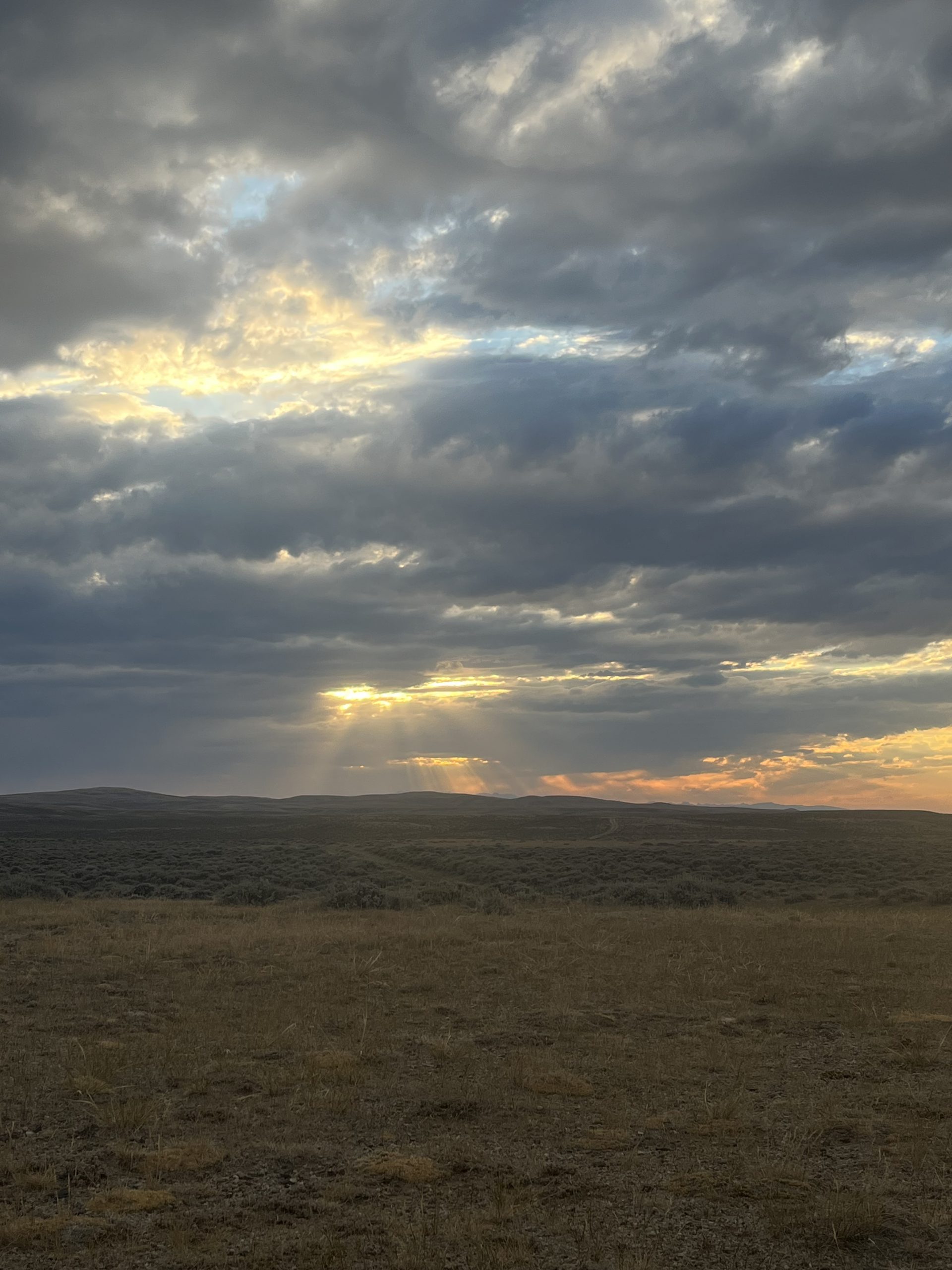
In a personal account detailed by The Trek, a hiker describes the intense physical and psychological challenges of crossing Wyoming’s Great Divide Basin on the Continental Divide Trail (CDT).
The journey through the Basin involves a 120-mile stretch characterized by sagebrush, a lack of trees, and minimal water sources. The author notes that the terrain is almost entirely flat, which shifts the primary dangers from elevation to heat exposure and dehydration.
To survive the stretch, the hikers relied heavily on pre-planned water caches. They managed the extreme heat by timing their movement for the early morning and late evening, utilizing a midday siesta to avoid the sun.
The author recalls using a cheap umbrella from Walmart as a makeshift shade tool, a necessity in the intense heat that mirrored conditions previously experienced in the New Mexico desert. During these long stretches, the pair balanced the harsh environment with small comforts, such as listening to “the worst fan fiction audiobooks” during sunrises.
Despite the flat terrain, unpredictable weather patterns presented significant risks. The author describes three distinct storm encounters in the Basin, including one where they had to abandon a high campsite to seek lower ground as dark clouds descended.
The trek through the Basin concluded in South Pass City, a former Gold Rush hub, before moving toward Lander. Biological hazards changed as the hikers entered "grizzly country," requiring them to secure bear spray and an AdoTech at an outfitter.
The landscape changed drastically upon entering the Wind River Range. While the previous sections in Colorado and New Mexico were described as arid and rocky, the Wind River Range provided a “lush” environment filled with wildflowers, lakes, and trees.
The author recounts a decision to deviate from the standard route to avoid the difficult descent from Texas Pass. By choosing an alternate route toward Temple Pass, the hiker crossed an eroded and poorly marked section of trail before eventually splitting from their companion, JC, for a ten-mile stretch.
“I am so glad that I took this alternate back to the CDT. It was one of my favorite days on trail.”
After exiting the Wind River Range, the hikers moved through Pinedale and eventually entered Yellowstone National Park. The author describes the park’s geothermal features and geyser basins as unparalleled, noting that while the park is heavily trafficked, certain backcountry spots offered total solitude among “boiling, rainbow-colored pools.”
The momentum of the trek was interrupted on the third day in Yellowstone due to a family emergency involving JC. This event introduced new complexities, including concerns regarding JC’s visa status and the potential need for an immediate return to the UK.
To balance the emergency with their desire to see Glacier National Park before the snow made it impassable, the hikers made a strategic decision to exit the trail. They opted to rent a car in Yellowstone and drive to Butte, Montana, to continue their journey by road.
The transition from long-distance hiking to a road trip included a stop at Swig for “dirty soda” in Idaho, marking the final leg of their Wyoming traverse as they entered Montana, the last state on the CDT.
Related reading
Arkansas State Police Investigate Five Fatalities in Arkansas
Five people died in Arkansas highway accidents Five people lost their lives in separate traffic incidents across Arkansas...
David Jones Enters Receivership, Threatening 6,000 Jobs
David Jones enters receivership David Jones, one of Australia’s oldest and most prominent department store chains, entered receivership...
APPA and TVA Host MAX 2026 Cybersecurity and Mutual Aid Exercise
The American Public Power Association (APPA) and the Tennessee Valley Authority (TVA) recently conducted a large-scale tabletop exercise...

WSJ Contributor Argues Small Businesses Cost Communities Character
In a recent Wall Street Journal column, a contributor argues that the disappearance of small, neighborhood businesses costs...