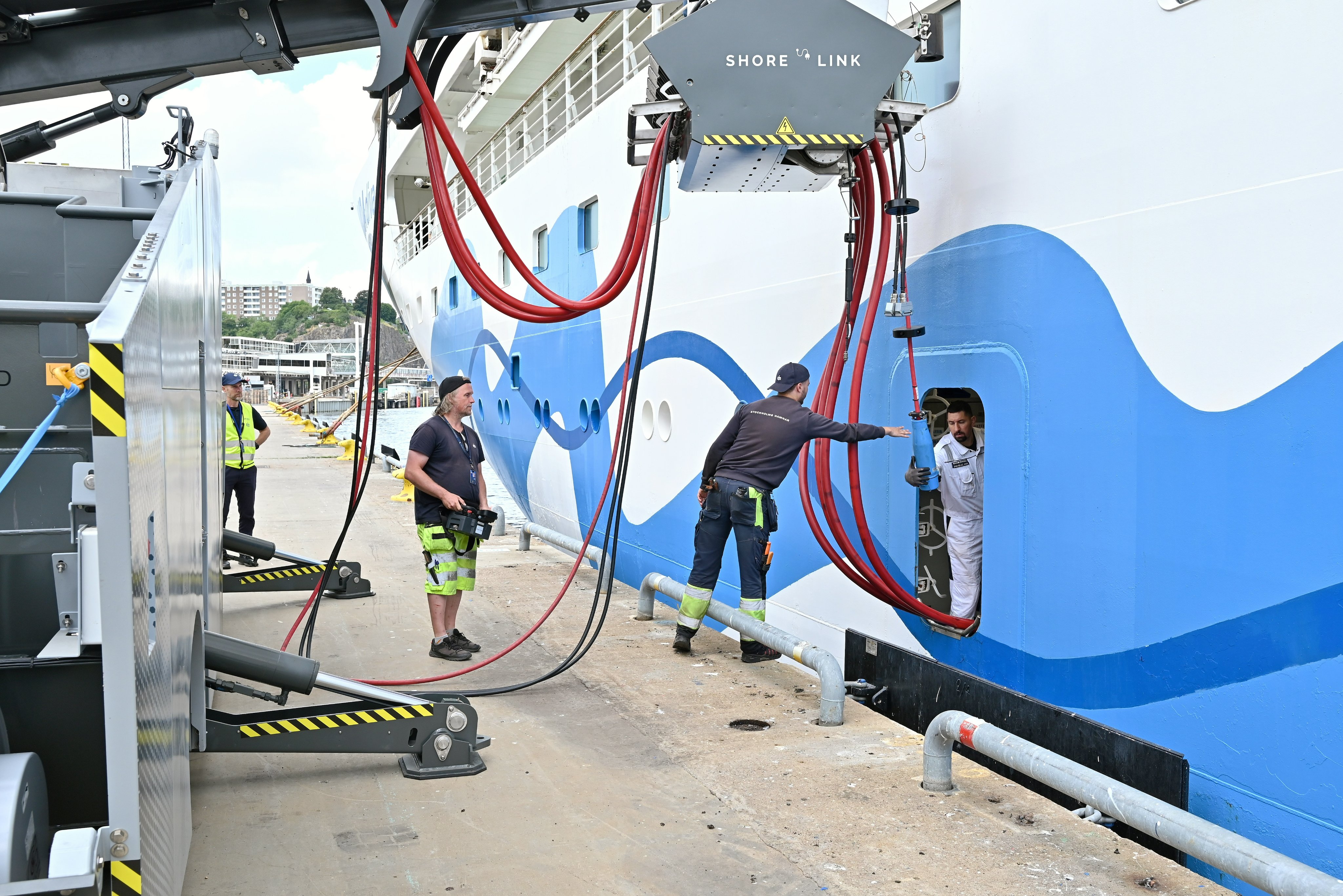
Cruise lines are accelerating shore power adoption to meet European mandates requiring major ports to offer the technology by 2030, The Maritime Executive reported.
The industry trade group Cruise Lines International Association projects 80 percent of its member fleet will be equipped for shore power by 2039, up from 193 ships today. Carnival Corporation already leads with roughly 74 percent of its fleet capable of connecting.
“Today, cruise and container terminals at the port both offer the technology, which has helped prevent an estimated 55,000 tonnes of greenhouse gas emissions (CO2) since 2009—equivalent to taking more than 12,850 gasoline-powered cars off the road for a year,” said Carla McGregor, senior construction project specialist at the Vancouver Fraser Port Authority.
Vancouver, the third port globally to install shore power in 2009, is expanding from three connection stations to five. The upgrade aims to boost connection rates by one-third and enable about 90 additional low-emission calls annually. Work is expected to finish ahead of the next cruise season.

“Our Canada Place Shore Power Expansion Project aims to boost connection rates across the terminal’s east and west berths by one-third and see more than 75 percent of all cruise ship calls to the Port of Vancouver able to plug in and access B.C.’s hydroelectric grid,” McGregor said.
Mid-sized vessels draw 7 to 12 megawatts while docked; larger ships require up to 16 megawatts. One megawatt from the grid can power 600 to 1,000 homes continuously, depending on house size and climate.
PortMiami spent an estimated $125 million to equip five terminals, allowing three simultaneous connections since 2024. A port spokesperson said there are no current plans to expand because power restrictions with the local utility remain unresolved.

Halifax connected 46 of 184 cruise calls to shore power in 2025, roughly 25 percent. The Halifax Port Authority is adding a second system with support from green shipping and decarbonization initiatives, spokesperson Lori MacLean said.
Seattle recorded 330 ship calls in 2026 with a 66 percent hookup rate, a record. The port targets 100 percent shore power use for its 16 homeported vessels by 2028.
“As we celebrate another record-breaking season, we’re equally proud of our progress towards a more sustainable maritime future through expanded shore power use and investments in cleaner maritime operations. Together with our cruise line partners, we’re demonstrating that economic growth and environmental stewardship can go hand in hand,” said Sam Cho, Seattle Port commissioner.
CLIA states shoreside electricity deployment is a multi-million dollar investment essential to public policies on air quality and noise, and calls for national and local authorities to provide financial support.
Keep reading

Legislators Urge MCI-Concord Rezoning Vote at May Town Meeting
State legislators are pressing Concord to hold a rezoning vote at the May Town Meeting to guide redevelopment...

Barry Houser Discusses Marching Illini History and Macy’s Parade
Barry Houser credits an unexpected turn of events for helping shape his journey to Illinois, journeys.illinois.edu reported. Houser...

Maine Fermentation Shop Adapts Korean Kimjang Tradition to Build Community Resilience and Food Sovereignty
On November 8, twenty people gathered at Island Creek Oysters in Portland, Maine, for the sixth annual kimjang...

Milwaukee South Side Residents Fear Safety Over Streetlight Outages, Possible Gunfire
Residents near South 10th Street and West Rogers Street on Milwaukee's South Side say repeated streetlight outages have...