
A $22.2 Million Bet on the Future: Columbus State Breaks Ground on Pezold Center
Calling it a “transformative investment in our community,” Columbus State University President Dr. Stuart Rayfield joined a host of civic and academic leaders on November 4 to turn the first ceremonial dirt on the Jack and JoRhee Pezold Center for Emergent Technology. As news.columbusstate.edu reported, the $22.2 million facility is scheduled to open in fall 2028 on the university’s Main Campus, positioned parallel to Interstate 185 and next to the Elizabeth Bradley Turner Center.
More Than a Building, a Hub for the Future
This is not just another new building on campus. It’s the first state-funded academic building constructed by Columbus State in over two decades, and its mission is clear: to become the epicenter of the region’s next technological wave. The Pezold Center will be the new home for the university’s Robotics Engineering program, its beloved Coca-Cola Space Science Center, and a forthcoming Institute for Emergent Technology. The vision, as Rayfield explained, is to create a hub for artificial intelligence, robotics, cybersecurity, and innovations that haven’t even been named yet.
The project shows strong cooperation between the public and private sectors. The funding itself tells a story of shared commitment: $12.2 million comes from state funds, $4 million from federal sources, and $2 million from an educational special-purpose local option sales tax (SPLOST) provided by the Muscogee County School District. But it was a significant private gift that made the center’s ambitious vision a reality. A $4 million contribution from Jack and JoRhee Pezold, prominent Columbus entrepreneurs and philanthropists, was the critical catalyst.

“Jack and JoRhee’s gift to the Pezold Center for Emergent Technology represents more than a financial contribution. It represents a belief in the power of education, the promise of innovation and the importance of creating opportunities for future generations.”
That belief is so profound that the University System of Georgia’s Board of Regents named the center in their honor. Their generosity didn’t stop with construction; the Pezolds also donated an additional $2 million to permanently endow a distinguished institute chair, named in honor of former Muscogee County School District Superintendent Dr. Jim Buntin and retired Synovus executive Nancy Buntin.
From Kindergarten to Career: A STEM Pipeline
The true significance of the Pezold Center lies in its role as a linchpin in a comprehensive education and economic development ecosystem. It’s designed to bridge the gap between classroom learning and real-world application, creating a clear pathway for students from their earliest years straight into high-demand careers.
Consider the numbers. When Columbus State’s Robotics Engineering program launched in 2019, it enrolled just six students. Today, that number has exploded to more than 100 undergraduate and graduate students. Graduates are already making their mark, securing positions at local companies like Pratt & Whitney and at cybersecurity, AI, and defense firms across the country. The new center’s labs will provide the advanced, hands-on training needed to support this growth and ensure these graduates enter the workforce as problem-solvers ready to lead from day one.
This pipeline doesn’t start at the university. The Pezold Center will deepen an existing partnership with the Muscogee County School District, which serves over 17,000 students. The district boasts more than 75 robotics teams, and the Coca-Cola Space Science Center has been a beacon for K-12 STEM education since 1996, inspiring over 1 million visitors. The new facility will allow the space center to expand its footprint by roughly 50%, giving it room to grow its popular exhibits and forge new partnerships.
“We’re leveraging this opportunity to build an ecosystem for preparing students in science, technology, engineering, mathematics, and particularly the areas of what we call ‘emerging technologies’—disciplines that are coming online that are very new, bleeding edge,” said Dr. Shawn Cruzen, executive director of the Coca-Cola Space Science Center and a professor of physics and astronomy. “The Pezold Center will be dedicated to inspiring students to pursue those fantastic new careers while deepening their understanding of the technology principles behind them.”
A Regional Economic Engine
The center’s impact extends far beyond the university’s walls. It is being intentionally designed to serve as an economic engine for the Chattahoochee Valley and for Georgia as a whole. The Pezold Center will strengthen research and testing collaborations with nearby Fort Benning and local advanced manufacturing sectors, directly addressing workforce needs for defense and industry partners. This alignment ensures that the skills being taught are the skills that employers are demanding right now.
University System of Georgia Chancellor Dr. Sonny Perdue, who was on hand for the groundbreaking, emphasized this connection between education and economic vitality. “We’re building the workforce of tomorrow,” Perdue stated. “We’re preparing students for high-demand careers here in Georgia and enhancing quality of life and prosperity for every Georgia family.”
The model is a forward-looking one. The newly endowed Buntin Distinguished University Chair, which will lead the Institute for Emerging Technology, is a shift from a traditional academic dean role toward one built for rapid market change. The ideal candidate, Rayfield explained, will be “an innovator with deep industry experience and who can bridge higher education, workforce development and emerging technology.” This director will target high-wage, high-impact career pathways, ensuring the university’s programs remain agile and relevant.
Superintendent of the Muscogee County School District Dr. David Lewis captured the collaborative spirit that makes this project possible. “This center is more than bricks and mortar,” he said. “It is about creating environments where [K-12] students can explore their interests, develop their talents and prepare for opportunities that may not even exist today.”
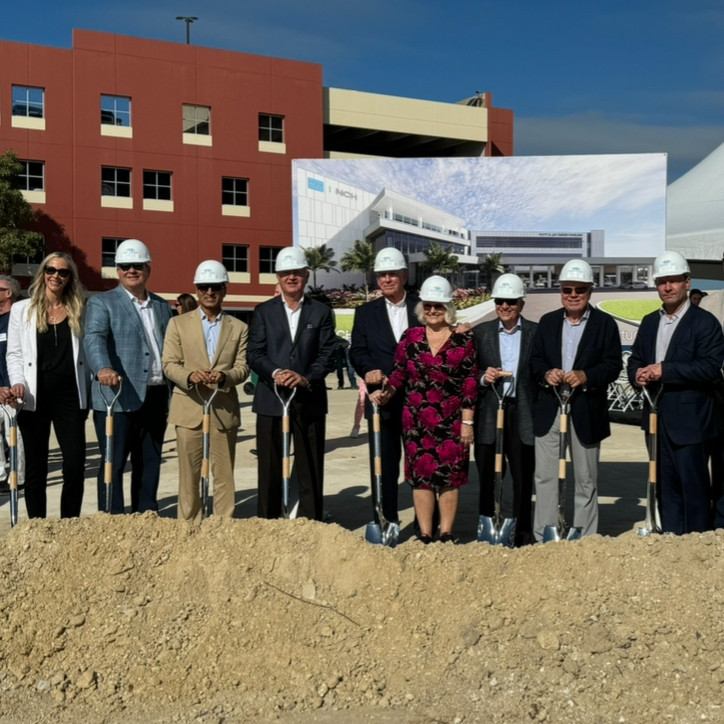
While the excitement is palpable, it’s also worth acknowledging the scale of the challenge. As Rayfield noted, we cannot predict the exact future of technology. The true test will be whether this investment can successfully cultivate the knowledge, skills, curiosity, and confidence needed not just to adapt to that future, but to help lead it. The Pezold Center is a bold wager that by building this ecosystem today, we can empower a generation to shape tomorrow.
With construction set to begin in early 2027 and a slated fall 2028 opening, the Pezold Center is already shaping the conversation about Columbus State’s—and the region’s—role in the next technological revolution.
Keep reading
Virginians Voice Views on Dominion/NextEra Merger at SCC Hearing
Virginians expressed their views on the proposed merger between Dominion Energy and Florida-based NextEra during a State Corporation...

Bad Idea completes transformation to American dishes and caviar
A Nashville Restaurant Ditches Spices for Caviar Wine and chicken nuggets for dinner? At East Nashville’s Bad Idea,...

Lucas defeats Daniels in race for North Salem supervisor
Lucas secures re-election as North Salem supervisor The final, unofficial numbers are in, and the race for North...

South Carolina Women’s Soccer Earns Multiple SEC Honors and Player of the Year Awards
Two Gamecocks Earn SEC Player of the Year Honors For the University of South Carolina Gamecocks, the latest...