
A 6-Hour Stillness in a Roaring Nation
As the midterm election results trickled in, a stark contrast emerged between the noise of the political world and the quietude offered by a string quartet in Portland. While voters across the country made decisive choices, flipping long-held seats and electing a historic slate of new leaders, House of Scordatura presented a sonic sanctuary at The Old Church, performing Morton Feldman’s String Quartet No. 2 in a single, continuous 5-hour, 38-minute meditation. ArtsWatch reported on this unique event, which unfolded on Election Day, November 3rd, as a direct response to the day’s intense churn.
What mattered in this moment was the juxtaposition of two very different American experiences. One was the high-stakes, often frantic, national conversation about leadership and direction. The other was a personal, contemplative space where the only demand was stillness. The performance wasn’t just a concert; it was a physical and mental endurance test for the musicians and a choice for the audience, many of whom came and went as they pleased, seeking respite from the political battles being waged just outside the church doors.
The Sound of Stillness
The event, dubbed “Sonic Sanctuary,” was conceived by local violinist Ron Blessinger as a pocket of quiescence in a day of maximum churn. The challenge was immense: to perform one of the quietest and longest pieces of modern classical music without pause. The musicians—Blessinger on violin, Shintaro Taneda on violin, Maia Hoffman on viola, and Marilyn de Oliveira on cello—had spent months preparing for the marathon session. The audience, averaging in the high 30s, was scattered throughout the pews, perhaps seeking refuge from the political noise or from the respiratory ailments circulating at the time.

Cherokee photojournalist Joe Cantrell, who attended the performance, described it as “another truly incredible experience, a Zen Mindfulness exercise by string quartet.” He noted the unique details of the performance: a man in the back row following the score from an actual printed book, while the musicians themselves used digital tablets. As the piece stretched on, a bowl of candy was brought out to help the performers maintain their energy. When the final note finally resonated, the musicians had played for 5 hours and 38 minutes straight. For those who stayed the entire duration, House of Scordatura presented Certificates of Endurance, signed by all four marathon musicians.
Whatever anxiety we felt as a group about whether we could pull it off, if our bladders would handle it, if we would get hopelessly lost, all of those fears melted away as soon as we started playing. It was an ecstatic experience playing that incredible music with such phenomenal musicians.
Ron Blessinger, violinist and House of Scordatura founder
A Nation Votes, a World Spins
While the quartet remained in a state of focused concentration inside The Old Church, the world outside was in a state of political upheaval. The election results were, as one observer put it, “hilarious” in their unpredictability. States and districts that had been Republican strongholds for decades, in some cases for nearly a century, flipped to Democratic control. The night was filled with firsts: Florida’s first Black governor is a Tea Partier and Trump ally, and it is the first time Kansas has elected a Democratic senator since 1932.
The voter sentiment seemed to be a rejection not just of a specific administration but of the political culture that had defined it. Many of the rejected Republicans were described as “puppet variety,” candidates heavily funded by the MAGA faction who offered little beyond opposition to the “blue team.” It appeared that the culture war rhetoric had finally worn thin, and voters, even in places where Trump had won in previous cycles, were no longer willing to be told who to vote for. They showed up and proceeded to not do what they were told, a powerful act of political independence.
This rejection of a regime known for “cruelty, incompetence, and corruption” was a significant theme. The consensus was that you can get away with one or two of those failings, but not all three at once. The election signaled a different attitude toward politics and politicians altogether, one that demanded substance over slogans and authenticity over allegiance.
The Sanctuary’s Echo
For Blessinger and the other musicians, the experience of playing was one of transcendence, a temporary escape from the world’s spinning chaos. “There really wasn’t much of a sense or vibe within our group that the rest of the world was spinning crazily around us or outside the room while we were playing this piece,” Blessinger reflected. The focus required by Feldman’s delicate, elongated notes created a self-contained reality for the performers.
Yet, as they reemerged from the music into the world, they were greeted with “the great news, at least in my opinion, that the country had made an emphatic statement about reclaiming its soul.” The performance and the election, while seemingly disparate, shared a common thread: a collective act of endurance and a search for meaning in a turbulent time. One was a quiet, internal journey; the other was a loud, public one. Both were profoundly American.
Cantrell, the photojournalist, captured the weight of the election’s aftermath in a personal reflection sent after the concert. “My long ago formed ‘Potential violence PTSD’ screamed and kicked my head all night, because of what I fear may happen when Trump actually feels what the country told him in the election,” he wrote. His Apple Watch told him he got only three hours of sleep.
The performance of Feldman’s String Quartet No. 2 is a piece of extreme minimalism, often described as having a meditative or trance-like quality. Its very existence challenges the traditional concert format, asking both performers and audience to embrace duration and quiet over flash and drama. In this way, it became a perfect artistic analogue for the political moment: a slow, deliberate, and profound statement that unfolded over time, demanding patience and attention from a weary public.
Related reading
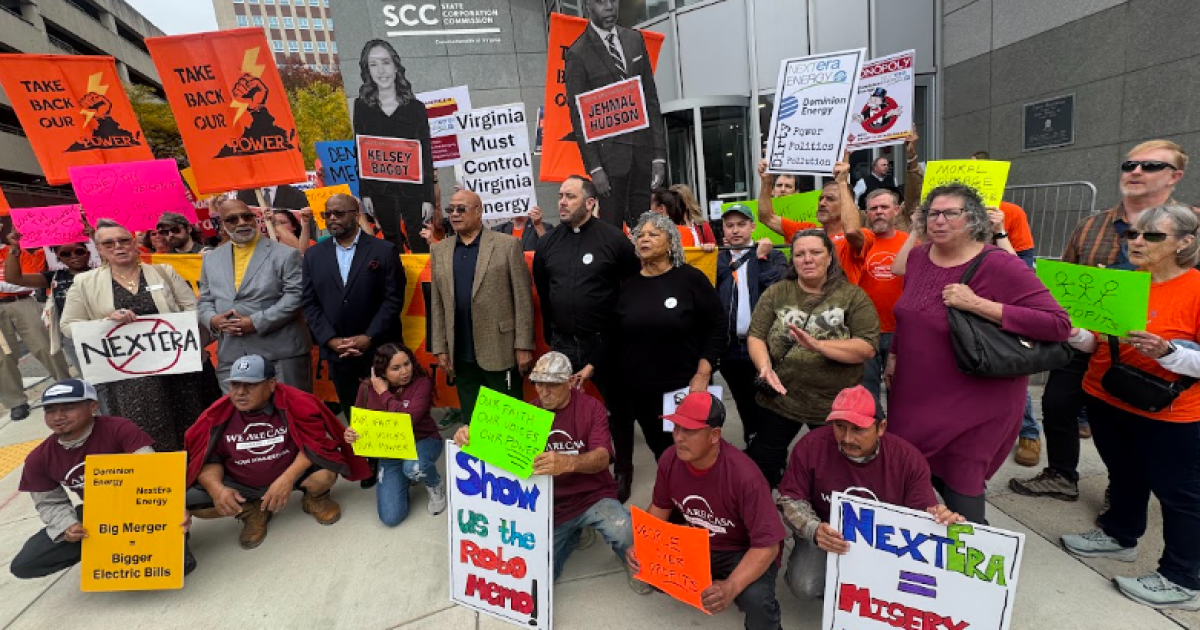
Virginians Voice Views on Dominion/NextEra Merger at SCC Hearing
Virginians expressed their views on the proposed merger between Dominion Energy and Florida-based NextEra during a State Corporation...

Bad Idea completes transformation to American dishes and caviar
A Nashville Restaurant Ditches Spices for Caviar Wine and chicken nuggets for dinner? At East Nashville’s Bad Idea,...

Lucas defeats Daniels in race for North Salem supervisor
Lucas secures re-election as North Salem supervisor The final, unofficial numbers are in, and the race for North...

South Carolina Women’s Soccer Earns Multiple SEC Honors and Player of the Year Awards
Two Gamecocks Earn SEC Player of the Year Honors For the University of South Carolina Gamecocks, the latest...