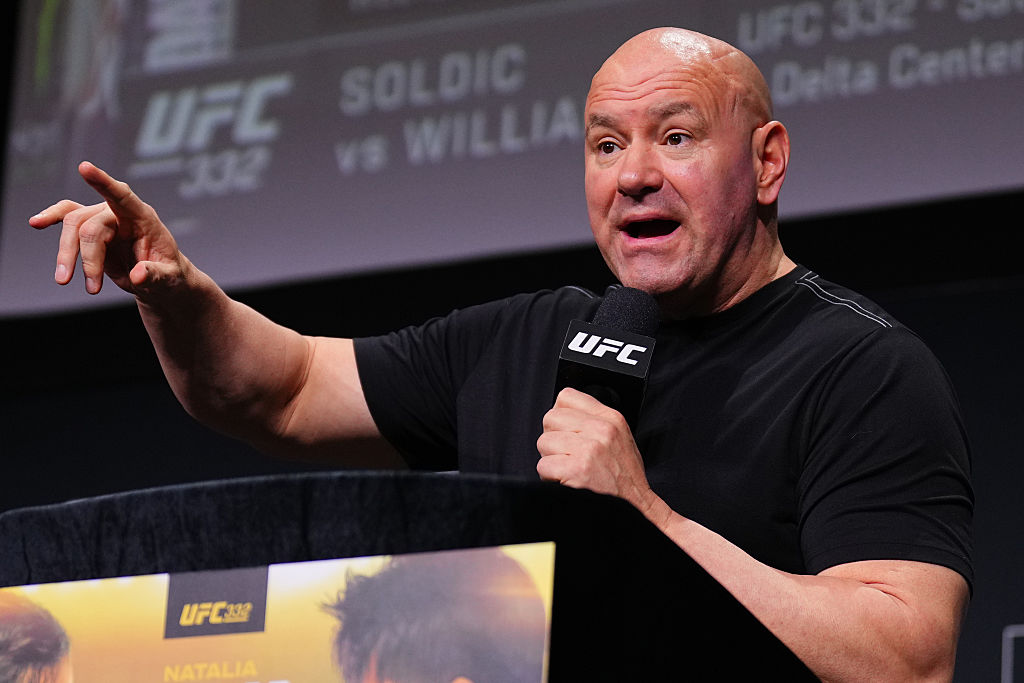
“I’m flying to Washington, D.C. right now.”
With that admission on Saturday night, Dana White, the Manchester-born CEO of the Ultimate Fighting Championship, said he is taking a high-stakes meeting with President Donald Trump this Monday to discuss a potential appointment as White House press secretary.
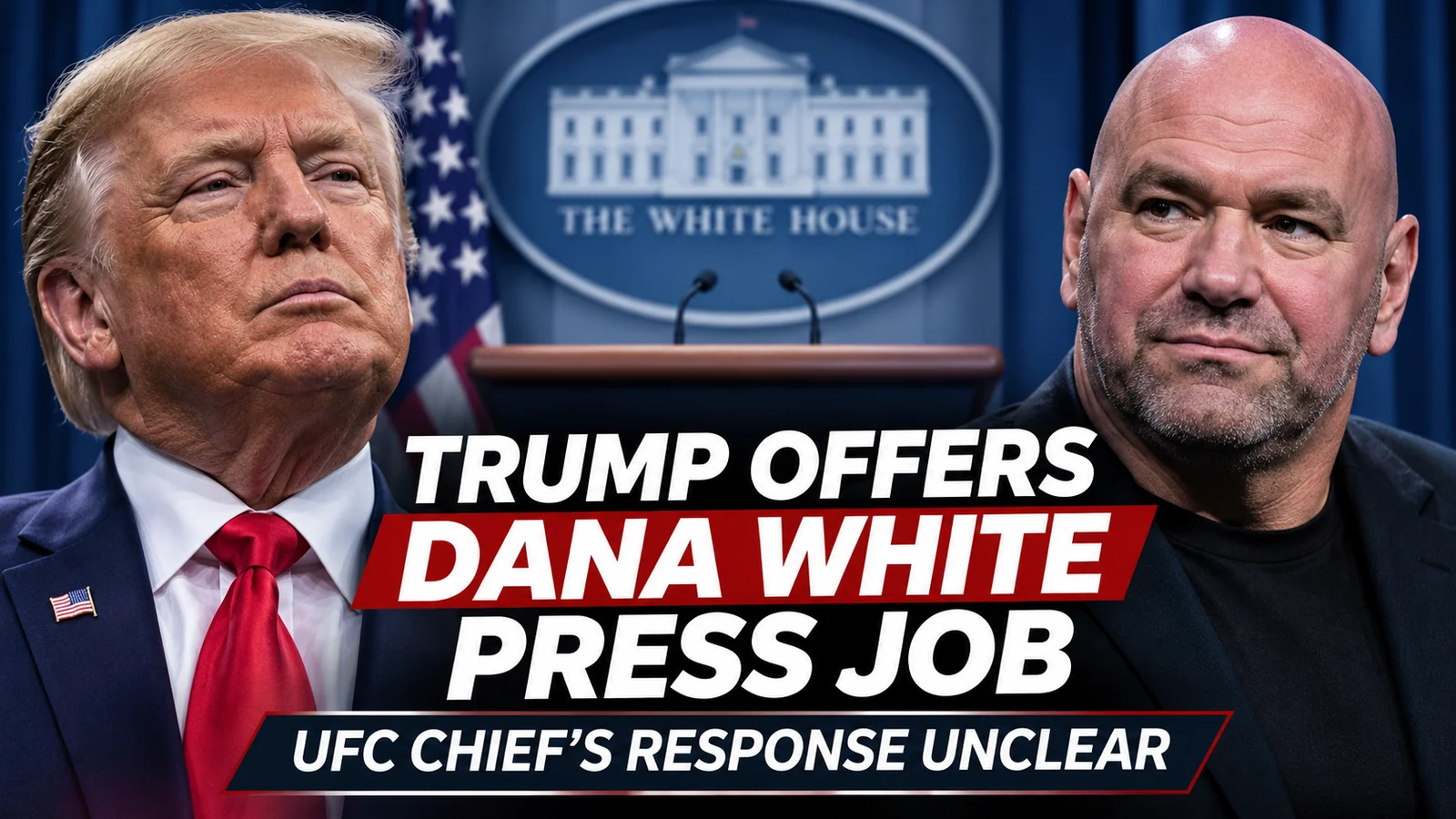
The offer, which surfaced on the president’s social media platform, Truth Social, represents a potential shift in how the administration approaches its public-facing communications. While the White House has not yet confirmed the offer as an official appointment, the president’s public language was unambiguous.
“I am pleased to announce that the Great Dana White, a violent Fighter and Warrior, has been offered the job of Press Secretary of the United States,” the president wrote.
For those tracking the logistics of the White House press shop, the appointment would deviate from the traditional backgrounds of past press secretaries. It follows a period of high turnover, as the president has cycled through six press secretaries across his two terms.
The most recent, Katie Zacharia, held a single press conference during a five-day stint, a tenure that highlights the volatile nature of the role in the current administration.
A Long History Between Two Public Figures
The connection between White and the president is not new; it spans over two decades of professional and personal history. Their relationship traces back to 2001, when White hosted a UFC event at the Trump Taj Mahal in Atlantic City, New Jersey—a property that would eventually face bankruptcy.
Since then, White has been a consistent presence in the president’s orbit, even hosting a UFC event on the White House lawn in June.
That event left a physical mark on the grounds, requiring the replacement of the lawn. Despite such hiccups, the president has remained a frequent attendee at UFC fights, often appearing ringside with White. This loyalty was further cemented when White delivered a speech at a presidential rally and attended the second inauguration in January 2025.
White’s business record, however, provides the primary context for why he is being considered for such a high-profile role. He purchased the UFC for $2 million in 2001 and, according to Forbes, transformed it into a multi-billion-dollar enterprise. The president’s social media post suggested he expects that same operational intensity to translate into the press briefing room.
The Proposed Strategy for the Briefing Room
The president’s vision for the role appears to involve a team-based approach to media relations. In his announcement, the president requested that White bring with him a list of specific UFC fighters, including Islam Makhachev, Khabib Nurmagomedov, Justin Gaethje, Daniel Cormier, Amanda Nunes, and Kayla Harrison. “We need these people to defend us against the Lunatic Left,” the president wrote.
This framing suggests the administration is looking for a combative, high-energy presence to manage the press corps rather than a traditional policy spokesperson. It marks a clear pivot away from the conventional expectations of the office, which has historically prioritized bureaucratic experience and institutional knowledge.
By selecting a promoter who has built a global combat sports brand, the administration is showing that it views the press secretary role primarily as a vehicle for cultural defense and brand management.
Whether White—who was born in Manchester in 1969 before moving to Ware, Massachusetts—will accept the position remains an open question. He has yet to formally decline or agree to the offer, maintaining a degree of ambiguity when pressed by reporters on Saturday night. “I’m sure I’ll have more to talk about after that,” White said regarding his Monday meeting.
The stakes for the administration are high. A press secretary effectively acts as the primary interface between the executive branch and the public. If White transitions from the octagon to the podium, it will be one of the most unconventional appointments in the history of the position.
For now, the administration waits, and the public is left to wonder if the next briefing will look more like a fight card than a policy update.
More on White House
Keep reading

Eurochambres Survey: Financing is Top Concern for Greek Businesses
Greek business owners are bracing for a difficult 2027, with financing conditions emerging as a primary barrier to...

Wisconsin Hosts Cooking, Watercolor, and Trivia Events This Week
Wisconsin residents can participate in several local cooking, crafting, and social events throughout the week of November 8,...

Bird Flu Detected at Pierce County Poultry Facility in Washington
Western Washington farmers are facing a familiar, high-stakes anxiety this week after the Washington State Department of Agriculture...

Search Underway for Burlington Man Who Fell into Lake Champlain
Search Operation Underway in Kingsland Bay A search and recovery operation is currently active on Lake Champlain following...