
The Weight of Memory at the Cenotaph
The annual Remembrance Sunday service in London remains one of the few moments where the rigid machinery of British statecraft pauses, replaced by a silence that feels increasingly heavy with the passage of time.
As King Charles III led the nation in honoring those lost in conflict, the 2026 ceremony at the Cenotaph showed how the gap between the living and the historical record is narrowing. According to the BBC, the King laid the first wreath at the memorial, starting a sequence that shows the monarchy's enduring role as the symbolic anchor of national mourning.
A Fading Generation
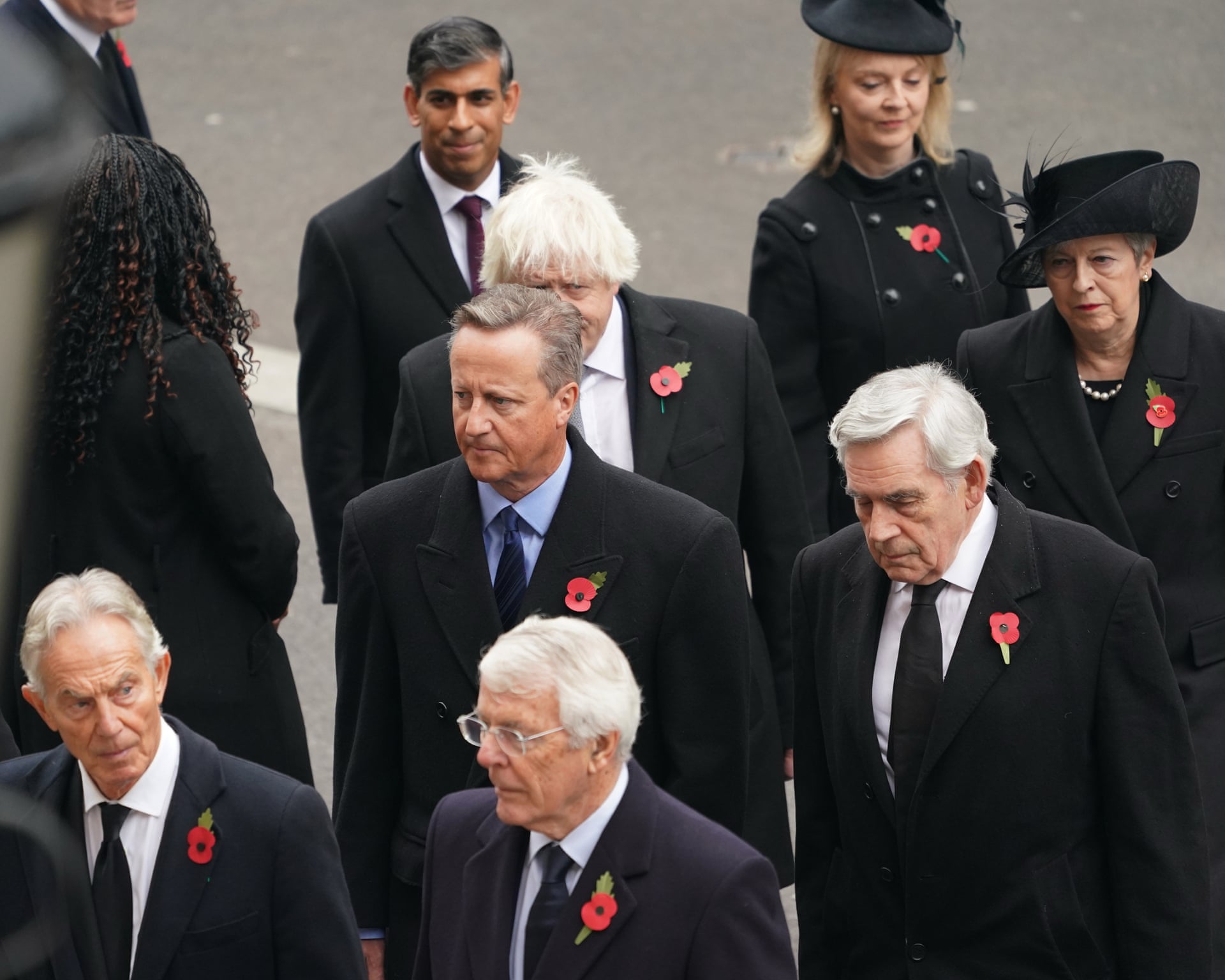
The demographic reality of the event was perhaps its most poignant subtext. The Guardian reported that Second World War veterans outnumbered former prime ministers for what could be the final time this year.
With the number of surviving personnel from that conflict dwindling to roughly a dozen, the sight of these individuals—some in wheelchairs, others maneuvering mobility scooters—provided a visceral contrast to the record-setting nine former prime ministers present on Whitehall.
“Second world war veterans outnumbered former prime ministers for what could be the last time at the national service of remembrance at the Cenotaph in central London.” — The Guardian
The presence of nine former premiers, including Sir John Major, Sir Tony Blair, and current Prime Minister Andy Burnham, highlights the cyclical nature of political power. Yet, as the number of former leaders swells, the veteran pool contracts, shifting the event from a living link to the 1940s toward a more formal act of historical preservation.
Symbolism in the Public Eye
For the observers on the Foreign Office balcony, the visual language of the day was meticulously curated. Queen Camilla and the Princess of Wales stood together, both dressed in black and notably wearing three poppies each. While Buckingham Palace has not issued an official explanation for the choice of three, HELLO! notes that historians often point to a blend of symbolic and practical reasons. This includes honoring the three branches of the military or paying tribute to family ancestors, such as the three great-uncles of the Princess of Wales who were killed during the First World War.
Beyond the symbolism, the event serves as a massive logistical undertaking, involving 10,000 veterans and over 300 armed forces and civilian organizations. The Daily Mail highlighted the stoic presence of the Princess of Wales, who joined the Queen at the vantage point, while Prince William and the King conducted the wreath-laying below.
This public display of duty is a critical component of the royal brand, reinforcing the family’s commitment to military patronage—a role that remains central to their public-facing work.
The Echoes of History
While the morning in Whitehall followed traditional protocols, the shadow of past violence remains part of the site’s identity. The Guardian and the Limerick Leader both recalled the 1987 IRA bombing at the Enniskillen memorial, an event that claimed 12 lives and serves as a somber reminder of the vulnerabilities inherent in such high-profile public gatherings. Today’s service, however, proceeded with the precision of a state-managed production, from the firing of the gun to signal the two-minute silence to the final sounding of the Last Post by the Royal Marines.
As the ceremony concluded, the transition from the solemnity of the Cenotaph back to the routine of daily politics and media cycles felt abrupt. For the American observer, the event offers a window into the British approach to institutional memory, where the monarchy and the state perform a synchronized ritual to define national identity.
It is a fragile equilibrium: a billion-dollar apparatus of tradition attempting to keep pace with a world that is rapidly moving away from the memories that birthed these very ceremonies.
Disclaimer: The cultural analyses and financial data presented in this article are based on available public records and industry metrics at the time of publication.
More on King Charles
The King has led the Nation in Remembrance at The Cenotaph. In commemoration of all those who have died in World Wars and other conflicts, The Royal Family stood united with others in thousands of similar ceremonies across the UK and worldwide to hold two minutes of silence at… pic.twitter.com/SzC1QZ3FFw
The King, The Queen and Members of the Royal Family have attended the annual Royal British Legion Festival of Remembrance at the Royal Albert Hall. The special commemorative concert, organised by @PoppyLegion, honours all those who have lost their lives in conflict. pic.twitter.com/PfTl6LzOty
Keep reading

Hisuian Goodra’s Utility in Pokémon GO Raids and PvP Leagues
Hisuian Goodra: The Steel-Dragon Paradox in Pokémon GO The arrival of Hisuian Goodra during the 2026 GO Wild...
Russell Brand found guilty of rape and sexual assault at Southwark Crown Court
The Fall of Russell Brand: A Verdict at Southwark Crown Court The cultural trajectory of Russell Brand, once...

Martin McDonagh’s Wild Horse Nine stars John Malkovich and Sam Rockwell
Martin McDonagh’s CIA Caper Lands in Cinemas Back on an isolated island with two men struggling to communicate,...

NYT Connections Hints for November 8, 2026
Players opening the New York Times puzzle app on Sunday, Nov. 8, 2026, face Connections No. 1,246, a...