
Chris Gerben grew up in the metro Detroit area in the 1980s and ’90s and noticed major shifts in the city.
Between the height of Detroit’s auto industry and Gerben’s birth in the ’80s — a span of about three decades — the city shed more than 200,000 jobs. That’s more than during the Great Depression. It also lost over half a million people. Gerben, who now lives in Chicago, wonders what happened in Detroit happened across the Midwest in the same way. How did deindustrialization hit Milwaukee? Why was Chicago seemingly spared? “If you don’t know any better…it would seem like, ‘oh, [Chicago] is privileged in some way,’” Gerben says. Deindustrialization shaped the Midwest in ways seen and unseen.
Detroit became the base of the “Big Three” automakers, making the Motor City the world’s leading center of car production. These factory jobs attracted workers, including African Americans leaving the rural South for the urban North, starting in the 1910s. Marsha Battle-Philpot said her dad, Joe Von Battle, was one of those early workers. “The auto industry here allowed for a relative prosperity that was unprecedented,” Battle-Philpot says. Von Battle was laid off from the auto plant when white workers returned after World War II, which gave rise to the axiom, “last hired, first fired” with regards to Black workers. “He was so despondent about having to have faced a reversal like that, he vowed at that point he would never work for another man,” she says. With the prosperity of the auto industry, Von Battle started his own business. In 1945, Joe’s Record Shop opened. In the first two years, he had a stock of over $100,000 worth of records.
But in the ’50s, the Big Three started moving to the suburbs for cheaper land. This exodus began before the “Rebellion of ’67,” five days of racial unrest in late July 1967 during which 43 people died, hundreds reported injuries and police arrested more than 7,000 people.
“There’s a whole narrative that says, well, Detroit was basically doing okay until 1967 and all the whites left, and then Detroit fell into decline,” Battle-Philpot says. “That’s just so wrong-headed. There’s no statistics that bear that out.” During the rebellion, Joe’s Record Shop was looted. “When my father walked back into that store…and he saw the destruction, I say that my dad really died then,” Battle-Philpot says.
Milwaukee’s industrial base was more diverse — brewing, heavy manufacturing, iron and steel. “Blue-collar in Milwaukee meant middle class,” says Adam Carr, a public historian and artist. “That’s entwined with the history of socialism here: that the worker was not a chump in Milwaukee.” Urban renewal and redlining erased generational wealth in Black and brown neighborhoods, and factory jobs never returned. “I think we haven’t found exactly who we are after industry yet.”
Chicago pivoted earlier.
Its rail hub status and varied economy — stockyards, manufacturing, later corporate headquarters — let the city redirect tax incentives downtown in the 1980s. Yet the Southeast Side tells a different story. “The neighborhood of South Chicago…the center of gravity was the steel plant,” said Matt Wilson, associate director of the Great Cities Institute at the University of Illinois Chicago. Michael Lisecki, who grew up in the South Chicago neighborhood, started working in the mills when he was 18.
Three years later, he was laid off. “It was like everybody worked in one of the mills… and I mean it was devastating when we all got laid off,” he says. The neighborhood was never the same.
Today, the Big Three’s headquarters remain in metro Detroit, but jobs in the city never bounced back. Milwaukee is converting brownfields like Three Bridges Park into green space. Chicago’s West Loop rises on former industrial land, while South Chicago still waits.

Pennsylvania Sportswatch Daily Listings Friday November 27
Sports fans across Pennsylvania have a full day of televised games to choose from on Friday, November 27....

Amazon Drops AirPods Pro 3 to $149 MacBook Neo Hits $649
Black Friday deals hit a day early on November 26. The deepest discounts of the year are on...
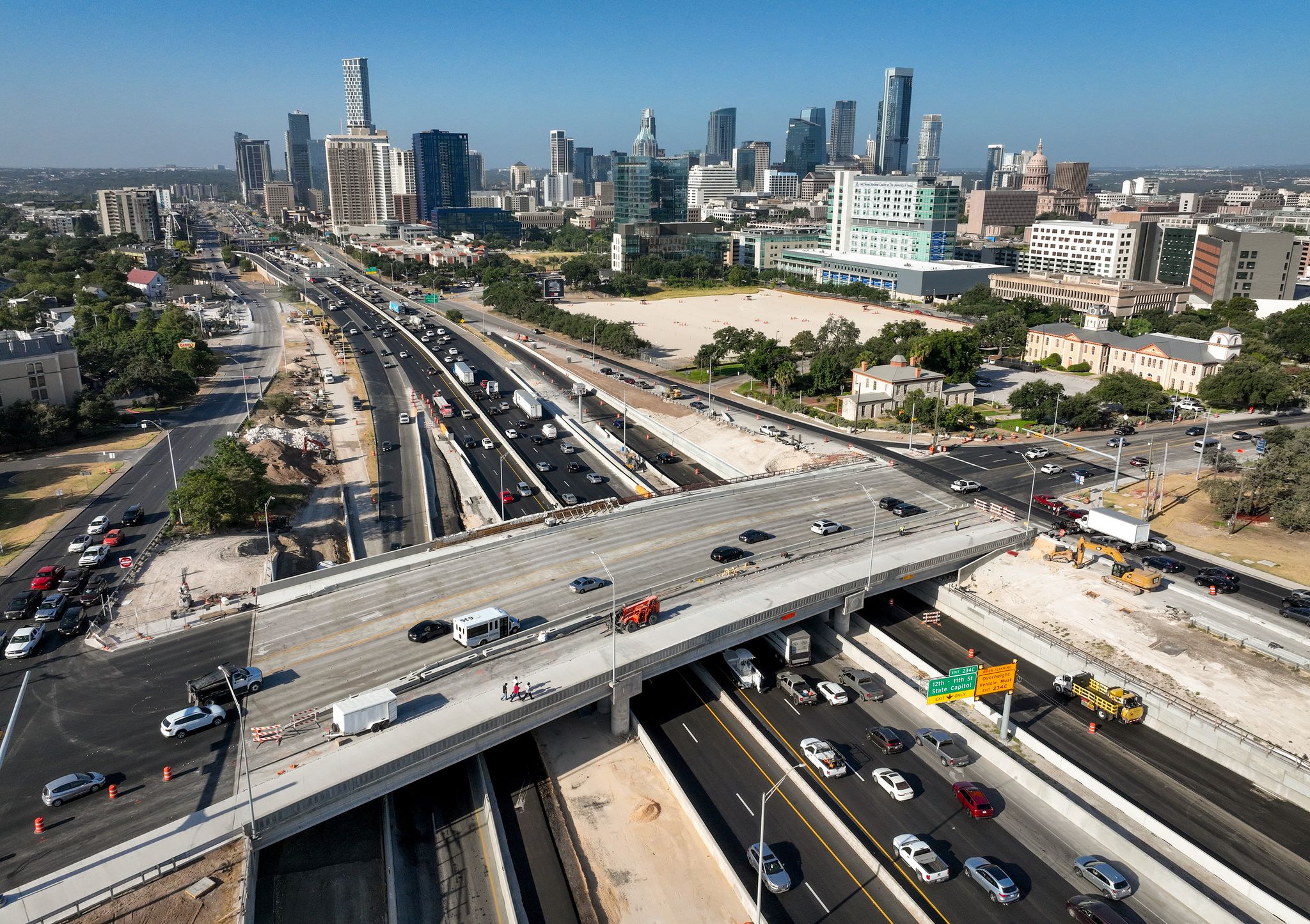
I-35 Stretch Ranks 7th Most Congested in Texas
An 8-mile section of Interstate 35 through central and downtown Austin ranks as the seventh most congested roadway...

Seattle Young Adults’ Cognitive Difficulty Rate Doubles to 6.7%, Ranking 11th Nationally
Seattle's young adults report cognitive difficulty at 6.7%, doubling the pre-pandemic rate and ranking 11th among 50 populous...