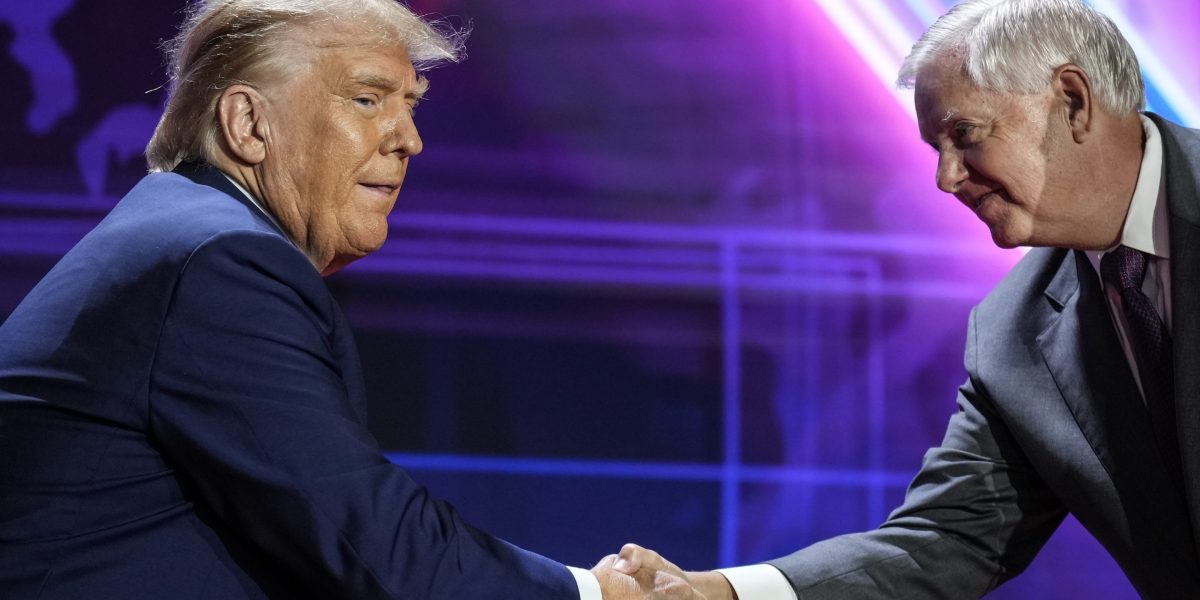
South Carolina Rejects Trump’s Senate Pick as Annie Andrews Flips Seat
South Carolina voters appeared to be choosing a Republican governor and a Democratic senator on Tuesday night, handing a victory to the Democratic Senate nominee while the gubernatorial race remained uncalled. Democrat Annie Andrews, a former pediatrician, defeated Darline Graham in a contest that tested the political gravity of a presidential endorsement in a deeply conservative state, Fortune reported.
The upset makes Andrews the first Democrat to win a Senate race in South Carolina since Fritz Hollings secured victory in 1998. The outcome arrived in a state that Donald Trump carried by 18 points during the 2024 presidential election, highlighting the friction caused by how the Republican nominee reached the ballot.
A Campaign Forged in Nepotism and Party Resentment
Trump’s involvement in Graham’s political ascent began almost immediately after the death of Lindsey Graham in July. Trump lobbied Governor Henry McMaster to appoint the late senator’s sister—a political newcomer—to finish the remaining term. After initially describing the appointment as a chance to finish her brother’s work, Graham received a swift boost on Truth Social, where Trump posted, RUN, DARLINE, RUN!
alongside a promise of his complete and total endorsement.
That backing propelled her into the general election, though not without severe friction within her own party. Graham was forced into a primary runoff against Republican Representative Ralph Norman, which she won by less than five points. In October, Dorchester County Republican Party Chairman CJ Westfall told CNN that he expected Republican gubernatorial candidate Alan Wilson to win comfortably by 10 to 12 points while Graham limped across the finish line with a mere two- to four-point margin.
Reporting by Slate’s Ben Jacobs highlighted widespread resentment among state party members who viewed the appointment as blatant nepotism driven solely by Trump’s personal relationship with her late brother. The backlash ran deep enough that some disillusioned conservatives organized an unofficial write-in campaign for Norman.
Super PAC Pours Millions into Unexpected Senate Race
Despite local warnings, national party infrastructure rallied behind the ticket. Senate Republicans deployed their main super PAC to defend a seat the party had never expected to contest. According to Fortune, American Mission—the Republican arm of the AI industry’s Leading the Future super PAC network—poured roughly $2.7 million into Graham’s campaign.
Dr. Annie Andrews defeats Darline Graham in U. S. Senate race in South Carolina, the first Democrat in the state to win in decades. https://t.co/szC4uBdNpC pic.twitter.com/N4CqLRlEv2
Trump himself returned to the state for a late-stage rescue mission, holding rallies in Pendleton on October 21 and in Rock Hill a week later. On the morning of the Rock Hill event, he posted on social media, Lindsey is watching, and very proud of her!!!
On Election Day, he doubled down, calling her a spectacular person, and a true American Patriot.
Polling showed the rallies offered only temporary relief. A Citadel poll indicated Andrews trailed by just one point before the Pendleton rally, only to see Graham surge by seven points among surveyed voters immediately afterward. However, a final-week New York Times/Siena poll showed the race locked in a dead heat.

Ticket-splitting proved decisive. While Republican Alan Wilson maintained a narrow lead in the governor’s race into Tuesday evening, enough conservative voters backed Wilson while crossing party lines for Andrews to sink Graham. Graham ultimately ran roughly 10 points behind Wilson’s margin.
Andrews Carves a Bipartisan Path to Victory
Andrews avoided the traditional playbook of national Democratic campaigns. She rarely appeared alongside national party figures and instead cultivated cross-partisan appeal. One week before the election, she secured endorsements from two former governors representing opposite sides of the aisle: Republican David Beasley and Democrat Jim Hodges, as The Hill noted.
Crucially, Andrews refused to position herself as an adversary to the White House. I’m willing to work with anyone, including the president,
she stated during the final week of the race, separating her public posture from her late brother’s history. Lindsey Graham initially challenged Trump during the 2016 primaries before cementing himself as one of the administration’s most vocal defenders by 2020—a year when Democrats poured more than $100 million into an unsuccessful bid to unseat him.
Operating with a significantly smaller financial footprint, Andrews raised $10.8 million, with 60 percent of those contributions originating from small-dollar donors.
Keep reading

Girl Scouts of Utah Hosts Color Guard Patch Workshop
Girl Scouts of Utah will gather Scouts in grades K-12 and their adult caregivers on Wednesday, November 11,...

Henrietta Red Will Close in April 2027 When Lease Ends
Henrietta Red, the Germantown restaurant that spent ten years setting the standard for Nashville seafood, will close permanently...
Paul Wick’s tech fund outperforms 94% of peers over five years
Paul Wick's fund is up almost 55% in 2026, a figure that lands like a thunderclap when set...
Chris Rabb tells Penn to be a better neighbor to West Philadelphia
State Rep. Chris Rabb is poised to take his seat in the United States House of Representatives next...