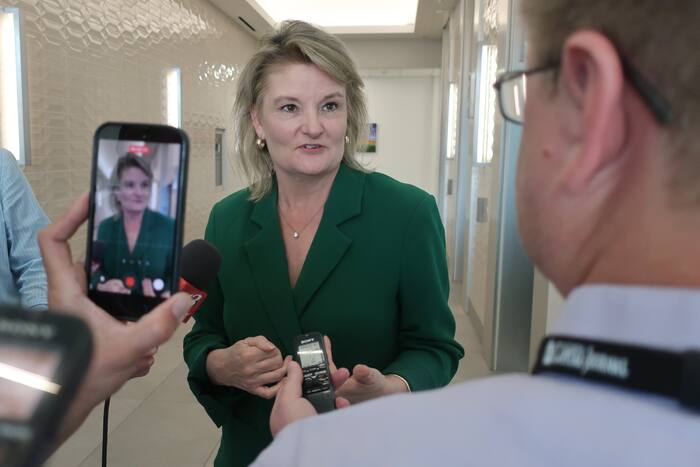
Democrat Cindy Holscher has been elected as the next governor of Kansas, defeating Republican Ty Masterson to maintain Democratic control of the state’s executive office.
Holscher's victory changes Kansas politics, as she becomes the first Democrat to succeed another Democrat in the governorship in a state where, for 60 years, the opposing party has typically won the seat whenever an incumbent retires or reaches term limits. The Associated Press did not officially call the race until Thursday, though Holscher had declared victory following Tuesday’s midterm elections.
“Kansans have sent a clear message that they want to keep our state moving forward,” Holscher said in a video posted online Tuesday, two days before the race was called. “The work of preparing to lead has already begun.”
Holscher, a state senator, ran a campaign centered on a proposed moratorium on the construction of new data centers dedicated to artificial intelligence.
She argued that such a move is necessary to protect the state’s energy and water resources while ensuring that technological growth translates into local employment. According to the Associated Press, Holscher said that the issue “cuts across party lines” because residents are seeking “reasonable things” regarding resource management.
A sweep of statewide offices
The gubernatorial win was part of a broader Democratic performance in Kansas that saw the party capture four statewide contests for the first time since 1958. This sweep included the election of U.S. Sen.-elect Adam Hamilton, a pastor of the nation’s largest United Methodist church, who secured the first Democratic Senate victory in Kansas since 1932.
Chris Mann also defeated state Attorney General Kris Kobach, a figure known for advocating strict voter ID laws and serving as vice chair of a 2017 commission on election fraud. On the Holscher ticket, state Rep. K.C. Ohaebosim of Wichita was elected lieutenant governor, becoming the first Black statewide elected official in Kansas since 1887.
The results suggest a continued realignment in the state’s most populous regions. Holscher, a former manager for Sprint Corp., draws much of her strength from the Kansas City, Kansas, suburbs in Johnson County.
This area, which accounts for 23% of the state’s 2 million voters, has trended increasingly Democratic since 2016. Holscher captured more than 60% of the vote in Johnson County, a margin that helped offset the significant leads Masterson maintained in rural, Republican-leaning areas.
The election was characterized by a massive spending gap. While the candidates’ fall fundraising totals were comparable, the Republican Governors Association outspent Democrats by more than 3-to-1, pouring $19 million into digital and television advertising to frame Holscher as an extreme liberal, according to data from the ad-tracking firm AdImpact.
Masterson emphasizes property tax relief and public safety
Masterson, who remains the top Republican leader in the Kansas Senate, focused his campaign on property tax relief and public safety. Despite the loss, he emphasized the importance of the platform his party maintains in the state legislature.
“The things we fought for are no less important today than they were yesterday,” Masterson said in a statement. “This was a hard election for people who share our vision, here and across the country. But I believe in this state and in the people who live here, and that hasn’t changed.”
The Republican strategy relied heavily on the fact that the GOP controls both chambers of the state Legislature. Masterson argued that this control would allow his party to deliver on promises to cut property taxes and improve schools, even without the governorship.
The transition of power follows the departure of outgoing Governor Laura Kelly, a Democrat who was term-limited. Holscher’s path was not without internal friction; she initially faced resistance from Kelly, who had previously supported a different Democratic state senator and expressed concerns that Holscher might be too liberal to win.
Kelly eventually endorsed Holscher, though the endorsement came after Kelly had already filmed a campaign spot for Iowa’s new governor-elect, Rob Sand.
The outcome of this election ensures that Democrats maintain a majority of governorships across the United States, a position they had already secured prior to the Kansas results. For Kansas, the focus now shifts to how Holscher will balance her environmental and resource-management promises with the economic pressures of changing technology.
Worth a look

Missouri AG Hanaway Issues Guidance on Child Exploitation Protection
The guidance addresses the rising threat of digital exploitation, specifically targeting the use of artificial intelligence to create...

A Complex Three-Team Deal Could Swap Hughes for Kucherov
Minnesota is currently riding one of the most unexpected waves of success in franchise history, matching the Carolina...
Monsignor Robert Lunsford Meditates on Death, Judgment, Heaven, and Hell
Monsignor Robert D. Lunsford, a 92-year-old former chancellor of the Diocese of Lansing, has offered a meditation on...
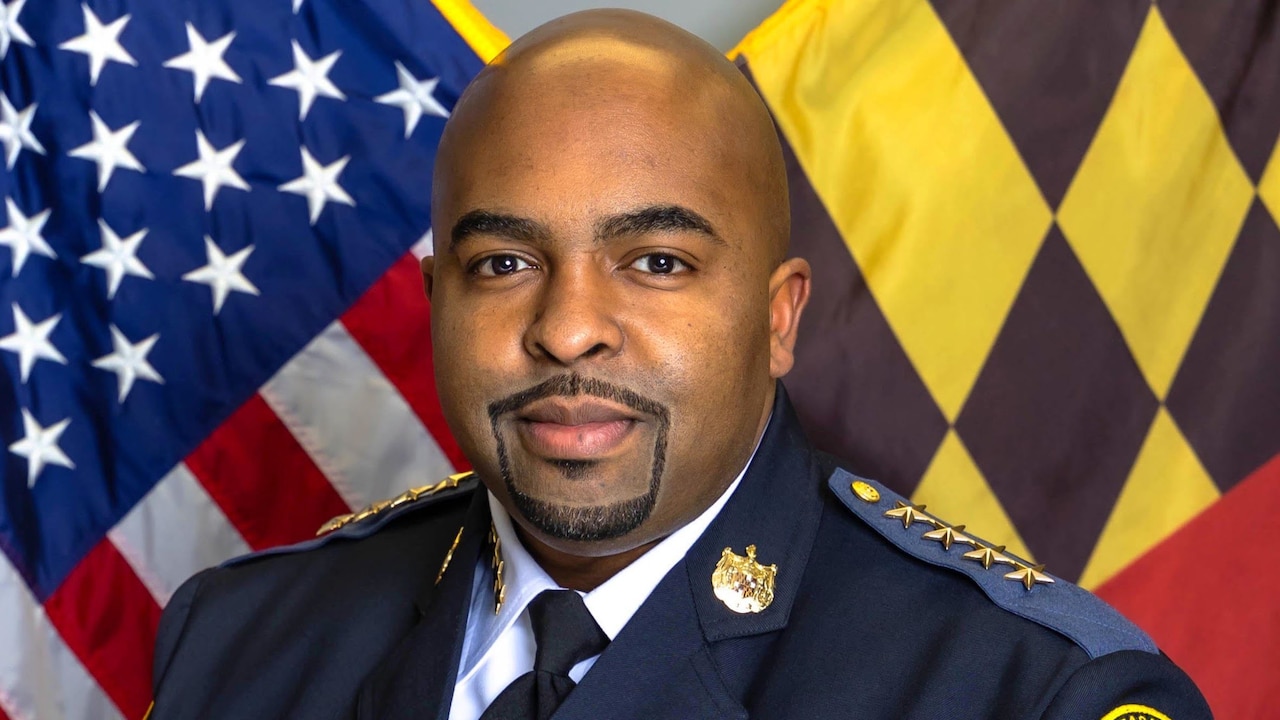
Mayor Littmann Proposes Demetrious Harris as New Annapolis Police Chief
Annapolis Mayor Jared Littmann has selected Demetrious Harris to lead the city’s police department, ending a nine-month vacancy...