
A Denver Lawyer Who Built More Than Buildings Dies at 79
Stephen Kaplan, the Denver city attorney who helped orchestrate the building of Denver International Airport and other transformative civic projects, died Sunday morning at 79 following a “courageous battle” with interstitial lung disease, his family wrote in his obituary. The Denver Post reported that Kaplan, a towering figure in the city’s legal and civic life, continued working from his hospital bed through Friday night, reflecting his lifelong dedication. His passing marks the end of an era for a man whose fingerprints are on some of the most significant changes to the city’s physical and economic fabric in recent decades.
There’s barely an important project in Denver he didn’t have hands in. Everything from the convention center to Union Station. The A Line from Union Station to DIA. The National Western Stock Show. The list goes on. Kaplan, a Harvard-educated lawyer who moved to Denver to start a family with his “soulmate,” Jeanne, was a quiet force behind the scenes, a master builder who operated with a simple, powerful question as his litmus test: How is this going to affect the community?
The ‘Yoda’ of the Law
“He was the calming, guiding ‘Yoda’ of the law firm and a mentor to the law community,” Federico Peña, who served as mayor of Denver and later as U.S. Transportation Secretary under President Bill Clinton, said of Kaplan. Peña, who relied on Kaplan for counsel during both personal and political years, credited his former city attorney with transforming the “underperforming” Denver City Attorney’s Office into a “powerful legal enterprise.”
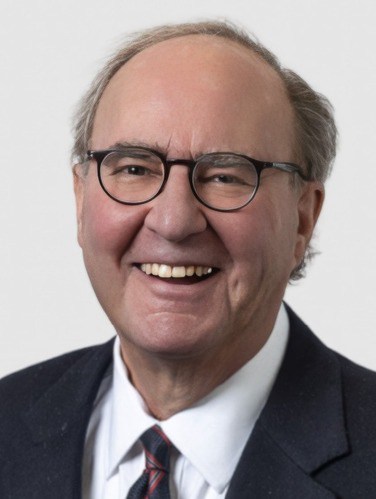
That power was most evident in the city’s biggest gambles. Kaplan laid the groundwork for Coors Field and bringing a Major League Baseball team to Denver. He was one of the prime movers in cementing plans for the Colorado Convention Center amid squabbling over its location. But perhaps his most significant legacy is his role in Denver International Airport, a project that Councilman Kevin Flynn, who knew Kaplan for decades, called “a monumental project that changed the city of Denver.” The complexity of the DIA deal and the subsequent Stapleton redevelopment boggles the mind, Kaplan’s longtime partner, Peter Kirsch, said.
Yet, for all his influence, Kaplan was a man who consistently passed on the credit. “He never sought recognition,” Peña said. “He wasn’t a person who bragged about his life or his accomplishments. He just took action and did things, and that’s how people respected him.” This humility was so ingrained that Kirsch recalled a “one block rule” downtown: you couldn’t walk down 16th Street for more than a block without someone stopping Kaplan to say hello. “He just knew everybody, and everybody knew him,” Kirsch said. “He collected friends the way most of us collect stamps or coins.”
“He was a person who, if you listened to him and asked him questions, he would give you the honest answers, whether he liked them or not, and whether the person hearing them liked them or not. You could always count on him to give you not just an honest answer, but the whole answer.” — Councilman Kevin Flynn, The Denver Post
Kaplan’s commitment to the community extended far beyond his legal work. His obituary highlights his deep involvement in civic and charitable organizations, including a term as president of the Colorado I Have a Dream Foundation and service on the boards of the Denver Zoo, Children’s Museum, and SafeHouse. At the time of his passing, he was a member of the Board of Directors of Conservation Colorado. His dedication to public service was so profound that when his wife, Jeanne, died in 2023, the Denver City Council adopted a proclamation honoring her dedication to the public school system—a reflection of the couple’s shared commitment to the city.
A Legacy of Integrity
Kaplan’s integrity was legendary. During a Denver City Council meeting Monday, Flynn read from a letter to the editor published in the Rocky Mountain News on Sept. 10, 1990, shortly after Kaplan announced he would be stepping down from the city attorney role he had held for seven years. The letter, written by Hugh Humphreys, stated, “The decision of Denver City Attorney Steve Kaplan to leave public service is one that leaves the public sector poorer.” Flynn continued, “When dealing with him, you never had to double-check the facts he presented. You might disagree with the conclusions he reached, but he was never one to give you anything other than his honest opinion.”
While Kaplan’s projects reshaped the city’s skyline and economy, his personal passions were simpler. He enjoyed spending time in the mountains, particularly Rocky Mountain National Park, and loved traveling with Jeanne to see wildlife around the world, with elephants and whales holding a special place in his heart. Closer to home, he welcomed any excuse for a Dairy Queen sundae. Over the past decade, he treasured every moment with his grandchildren, Sammy and Sophie Heitkamp and Morris and Zev Kaplan.
Kaplan’s life showed that public service and private success are not mutually exclusive. He never took on projects just to make money; he wanted to make sure they reflected Denver’s desires and would “help stimulate the economy, create jobs or otherwise benefit the neighborhood,” Peña said. “He always said, ‘Let’s find the biggest and most important projects in whatever community we’re in, and let’s make sure we help make that happen’,” Kirsch recalled. He is survived by his children Leslie Kaplan (Joe Heitkamp) and Michael Kaplan (Alexandra Woods).
A funeral service was held Tuesday, November 3, at 1:00 p.m., at Congregation Rodef Shalom, with a livestream available on the congregation’s website. In lieu of flowers, contributions can be made to the Kaplan Kirsch Fund through The Denver Foundation, which will be renamed in Steve’s memory.
Related reading

RI Working Families Party sees major election growth in power
Working-Class Champions Win Across Rhode Island “Rhode Island is at an inflection point, and tonight voters chose leaders...

For decades, Pennsylvania’s Democratic legislators have been stymied, their environmental and
A New Era for Pa. Energy Policy, With Data Centers and Fracking in the Crosshairs For decades, Pennsylvania’s...

Two Wanted in Ohio Brothel Network Probe
Two suspects are on the run from Ohio authorities after a sweeping human trafficking investigation uncovered what officials...

Christine Drazan faces questions after Oregon gubernatorial defeat
Republicans Face a Familiar Oregon Question After Governor's Race Defeat On the night of November 3, 2026, at...