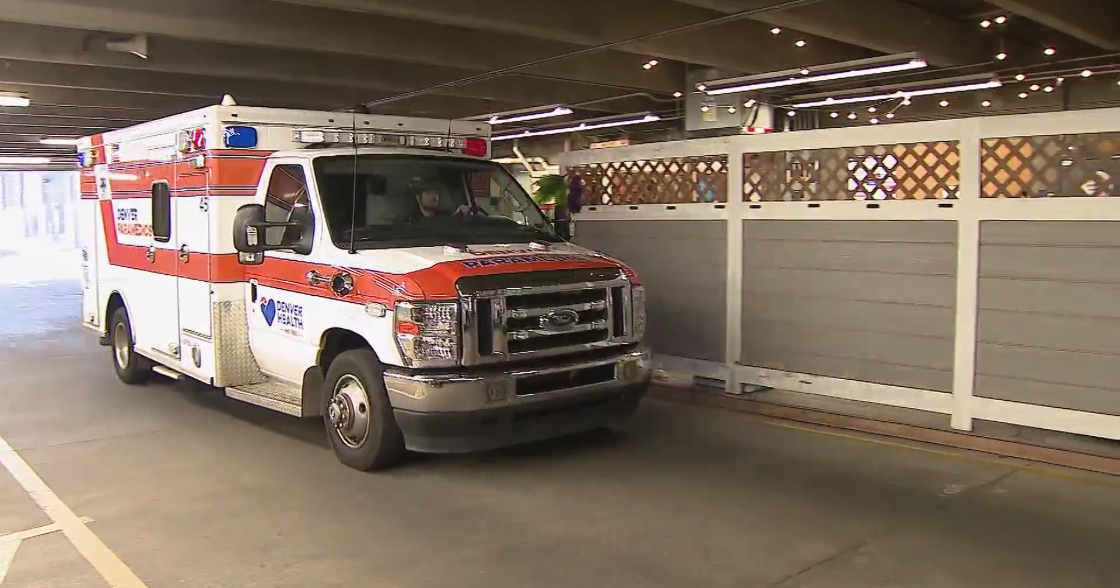
Call volume has climbed to 140,000 calls per year, driven by more behavioral-health crises, substance-misuse incidents and residents using 911 because they lack primary-care access, said Justin Harper, Denver Health’s chief paramedic.
“We’re seeing increased calls for behavioral health,” Harper said. “We’re seeing increased calls for substance misuse. We’re seeing increased calls for people who are utilizing 911 because they don’t have primary care healthcare, and so these are all perfectly reasonable uses of the 911 system. And we want to be able to get our resources there for these patients. We need to be able to prioritize these calls as they come in.”
Fire department expects relief
Denver Fire, which has previously submitted complaints about long wait times, says the model will keep engines available for higher-acuity runs.
“We’re going to have the opportunity to have our fire engines and trucks responding to higher acuity types of calls, which in turn would allow them to stay available for those types of calls,” said Desmond Fulton. “When we arrive on that scene and it’s a code 9 non-emergent call, if it happens to be emergent or there are things there that that patient is presenting that would justify an upgrade, our officers and firefighters have the ability to notify dispatch, and then they would let Denver Health know, and they could step up their response accordingly for that emergent type of call.”
Data review set for City Council
Officials will collect performance data over the course of the next few months and present results to Denver City Council next year.
Response-time standard missed four straight years
CBS Colorado found through previous reporting and open-records requests that the department failed to meet that standard in 2023, 2024 and 2025 and is on pace to miss it again in 2026.
Denver Health operates the Denver Health Paramedic Division, a hospital-based paramedic service based out of Denver Health Medical Center, Pavilion A, which serves as the city’s 911 EMS response provider. The Authority’s integrated health care system explicitly includes “911 response and EMS” as a core component, establishing Denver Health as the primary medical transport and advanced life support agency for Denver.
Under this model, Denver Fire Department engines respond alongside paramedics but the new pilot program aims to keep fire apparatus available for higher-acuity fire and rescue runs by adjusting dispatch protocols.
Pilot program launched this week
“We know there are gaps, and we’re doing the best that we can to identify those,” said Denver Fire Chief Desmond Fulton. “What we’re finding is that getting the right resource to the right patient the right time is about utilizing those resources more responsibly,” said Harper.
Worth a look

Vanderbilt Hosts No. 7 Tennessee; Stowers Leads SEC in Receptions
Vanderbilt hosts No. 7 Tennessee on Saturday at 6 p.m. CT at FirstBank Stadium, the Commodores' official athletics...

Kelsey Defends Fifth-Year Transfers, Tells Critics ‘Bring It’ After Upset
ESPN columnist Myron Medcalf reported Tuesday from Las Vegas that Louisville coach Pat Kelsey defended fifth-year transfers after...

Man Utd vs Sporting CP: Pochettino’s First UCL Match, Team News, Lineups, TV Channel
Manchester United travel to Sporting CP at Estádio José Alvalade on Wednesday for a Champions League-phase match that...

Nevada Court of Appeals Affirms Tholke Conviction, Rejects Miranda Claim
The Nevada Court of Appeals affirmed Vernon Tholke’s conviction for lewdness with a child under fourteen, rejecting his...