
Early Returns Show Denver Voters Approving New Twenty-Year Xcel Energy Franchise Agreement
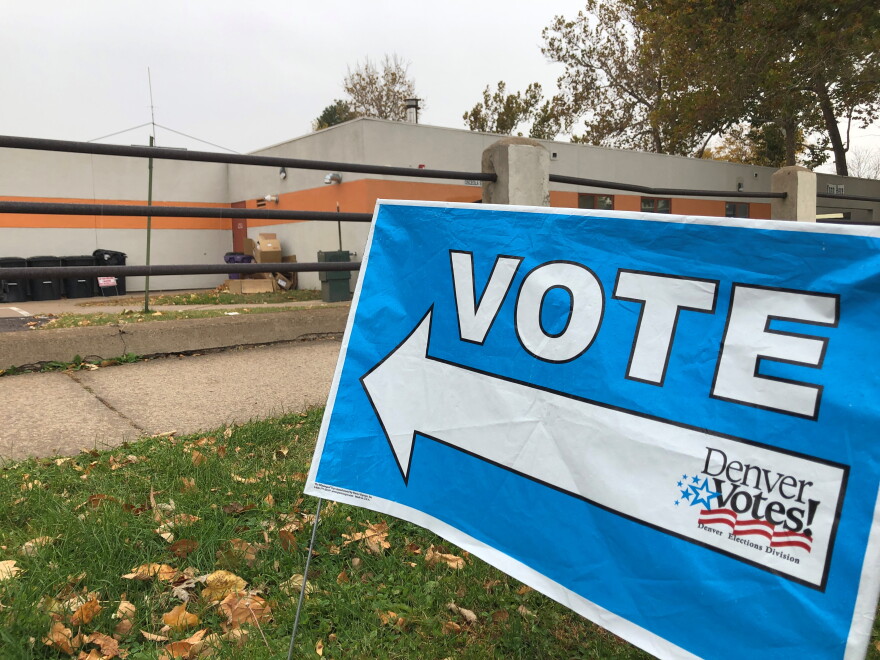
With early returns showing roughly 68.5% support by 11:30 p.m., Denver voters are on track to approve a new 20-year franchise agreement that secures Xcel Energy’s access to public rights-of-way, according to reporting by Denverite. That decisive margin positions the utility to continue business as usual across the city, avoiding the expiration deadline looming on December 31 for the previous agreement put into place in 2007.
The ballot measure, designated as Referred Question 2K, arrived at the polls after a turbulent path through city leadership. Last year, the Denver City Council rejected a previous version of the proposal by a 7 to 6 vote, partly because council members felt it fell short on climate resilience and clean energy goals. That rejection sent negotiators back to the drawing board, ultimately producing a revised contract paired with an Energy Partnership Agreement that advanced out of the council in July 2026 by a 10 to 2 vote.
Financial Commitments and Ratepayer Costs Under the New Deal
Under the terms of the newly negotiated framework, Xcel will maintain its standard operations while funding a specific slate of community benefits and infrastructure obligations. The agreement requires the utility to cover the costs of major utility relocations for construction projects, valued at approximately $150 million. Xcel will also pay $34 million per year in franchise fees to the city, drawing from a 3 percent pass-through fee tacked onto customer monthly bills. Out of that pool, $2 million annually is carved out for affordability and clean energy programs such as heat pumps and electric vehicles.
The deal also incorporates provisions that are to come from Xcel shareholders rather than ratepayers. These include a one-time $2.5 million donation for utility bill assistance, alongside $125,000 per year directed to low-income energy assistance and conservation. Ratepayers, meanwhile, will shoulder the costs for other designated items, including $250,000 annually for energy resource navigators, 1 percent of substation budgets dedicated to neighborhood-compatible design improvements, and roughly $10 million per year allocated to burying power lines.
Supporters on the City Council defended the prolonged negotiations as a necessary step to extract stronger concessions. As Councilmember Amanda Sandoval noted during council deliberations, the initial rejection was not about saying no, but about proving the city could negotiate a better deal.
Divided Opinions on Right-of-Way Value and Climate Priorities
Former councilmember Sarah Parady pointed out that members of a working group had originally requested $5 million per year for assistance programs rather than the $5 million over 20 years ultimately secured in the final text. Parady contended that the city administration failed to aggressively press that demand, undermining her confidence in the negotiating process.
The franchise agreement does not grant Denver the authority to set utility rates or dictate Xcel’s energy generation mix, powers that remain under the purview of the Colorado Public Utilities Commission and state-level emission reduction targets. If voters had rejected the measure, Xcel would have remained a state-regulated monopoly anyway, leaving the city with few viable alternatives given that municipalizing the system was previously estimated to cost between $4 billion and $5 billion.
Keep reading

Democrat Ben Brist Defeats Bob Donovan to Help Flip Wisconsin Assembly
Ben Brist, a Democrat and seven-year Army veteran, defeated longtime Republican politician Bob Donovan on Tuesday night in...
Charleston parking and rental taxes can increase visit costs
Charleston can be expensive, but the total depends on your dates, group size, cars, and dining. City-operated garages...

Washington Manor opens its doors at $3,540 per month
Washington Manor Opens at $3,540, $2,795 Below Area Care Costs Washington Manor opens its doors at $3,540 per...

Burlington Central beats St. Charles East 27-25, 25-16 in Burlington
Burlington Central defeated St. Charles East 27-25, 25-16 on Tuesday night in Burlington, sending the Rockets to the...