
When world leaders gather in Antalya, Türkiye, on November 9 for the 31st United Nations Climate Change Conference, Indonesia will arrive with more than diplomatic promises. The delegation plans to present three pieces of legislation now moving through parliament, ANTARA News reported, positioning the archipelago as a test case for turning climate commitments into binding law just as the summit shifts its focus from pledges to projects.
COP31, running through November 20, has deliberately pivoted toward implementation. Rather than haggling over new emission targets, negotiators will concentrate on the Climate Implementation Bridge—a mechanism designed to convert national climate plans into investment-ready initiatives. Indonesia’s timing matters. With the Just Climate Change Control Bill, the New and Renewable Energy Bill, and a sweeping revision to the Electricity Law all under active consideration in Jakarta, the government is betting that showing draft legislation will signal concrete seriousness to both investors and fellow nations.
Legislation as the New Diplomacy
People’s Consultative Assembly Deputy Speaker Eddy Soeparno outlined the package during a Government Communication Agency briefing in Jakarta. “There are three bills we are working on in parliament,” Soeparno said. “One is the Climate Change Control Bill, and at the proposal of Environment Minister Jumhur Hidayat, it is now the Just Climate Change Control Bill.”
The word “just” carries weight. Indonesia wants to demonstrate that its energy transition will not sacrifice workers or vulnerable communities as the country phases down fossil fuel dependence. The government has committed to making new and renewable energy reach 70 percent of the national energy mix by 2045—a transformation that requires rewriting the foundational rules of the electricity sector, which explains why the Electricity Law revision travels alongside the climate legislation.
Beyond the bills themselves, Indonesia plans to highlight operational programs at COP31. These include accelerating waste-to-energy processing to cut methane emissions from landfills and formally asserting the role of blue carbon reserves in global climate action. Coastal ecosystems like mangroves store vast amounts of carbon, and Indonesia wants Antalya to recognize them as critical infrastructure. “For us, climate action and the energy transition are not just sustainability programs, but also a development strategy for Indonesia to focus on sustainability in the future,” Soeparno said.

The Distance Between Antalya and Liagu
Yet the physical and bureaucratic distance between Türkiye’s conference halls and Indonesia’s 17,000 islands remains stark. A Jakarta Post illustration shows this gap through Liagu, a remote seaside village in North Kalimantan where women process milkfish from aquaculture ponds nestled among mangrove trees. As those mangroves degrade, the shoreline creeps closer, threatening both the ponds and the families who depend on them. Liagu will not have a seat in Antalya, but it represents exactly the kind of place where the summit’s implementation bridge must land.
The Jakarta Post reports that since the early 2020s, the Global Green Growth Institute has partnered with Indonesia’s National Development Planning Agency to embed climate planning at the provincial level, embedding teams in local administrations and working with regional investors. The insight is straightforward: national decarbonization priorities only become real when they are localized, and that subnational groundwork is where climate finance actually unlocks.
When Biodiesel Meets the Forest
Jakarta Globe raises a sharper tension that complicates Indonesia’s climate narrative. Since July, the government has required all diesel sold in Indonesia to contain 50 percent biodiesel derived from palm oil under the B50 program. While this reduces costly diesel imports, it demands agricultural land—creating pressure on forests and carbon-rich peatlands. The outlet reports that during recent dry seasons, government satellites recorded more than 20,000 fire hotspots in a single day, with resulting haze crossing borders to force school closures in Johor, Malaysia.
The numbers reveal the strain on land policy. Indonesia has formally recognized about 369,000 hectares of customary forests belonging to 174 communities, with an official target of 1.4 million hectares by 2029. But Jakarta Globe notes this goal looks modest when set beside the land that expanded biodiesel production may require. Legal recognition alone, the outlet argues, does not translate into money for village economies—a gap that leaves communities vulnerable when fires come.
This friction is why Jakarta Globe advocates for a “just forest agenda” at COP31: mandatory traceability ensuring no palm oil used for biodiesel comes from forests, peatlands, or community-claimed land; direct annual payments to villages that successfully prevent fires during dry seasons; and guaranteed revenue shares from carbon credits when communities secure formal forest rights.
From Bills to Bank Accounts
Indonesia’s delegation will spend November 9 through 20 in Antalya presenting these legislative and policy efforts as interconnected pillars of a long-term development strategy. The initiatives will be pursued, officials say, through strengthened regulation and governance, cross-sector collaboration, and long-term financing mechanisms designed to sustain the transition beyond the summit’s closing.

Whether parliament actually passes the three bills remains uncertain, and whether the Climate Implementation Bridge can deliver funding all the way down to subnational levels like North Kalimantan’s coast remains the open question hanging over the summit.
For now, Indonesia is betting that showing its legislative work—three bills, a 70 percent renewable target, and a promise to make the transition equitable—will distinguish its approach at a conference weary of unfulfilled pledges.
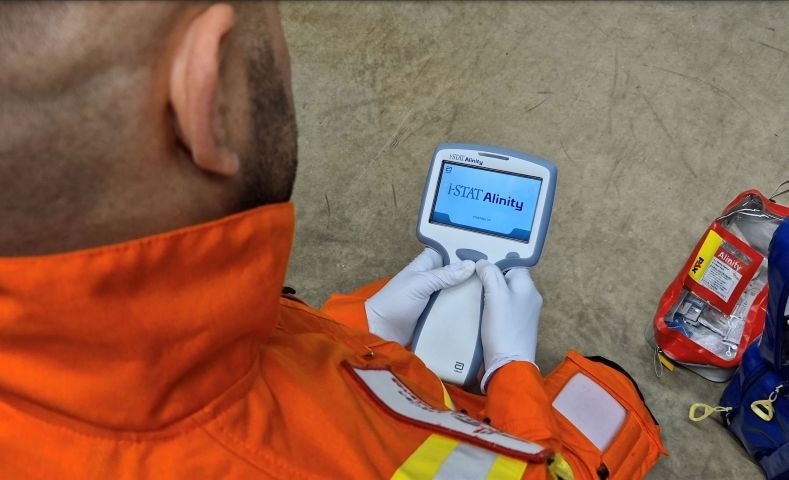
East Anglian Air Ambulance blood test confirms brain bleeds in minutes in first trial cohort
When a helicopter crew reaches someone with a suspected head injury, the clock is already running. East Anglian...

Potassium-Enriched Salt Could Prevent 3 Million Annual Deaths
Replacing ordinary table salt with a potassium-enriched alternative could prevent nearly three million deaths globally every year, according...

Sudipen Launches Paleng-QR PH Plus Program at Public Market
Market vendors in Sudipen, La Union, are trading the familiar clink of coins and crisp folds of peso...

Australian Survey: 57% of 18-35 Year Olds Report Sexual Strangulation
More than half of young adults surveyed in Australia recently reported experiencing sexual strangulation, a startling statistic that...