When adults with focal epilepsy begin treatment in Bangladesh, the choice between lamotrigine and carbamazepine often comes down to an unforgiving financial calculation. In a healthcare system where patients pay largely out of pocket, a newly published clinical trial reveals that while lamotrigine offers a more favorable safety profile with fewer adverse events, its direct drug cost is higher than that of carbamazepine.
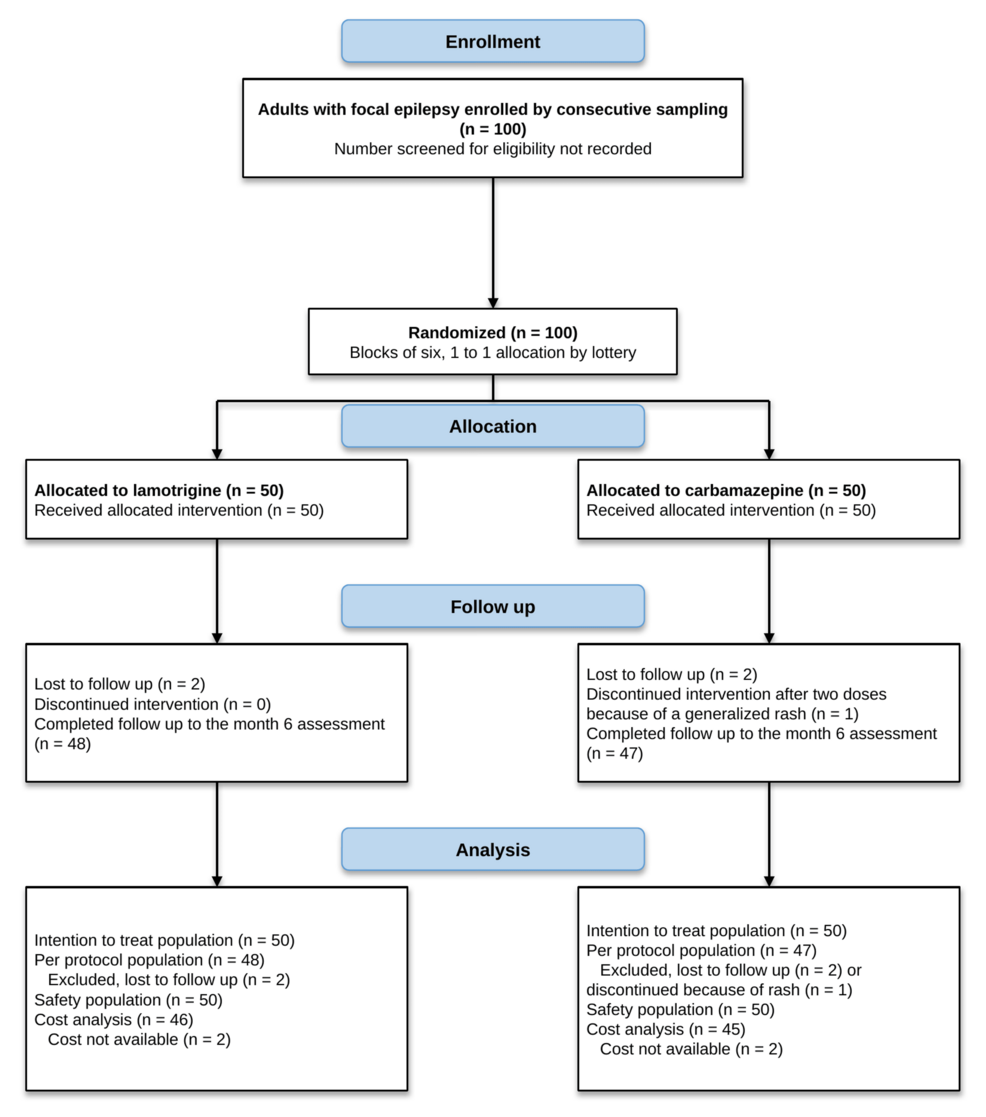
The trial evaluated 100 adults with focal epilepsy at the Department of Neurology at Dhaka Medical College Hospital between November 2022 and October 2023. It provides a localized look at how economic constraints and tolerability shape neurological care in low- and middle-income settings, where affordability frequently dictates whether a patient maintains therapy or abandons it entirely.
How did seizure control compare between the two drugs over six months?
In the intention-to-treat analysis involving all 100 participants, seizure freedom at six months was achieved by 66.0% of patients taking lamotrigine compared to 70.0% of those taking carbamazepine. When looking at the per-protocol population of 95 patients, the rates were 68.8% for lamotrigine versus 74.5% for carbamazepine. Continuous freedom from seizure recurrence through the entire six-month period stood at 50.0% for the lamotrigine group and 55.3% for the carbamazepine group.
While carbamazepine showed slightly higher numerical rates of seizure freedom, the confidence intervals were wide. Because the study utilized a prespecified noninferiority margin of 30 percentage points, researchers emphasized that equivalence or noninferiority against a conventional margin cannot be claimed.
What differences emerged in patient tolerability and adverse events?
The trial uncovered a contrast in side effects between the two medications. At least one adverse event was reported by 35.4% of participants receiving lamotrigine, contrasted with 70.2% of participants receiving carbamazepine. Sedation and fatigue drove the majority of these complaints in the carbamazepine cohort. Furthermore, two deaths occurred during the observation period, both of which were recorded in the carbamazepine group. Treatment adherence, measured via the four-item Morisky scale, remained similar across both arms of the trial.
| Outcome Measure | Lamotrigine Group | Carbamazepine Group | Statistical Significance |
|---|---|---|---|
| Seizure Freedom (6 Months, ITT) | 66.0% (33/50) | 70.0% (35/50) | Risk difference -4.0% points |
| Adverse Events Reported | 35.4% (17/50) | 70.2% (33/50) | p < 0.001 |
| Median Direct Drug Cost (6 Months) | 6480 Taka | 3510 Taka | p < 0.001 |
Why does the financial burden shift prescribing practices?
The median direct drug cost over the six-month study period was 6480 Taka for patients prescribed lamotrigine, compared to 3510 Taka for those taking carbamazepine. In a country where epilepsy affects an estimated 8.4 per 1,000 people and historical data shows wide treatment gaps, out-of-pocket expenses dictate long-term compliance. Carbamazepine remains a reference first-line drug, whereas some current guidelines suggest lamotrigine or levetiracetam as first-line monotherapy for focal seizures and place carbamazepine among the second-line options. Investigators conclude that drug choice should be individualized, underscoring the need for larger multicenter trials with longer follow-up.
Keep reading

Cambridge Scientists Detect Beauty Quarks at Zeptoverse Scale
Scientists have picked up signals from the smallest scale of nature ever explored, operating at a realm 100...

Immunosuppression Linked to Higher Blood Infection Mortality
When bloodstream infections strike patients who are immunocompromised, the danger does not just stem from ordinary bacteria. According...

Indonesian Police Refuse to Confirm Reports of General’s Detention
National Police Refuse to Confirm Officer Detentions Indonesia's National Police declined on Tuesday to confirm or deny reports...
Diabetes has greatest impact on sexuality, says sexologist Leemans
Intimate difficulties like erectile dysfunction, vaginal dryness, painful sex, and ejaculatory disorders hit people with diabetes harder than...