
Federal election monitors from the U.S. Department of Justice (DOJ) will be barred from entering polling sites in Indiana and Kentucky during the upcoming election, officials in both states announced. Instead, these observers will be forced to remain outside the designated “campaign-free” zones of polling locations in key counties, including Marion and Lake in Indiana, and Jefferson and Fayette in Kentucky.
While the DOJ is deploying 1,000 observers across all 50 states—a significant increase from the 714 sent in 2024 and 289 in 2022—state officials are digging in their heels, citing local laws that restrict who can cross the threshold of a voting center.
The 50-Foot Line in Indiana
In central Indiana’s Marion County, the boundary is known as the “chute.” Marion County Clerk Kate Sweeney Bell explained that federal monitors will be treated the same as people handing out campaign flyers: they must stay at least 50 feet away from the entrance. Signs are already affixed to walls and stakes marking the point where campaigning—and now federal monitoring—must stop.
The Indiana Election Division has taken a hard line on the matter, stating that state law does not grant federal monitors the authority to enter voting locations. In Marion County, monitors will work in pairs, visiting six or seven of the city’s 182 vote centers. To keep a low profile, these observers will wear plain clothes rather than uniforms and will not carry firearms, as they are not law enforcement officers.
While some of the monitors are not direct DOJ employees, they are drawn from other federal entities and carry temporary DOJ credentials. Sweeney Bell noted that these observers are specifically looking for compliance with the Americans with Disabilities Act and the Help America Vote Act, particularly regarding polling accessibility and the handling of provisional ballots.
Kentucky Threatens Police Intervention
In Jefferson and Fayette counties—the state’s largest hubs for Democrat-registered voters—officials have similarly blocked DOJ entry. Jefferson County Clerk David Yates stated that if federal monitors ignore the 100-foot boundary and attempt to enter polling sites, his office may call local police.
Yates described the DOJ’s notice to enter as a demand rather than a request. While Kentucky law allows for “challengers”—poll watchers appointed by political parties—those roles must be registered by a deadline that has already passed. Because no party challengers were registered, the DOJ monitors find themselves without a legal pathway inside the room.
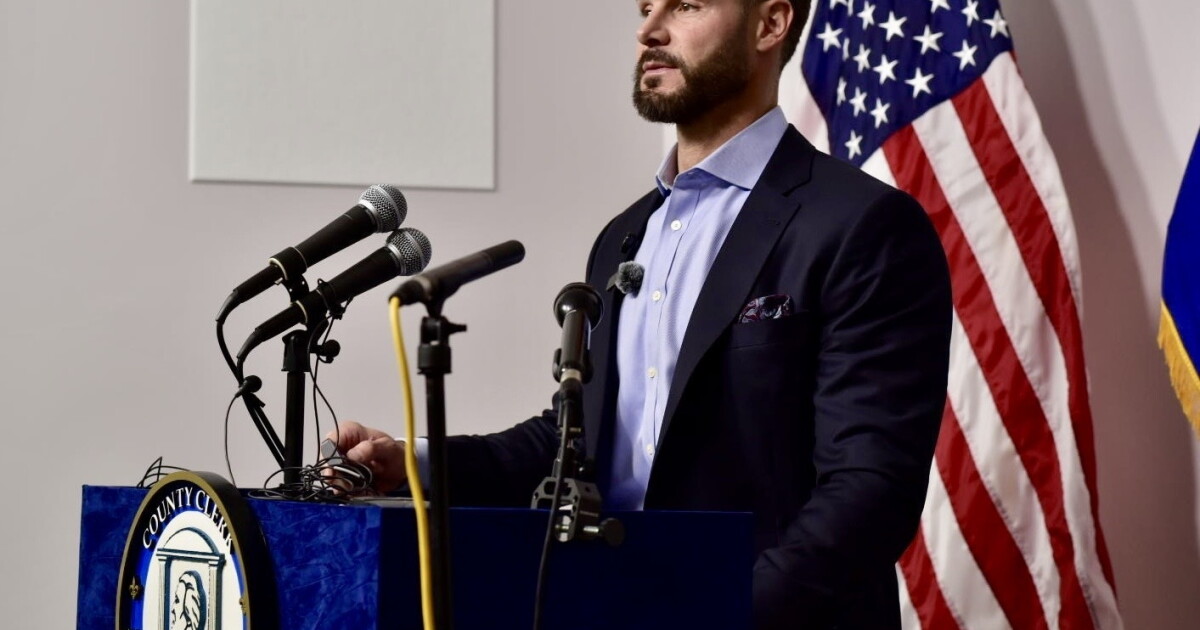
“If they would violate that…just like any other person, everyone’s held accountable to the same law,” Yates said.
The Conflict Over Voting Rights
The DOJ’s interest in these specific counties often centers on the Voting Rights Act, specifically language assistance for minority populations. However, officials in both Indiana and Kentucky point out that none of the targeted counties are currently subject to those specific federal mandates.
Indiana Attorney General Todd Rokita has welcomed the monitors, framing them as an extra layer of accountability to prevent noncitizen voting. Rokita cited recent charges filed by his office against an alleged noncitizen who voted illegally as proof that federal eyes are necessary to protect election integrity.
Conversely, the DOJ maintains that this is routine. In a statement used across multiple states, the agency asserted that its monitors are simply observing for potential violations of federal law and will report concerns after Election Day without interfering in the voting process.
A Comparison of State Restrictions
| State | Restriction Zone | Legal Basis / Action | Primary Concern |
|---|---|---|---|
| Indiana | 50 Feet | State law denies federal access | ADA & Help America Vote Act |
| Kentucky | 100 Feet | Police intervention threatened | General federal law compliance |
For now, the DOJ is left to watch from the periphery. As Kate Sweeney Bell put it, the monitors have a right to be there, but so do the voters have a right to vote without coercion. The question remains whether a report written from 50 or 100 feet away can truly capture the nuances of what happens inside the polling location.
Worth a look

NYC Marathon for Alzheimer’s: Influencer Crust by Carson
Social media influencer Carson Gillaspia, known to millions as "Crust by Carson," is set to run the 2026...

Sen. Stan Clouse intends to bring Head Start programs into state law
Approximately 5,500 children from low-income families in Nebraska are served by Head Start across 37 programs statewide, yet...

Center for Warriors proposes $150M veterans complex in Helena
The Center for Warriors Foundation is proposing a $150 million veterans corrections complex in Helena, Montana, designed to...

Chiefs Urged to Trade for Adonai Mitchell to Fix Downfield Passing
The Kansas City Chiefs are facing urgent calls to acquire New York Jets wide receiver Adonai Mitchell before...