Dover Corporation’s organic sales growth hit 7% in the third quarter, accelerating well past the 4% to 6% range the company has long used as its compass, Yahoo Finance reported.
The quarter pushed bookings up 16% year over year across all five segments, leaving a record backlog 35% higher than a year ago. That backlog now stretches deep into 2027, with roughly half of it scheduled to ship in the next fiscal year, the same Yahoo Finance summary of the Q3 earnings call noted.
“Our highest return on invested capital is CapEx. Everybody likes to talk about M&A, but remember, you’re buying 15, 16 years worth of earnings when you do M&A. When we do CapEx, sure, there’s a short-term drag during the build-out phase and the under-absorption phase, but if you get it right, the returns on our organic capital are far superior than even the best ones that we’ve done on M&A,” Chief Executive Rich told the Baird 2026 Global Industrial Conference on November 10, according to an Investing.com transcript.
That philosophy is playing out in real time. Dover is building four greenfield plants simultaneously — expanding retail fueling, cryogenic components, biopharma and large heat-exchanger capacity — investments that ate $40 million in duplicate fixed costs and ramp-up expenses through the first nine months of 2026, Yahoo Finance said. The hit will grow slightly through year-end before rolling off in the first quarter of 2027, management told analysts on the earnings call.

Cash flow gives the company room to absorb that drag. Dover generated about $1.1 billion in free cash flow on $8.1 billion of 2025 revenue, Built In reported, and the company repurchased $330 million of stock in the third quarter alone. At the Baird conference, management said the capital-allocation bias has flipped from 70% M&A / 30% shareholder returns to the inverse, citing high deal multiples and a belief that Dover shares trade below intrinsic value.
The mix shift is already visible in margins. Imaging and Identification EBITDA margins expanded 400 basis points to 33% in the quarter, driven by high-margin software growth and higher volume on a largely fixed cost base, Yahoo Finance said. The brazed plate heat-exchanger business — a key supplier for data-center liquid cooling — has delivered 500 to 600 basis points of margin improvement after its capacity build-out, Investing.com reported from the Baird presentation.
Climate and Sustainability Technologies posted 18% organic growth in the quarter, fueled by demand for those same heat exchangers in data centers. Clean Energy and Fueling benefited from a multi-year North American retail-fueling capex cycle and healthy cryogenic-component demand. Yet capacity constraints in cryogenic lines and heat exchangers temporarily offset the benefit of higher volume because demand is running ahead of production, Yahoo Finance noted.
Europe remains a drag. Management at Baird flagged the region’s slower pace and uneven regional demand as a watch item, even as secular growth markets — AI infrastructure, energy transition, U.S. onshoring — now represent more than 25% of total revenue, Yahoo Finance said.
Full-year guidance was narrowed toward the upper end: organic growth of 5% to 6% and adjusted earnings per share of $10.60 to $10.75. The company is targeting 25% EBITDA margins by late 2027 or early 2028, assuming a stable macro backdrop, Investing.com reported.
Two bolt-on acquisitions, Clarin and Lichtung, were announced to add low-cost manufacturing hubs in the U.S. and India, Yahoo Finance said, but the M&A throttle is deliberately light.
Dover Corporation traces its roots to 1955, when New York stockbroker George L. Ohrstrom Sr. consolidated four industrial firms — among them Rotary Lift and C. Lee Cook — under a single holding company led by Fred D. Durham. The corporate name came from the Dover Elevator business that grew from those origins and eventually made Dover the third-largest U.S. elevator manufacturer before the division was sold to Thyssen AG for $1.1 billion in 1999.
A 1949 invention by OPW engineer Leonard H. Duerr, the automatic shutoff fuel-dispensing nozzle valve, became a ubiquitous piece of retail-fueling infrastructure and foreshadowed the Clean Energy and Fueling segment that now benefits from a multi-year North American capex cycle. Today the S&P 500 constituent, ranked 484 on the 2026 Fortune 500, generates roughly $8.1 billion in revenue while pivoting capital allocation from M&A toward organic expansion and shareholder returns.
Backlog duration gives high visibility into 2027, and the cyclical bottom in the Belvac can-making business represents potential future upside not yet reflected in the current order book, management told analysts on the Q3 call.
Keep reading
- Paolo Banchero Stays Mentally Engaged During High Ankle Sprain Rehab to Avoid Past Mistakes
- Hour Detroit Magazine Highlights Four Detroit Hotel Restaurants
- Airbnb's Chore Limits Cover Bookings Made From Nov. 20, Not Stays (daybreakwire.com)
- UK retail sales jump 0.7% in October as shoppers stockpile essentials (newsarchyuk.com)

Paolo Banchero Stays Mentally Engaged During High Ankle Sprain Rehab to Avoid Past Mistakes
“They were all very much forward with making sure I’m watching film with them on the road, making...
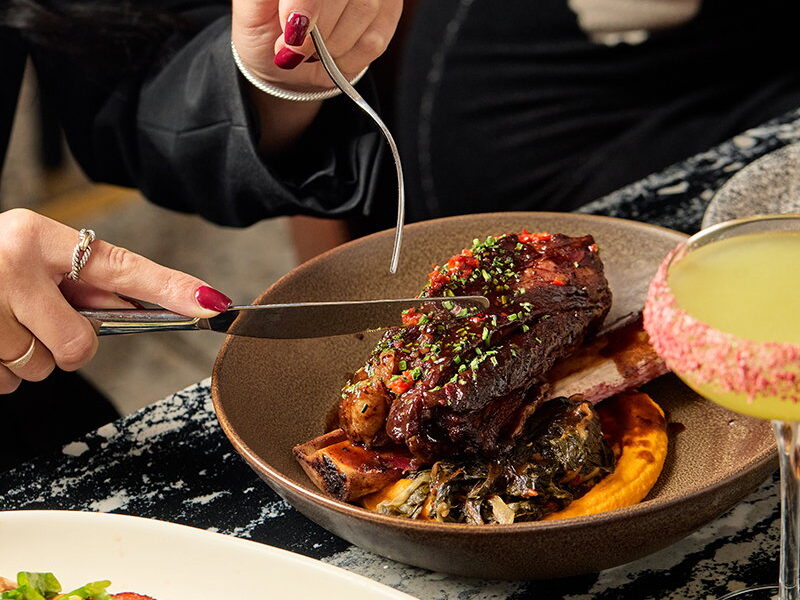
Hour Detroit Magazine Highlights Four Detroit Hotel Restaurants
Detroit's hotel restaurants have stopped feeling like afterthoughts and started feeling like destinations, Hour Detroit Magazine reported in...

Kala Flannigan Dies Saving Dog After Brother Sets House Fire
Kala Flannigan was already out of the burning townhouse when she turned back toward the second-story window to...
North Dakota vs Cambodia: Size and Population Comparison
North Dakota and Cambodia occupy almost the exact same footprint on the planet — separated by roughly 800...