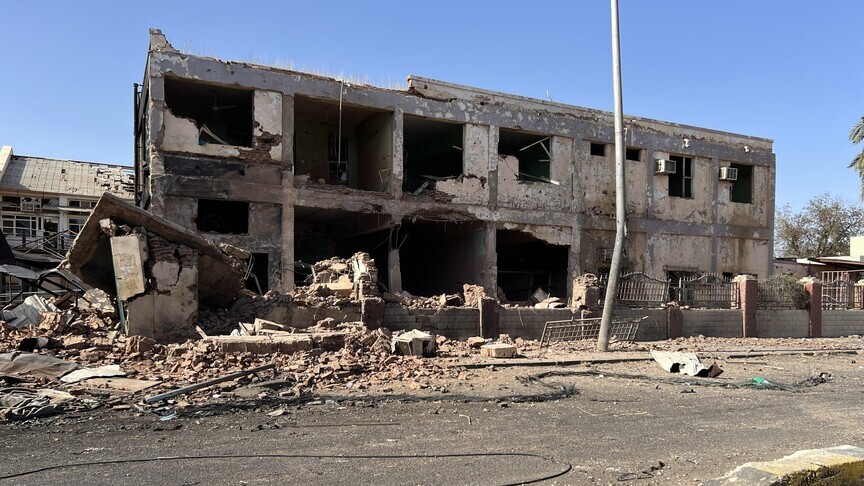
Sudan faces a severe energy crisis as a wave of targeted drone strikes drives down electricity generation and disrupts hospitals, water supply networks, and aid delivery.
Power Stations Hit by 15 Strikes in October
Up to 15 drone strikes hit power stations across Sudan during October, according to UNICEF spokesperson James Elder. The frequency of attacks has plunged cities into darkness and reduced electricity generation from roughly 4,400 megawatts before the war to about 1,100 megawatts, according to figures cited from The Associated Press.
The offensive has heavily impacted urban centers, including Khartoum, where power facilities and fuel depots have faced systematic targeting. In El Obeid, residents live under the constant threat of drone strikes alongside severe water shortages and soaring food prices, according to The European Times. The civil war began when a power struggle between the armed forces and the paramilitary Rapid Support Forces erupted into violence in the capital of Khartoum in April 2023. Over the course of the conflict, the dynamics of the warfare evolved. At the start of the conflict, the army relied on fighter jets, attack helicopters, tanks, and long-range artillery, while the military conflict later saw an increased reliance on armed drones capable of striking targets hundreds of kilometers away without risking fighters.
Ali Mahmoud Ali, a Sudan analyst at the conflict monitoring group Acled, said that the armed forces typically deployed unmanned aerial vehicles to strike paramilitary bases and cut off supply and refueling routes, while militia forces targeted infrastructure such as water plants, airports, hospitals, and power stations to signal their ability to destabilize army-controlled regions.
The United Nations Human Rights Office reported that between January and April 2026, drone strikes killed at least 880 civilians, accounting for over 80 percent of all conflict-related deaths during that period. In October alone, major spikes in violence included drone attacks that killed at least 306 people across Sudan in the first three weeks of the month.
Impact on Healthcare and Humanitarian Aid
The energy shortages and direct strikes have severely impaired medical facilities. UN Humanitarian Coordinator Denise Brown highlighted that World Health Organization colleagues visited a hospital outside Khartoum where the electricity failed during strikes. Without a generator or solar panels, the outage halted dialysis treatment for 25 people.

Humanitarian operations face similar paralysis due to fuel shortages and blocked supply routes. The UN official also explained that teams engaged in daily negotiations to access hard-to-reach areas such as South Kordofan, alongside locations in Blue Nile, Darfur, and West Kordofan, while the World Food Programme was forced to cut both the number of people served and individual ration sizes.

Agencies reported that as of early November, approximately 15.4 million people across the country required emergency shelter and household supplies, though humanitarian groups had reached only ten percent of them. The UN’s Humanitarian Needs and Response Plan required $2.9 billion to support 20 million out of 33 million vulnerable residents, but was only about 47 percent funded by early November.
There is no defence for repeatedly hitting power stations and fuel stations. People who need lifesaving dialysis can’t get it. Women are giving birth with no lights in the hospital. Operations can’t take place.
Denise Brown, UN resident and humanitarian coordinator in Sudan, via The Guardian
Child Casualties and Rising Malnutrition
UNICEF reported that two-thirds of all children killed or injured in Sudan this year fell victim to armed drones. Out of 410 child casualties recorded between January and September, an estimated 270 stemmed from drone strikes.
They are bringing the war to places that were once safe. People here talk about three things: safety, education and water. Armed drones are taking all three.
James Elder, UNICEF spokesperson, via Channels Television
Simultaneously, the Integrated Food Security Phase Classification warns that 825,000 children under five will suffer from severe acute malnutrition in 2026, marking a 7 percent increase from the previous year. Drought and crop failures linked to the El Niño phenomenon have further reduced vegetation growth across agricultural land in North and South Darfur and the Kordofan states.
UNICEF recorded at least 40,000 malnutrition cases in North Darfur from January to May 2025, while displacement camps such as Al-Karama-3 in Blue Nile state saw pediatric malnutrition numbers climb from 1,800 in September to 2,116 in November.
Additionally, regional developments included a drone strike in the Blue Nile region that killed nine civilians in the Bani Shako area and injured several others, as reported by Kurmuk Locality Commissioner Abdel Ati Mohamed Al-Faki. Displaced residents were attempting to flee toward the regional capital of Damazin when the strike occurred.
International Condemnation and Joint Demands
Five international organizations—the African Union, United Nations, European Union, Arab League, and IGAD—released a joint statement condemning the escalation. The Quintet stressed that attacks directed against civilians and civilian objects constitute violations of international humanitarian law, urging an immediate halt to hostilities and an end to external support fueling the conflict.

Deputy Spokesman for the UN Secretary-General Farhan Haq also emphasized that ongoing humanitarian needs continue to grow as strikes persist across multiple states, while international aid programs remain heavily underfunded with less than two months remaining in the annual response cycle.
Earlier coverage: US Calls for Accountability After Drone Strikes Kill 30 in Abyei
Worth a look

Three Springfield Area Teams Reach IHSA Semifinals: Evrim Tabag Leads
Three Springfield-area high school football teams punched their tickets to the IHSA semifinals on Saturday, Nov. 14, following...

Waimanalo Parents and Coaches Protest Overgrown District Park Grass
“The grass is taller than her,” Tony Graziano told Hawaii News Now regarding the conditions at Waimanalo District...

Malakoff, Tatum and Atlanta Advance in Class 3A Bi-District Playoffs
The Malakoff Tigers, Tatum Eagles and Atlanta Rabbits secured bi-district victories to advance in the playoffs, according to...

Jacksonville Jaguars Bench Jessie Bates and Jordan Davis for Titans Game
The Jacksonville Jaguars bench newly acquired safety Jessie Bates and defensive tackle Jordan Davis for their Nov. 15...