
The Shrinking Lifespan of New Mexico’s Rio Grande Cottonwoods
For weeks, the bosque—the vital ribbon of green hugging the Rio Grande—has been a landscape of quiet distress. While September brought the wettest weather on record to New Mexico, providing a temporary reprieve from the parched conditions that defined the summer, the long-term health of the region’s iconic cottonwood trees remains in jeopardy. Even with recent moisture, the state is still grappling with the lingering effects of a historic dry spell, with data from the National Integrated Drought Information System showing that 30.3% of New Mexico is still classified under moderate drought conditions.
The severity of this current cycle is difficult to overstate. According to Matthew Hurteau, director of the Center for Fire Resilient Ecosystems and Society, the current drought intensity mirrors conditions not seen in the region since the 1500s. By analyzing tree rings, researchers can pinpoint the exact impact of these dry years on growth; when water is scarce, trees produce significantly narrower rings. This season, the stress on the cottonwoods was visible long before the autumn chill. In a typical year, these trees serve as a golden landmark for Albuquerque in October, but this year, they began shedding their leaves as early as July—months ahead of their natural cycle.
“I wouldn’t be surprised if this is what kills them this year,” says Matthew Hurteau, noting that when cottonwoods are forced to drop their leaves prematurely, they cannot store the essential carbohydrates needed to sustain themselves through the following season.
The Vulnerability of an Aging Ecosystem
The crisis is compounded by the age of the forest itself. Many of the cottonwoods located in the Rio Grande Nature Center State Park are between 80 and 100 years old, putting them at the upper limit of their natural lifespan. As these trees age, their ability to recover from environmental stressors—such as disease or the persistent invasion of mistletoe—diminishes. Levi Dean, the park superintendent, explains that the cumulative effect of these pressures has left the trees shedding limbs and struggling to maintain their structural integrity.
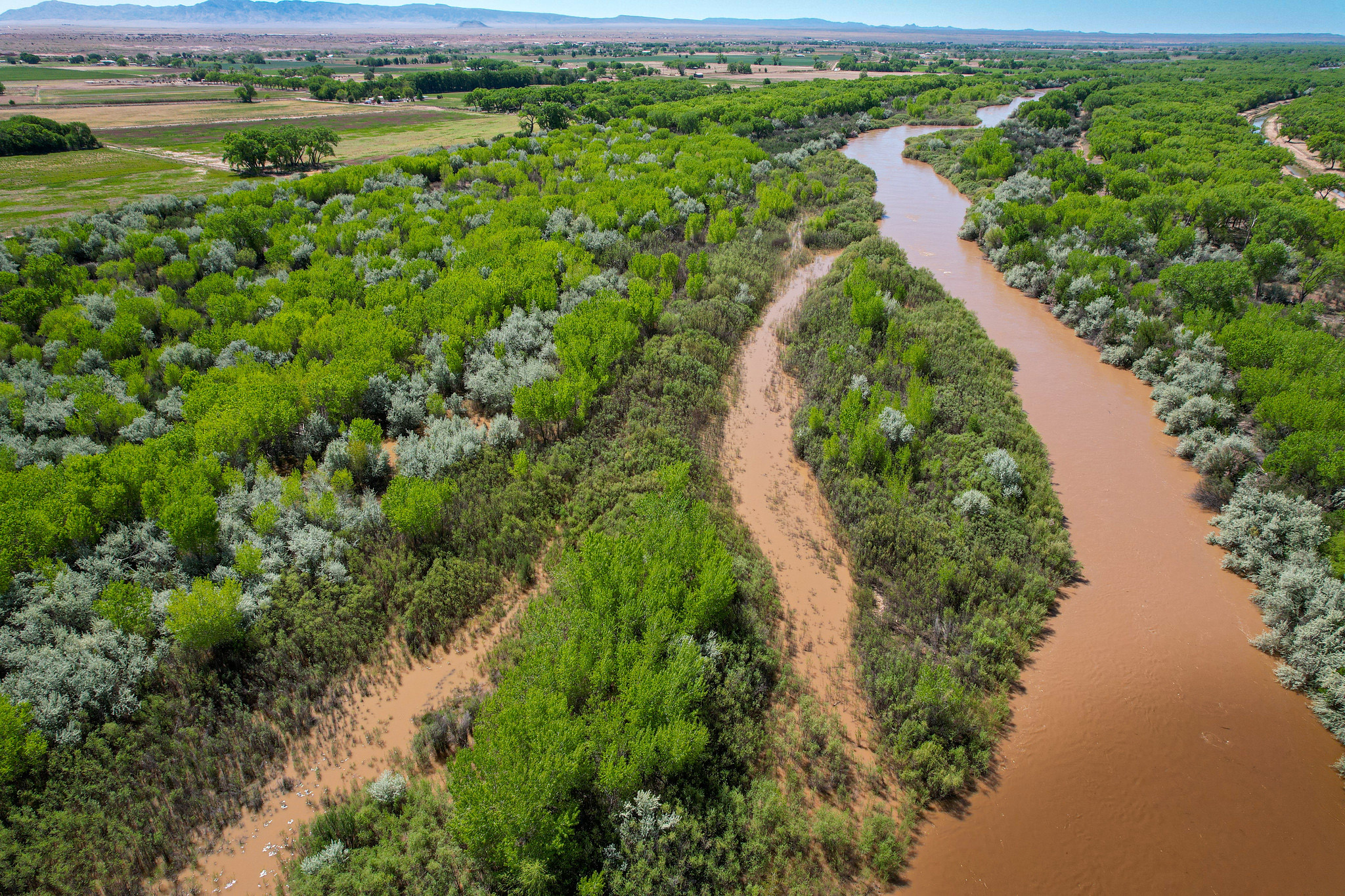
The potential loss of these trees extends far beyond the aesthetic change to the riverfront. The cottonwood serves as a keystone species for the middle Rio Grande, anchoring the riparian habitat that supports a vast array of wildlife. Its canopy provides essential cooling shade for the forest floor, and its decline creates a vacuum that could be filled by invasive species such as the Siberian elm, tamarisk, and Russian olive. This shift in vegetation could lead to a broader ecological transformation, potentially clearing the path for species like the screwbean mesquite and Arizona ash to migrate northward from hotter, southern climates.
Rising Fire Risks and the Path Forward
The environmental stakes are also profoundly personal for those living near the bosque. A forest dominated by dead trees and dry, brittle limbs is significantly more susceptible to fire. Because nonnative species often possess high fuel loads, the degradation of the cottonwood forest increases the wildfire risk for nearby homes, schools, and businesses. While the recent monsoon rains brought a necessary drop from the 69.8% of the state that was facing severe drought just weeks ago, experts warn against complacency.
Both Dean and Hurteau emphasize that proactive measures remain critical. Following Firewise preparation steps—such as clearing flammable debris around private properties—is a necessary reality for residents in the wildland-urban interface. Despite these efforts, the true extent of the damage may not be fully realized until next spring, when the trees attempt to exit their dormant state. For now, the community is left to watch the bosque with a sense of guarded uncertainty.
Nature in the middle Rio Grande will persist, but it is unlikely to remain unchanged. As Dean observed, the ecosystem will continue to evolve, but it may look quite different as the years progress. The challenge for the region is not just to wait for the rains, but to adapt to a reality where the iconic golden canopy of the bosque is no longer a guarantee.
Related reading

Jalen Brunson Makes Law & Order SVU Cameo as Detective Madison
Jalen Brunson Trades the Hardwood for the Precinct in SVU Cameo New York Knicks star Jalen Brunson made...

Justin Pearson accepts 9th District loss but vows to challenge map
The 9th District Results and the Future of Tennessee’s Political Map Democratic state Representative Justin J. Pearson has...

The 6 Stages of Content Maturity: How to Scale Your B2B Content Engine
Content maturity for B2B brands often stalls because companies rely on sporadic, founder-led updates rather than a systemic...

228 Roosters Seized From Redmond Cockfighting Operation
Deschutes County Detectives Seize 228 Roosters in Redmond Cockfighting Raid A long-term investigation into a property northeast of...