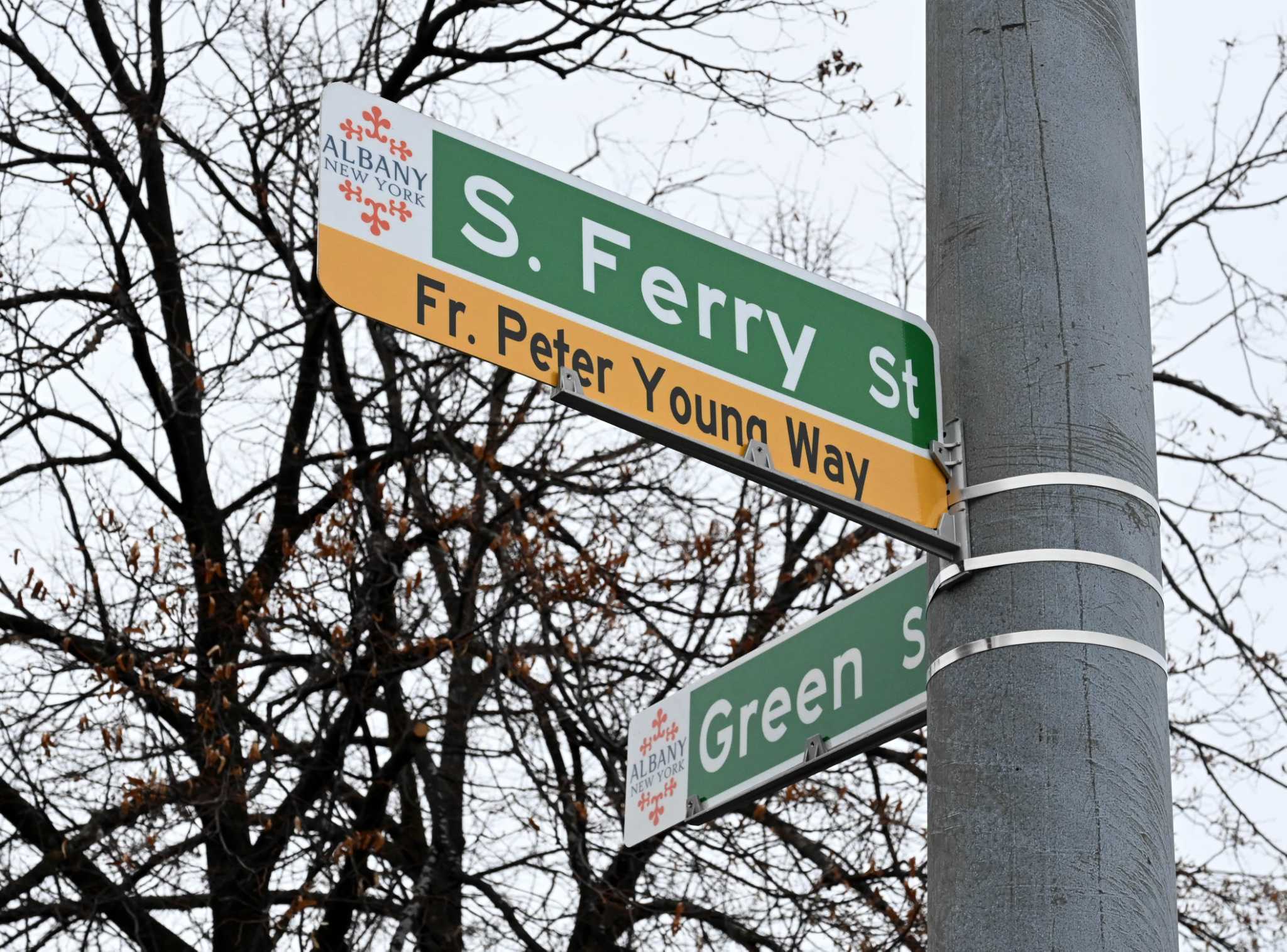
In a column for the Times Union, the newspaper’s editorial board argues that Albany’s decision to begin naming streets after living residents was a misguided step that the Common Council should reverse, returning instead to a long-standing tradition of bestowing such civic honors only after death.
The debate surfaced at a recent caucus meeting of the Albany Common Council, where members briefly paused their fractious but weighty wrangling over the city’s pressing budget crisis to examine something less consequential yet unexpectedly divisive: the flawed process for naming streets to honor noteworthy citizens. As Times Union Patrick Tine detailed in his reporting on the meeting, the discussion raised intriguing questions about who should receive such public tributes and, crucially, when they should receive them. Yes, Albany has more pressing problems, but the debate reveals deeper tensions about how the city chooses to memorialize its residents while managing scarce resources.
Roughly a year ago, the city moved away from a longstanding practice of granting honorary street names exclusively to those who had passed away. The Common Council enacted legislation outlining clear procedures for naming streets after the living and the dead alike, a shift that was well-intentioned. Councilors believed it would be genuinely nice to bestow the honor while the honoree is still around to appreciate it. Councilman Derek Johnson captured the sentiment at the time.
“Smell their flowers,” as Johnson put it.
When Good Intentions Pave the Road to Headaches
Turns out, the road to headaches is paved with good intentions. At last week’s meeting, some councilors wanted to pause the program entirely amid a torrent of requests and mounting worries that these honors would become diluted and lose their meaning. Highlighting the point, Johnson said he had received a request to name a street for a preteen. The child is undoubtedly wonderful, and the editorial board intends no disrespect toward the youngster in maintaining that honorary street names ought to honor an entire lifetime rather than just a few years of accomplishments or service.
The Times Union editorial board recommends that the city revert to its prior tradition of designating street honors only for the deceased. Naming a street for a living, breathing human raises obvious problems, the paper argues, including that the person remains alive to potentially dishonor the honor through future actions. It would be deeply embarrassing to have an Albany street named for somebody subsequently convicted of a crime, for example. It is also worth noting that the financial costs associated with naming a street are not negligible, involving signage changes and administrative work, and once a street has been given an honorary name, it should stick permanently.
Rejecting the Highest Bidder
The editorial also firmly rejects a suggestion from Owusu Anane that the revenue-hungry city sell honorary street names to entrepreneurs, businesses or individuals as a creative revenue stream. Albany has a long and generally proud history, the paper writes — too proud for street names sold to the highest bidder. Too proud for, say, “Crumbs Along the Mohawk Way,” delicious as that revered local ice cream establishment may be. At the very least, Anane sought to steer the discussion toward the city’s most pressing issue — namely, the fiscal crisis — and deserves recognition for exploring innovative approaches that avoid imposing a mandatory commuter tax on non-residents. But when it comes to honorary street names, the best approach is a return to tradition.

History Changes, Values Evolve
Granted, time can alter how even the most eminent of the deceased are perceived by later generations. As proof, the editorial cites former Mayor Kathy Sheehan’s choice to take down the City Hall statue commemorating Philip Schuyler, the Revolutionary War general and among colonial Albany’s most prominent enslavers. History may not change, the paper concedes, but our societal values do evolve. Any honor carries risk, the editorial acknowledges.
As the Common Council paused its budget crisis debate to discuss honorary street names, some members sought to pause the program amid a torrent of requests while others proposed selling the honors.
Keep reading

Tennessee Supreme Court Upholds Law Capping Metro Nashville Council at 20 Members
Twenty. The Tennessee Supreme Court on Monday upheld a 2023 state law capping the Metro Nashville Council at...

South Dakota Republicans win statewide races, including secretary of state Heather Baxter
Republicans won in South Dakota on Tuesday. What happened instead was a clean sweep: the GOP finished ahead...

Yale SOM alumni win seats in Connecticut, Kentucky and Rhode Island
59% to 41%. That was the commanding margin by which Connecticut Ned Lamont won his third term on...

Charleston Voters Approve Half-Cent Transportation Sales Tax Extension
Charleston County voters have chosen to keep a half-cent transportation sales tax in place, with the extension projected...