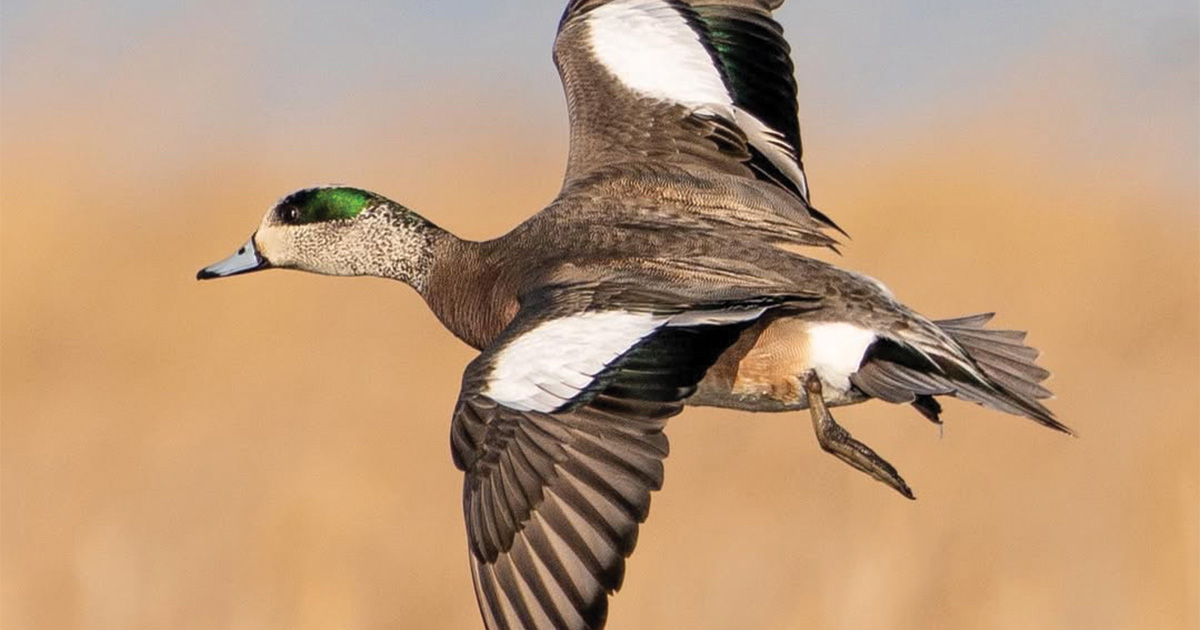
Oregon duck hunters are dealing with a sporadic fall season as a powerful El Niño pattern leaves the Pacific Northwest dry and pushes migratory birds off their usual routes, ducks.org reported.
The weather phenomenon, which has duped hunters before, is splitting the West’s winter storm systems, sending moisture south to drench California and north into British Columbia while leaving Oregon parched well into November. Officials at the Oregon Department of Fish and Wildlife say the lack of rain has left public hunting areas with below-average success rates, though a recent shot of cold air from Canada has begun pulling some birds south into the state.
El Niño Leaves the Pacific Northwest High and Dry
Brandon Reishus, migratory game bird coordinator for the Oregon Department of Fish and Wildlife, told ducks.org the season has been slow, but officials expected a weather-less year. “It’s been kind of slow so far,” Reishus said. “But we kind of expected it to be pretty weather-less this year. There’s a week or two of (modest) rain coming, though, so at least we’ll finally see some water on the ground. Anything helps.”

Sauvie Island, home to Oregon’s banner public hunting area, started the season with success rates below average. But last week’s hunts yielded well over two and even three birds per gun, thanks to that blast of cold from Canada. Mallards and green-winged teal are each contributing comparable portions of the harvest and top the overall counts, with wigeon, pintails, and shovelers trailing behind in that sequence.
Farther south in the Willamette Valley, the story shifts. Kelly Warren, Ducks Unlimited’s regional biologist for western Oregon, notes that mallard ratios are high there. The cold shot across Canada has accelerated the migration into the valley, changing what hunters see in the field. According to Warren, hunters in the valley are encountering abundant mallards—local birds on private property near federal refuges and along the Long Tom River, south of Monroe.
“The mallards I was seeing at the start of the season were quite different in plumage and behavior from what we’re seeing now,” Warren said.
Whether this success lasts remains uncertain as hunting resumes Thursday after a hiatus of a few days, because Canada is once again basking in unseasonably warm weather that could keep birds grounded.
Mallards Stuck in Alberta as Calgary Hits 68 Degrees
The migration stall is stark when you look north. Reishus and Warren point to a partnership among Ducks Unlimited, Oregon, Washington, and Idaho to outfit mallards on Alberta’s prairies with radio transmitters. This collaboration allows researchers to track the birds’ movements to gain more information about distribution patterns, and the data reveals birds that should be moving south are instead holding tight in Canada.
Reishus observes that so far, the banded birds are not moving from the area. Warren agrees, noting they are stuck in Alberta. Reishus adds that it is 68 degrees in Calgary.
Along the Oregon coast, the pattern differs. Wigeon and pintails dominate harvests in the north, with some southbound teal lingering in southern coastal estuaries. Strong numbers of wigeon provided a few great days for Ted Teufel of Bay City, near Tillamook, who includes estuary hunts in his guide service.
“Pintails and some greenwings are here and there, but wigeon will stick around for the season,” Teufel said. “There are mallards in the Tillamook area, but they’re working fields of freshly harvested corn.”
The coast is also lacking its normal fall rains, though Teufel adds that at least it has been nice and cold. In southeast Oregon, hunting is decent at Summer Lake’s vast spring-fed marshes, a success Warren attributes to the lack of water across the high desert forcing birds into the remaining wetlands. Areas of eastern Oregon that did receive some water are already drying up again.
Canada geese and cackling geese are likewise holding back from their typical southward movement into the Willamette Valley, remaining from Sauvie Island and Ridgefield National Wildlife Refuge across the Columbia River up into southwest Washington, where Warren reports they are plentiful. Reishus notes the season’s first cases of avian flu have been reported among geese that have moved into the valley—a disease that has been a seasonal problem for the past several years and could spread rapidly if birds remain concentrated.
While Canada basks in unseasonably warm weather, Summer Lake is producing, Sauvie Island rebounded last week with hunters taking multiple birds, and coastal guides are finding wigeon in strong numbers. But the counterweight to that optimism is the warming trend in Alberta: if the 68-degree weather in Calgary persists through Thursday’s reopening, the mallards currently grounded there may not move at all.
For now, Oregon hunters are left watching the thermometer in Calgary as closely as the sky over Sauvie Island, waiting to see if the cold returns.
Essential Hunting Requirements for Wyoming Migratory Bird and Pheasant Seasons
As Wyoming’s big game hunting season comes to a close, the focus for many outdoorsmen and women is...

Wisconsin Voters Approve Two of Three Constitutional Amendments
Voters prohibit governor from using partial veto for taxes Wisconsin voters reached a definitive verdict on the scope...

Sam Darnold ruled out for Seahawks vs. Cardinals Week 9 matchup
The Seattle Seahawks are facing a significant roster disruption ahead of their Sunday showdown at Lumen Field. Starting...

Gov. Kim Reynolds Congratulates Governor-Elect Rob Sand
Governor-elect Rob Sand Secures Victory in Iowa Gubernatorial Race Iowa’s politics are set to change as Democrat Rob...