Cerebral desaturation occurred in nearly four of five infants undergoing non-cardiac surgery, and the deepest drops tracked closely with falling end-tidal CO₂ even while heart rate, blood pressure and peripheral oxygen saturation looked normal, a prospective observational study in Nature found.
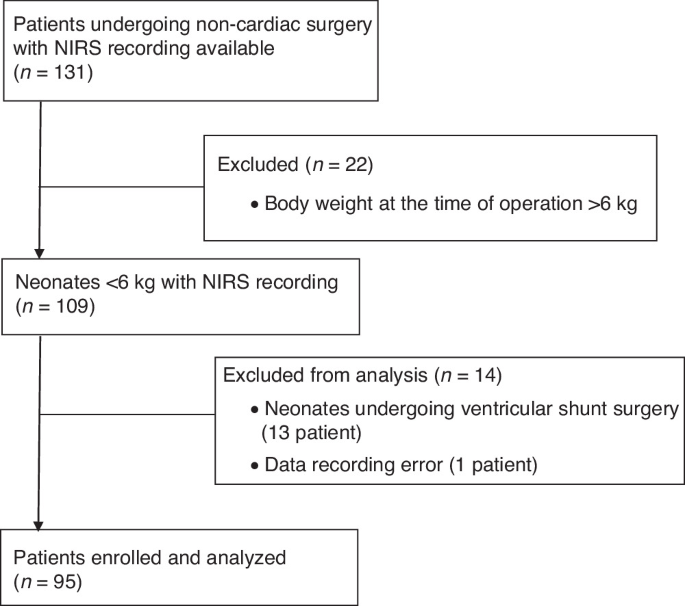
Researchers monitored 101 neonates with near-infrared spectroscopy (NIRS) during routine non-cardiac procedures. Severe desaturation events — defined by nadir regional cerebral oxygen saturation (rSO₂) — were less frequent than mild ones but lasted markedly longer and carried the greatest cumulative hypoxic burden, measured as an rSO₂-time integral.
Standard monitors missed the signal
Heart rate, non-invasive blood pressure and SpO₂ generally remained within clinically accepted ranges during severe desaturations. The study reported a “dissociation between cerebral oxygenation and routinely monitored systemic parameters,” which the authors attribute to immature cerebrovascular autoregulation in neonates, especially preterm infants.
End-tidal CO₂ showed the tightest temporal link
Among routinely captured variables, end-tidal CO₂ (etCO₂) demonstrated the closest temporal relationship with rSO₂ nadirs during severe events. The authors note that hypocapnia causes cerebral vasoconstriction and is a recognized risk factor for intraventricular hemorrhage, periventricular leukomalacia and bronchopulmonary dysplasia in neonates.
“The relatively high cFTOE observed at the rSO₂ nadir, together with preserved peripheral oxygen saturation, further suggests that severe cerebral desaturation was not primarily attributable to systemic arterial desaturation, but may reflect an imbalance between cerebral oxygen delivery and consumption,” the study says.
etCO₂ trends, not absolute values, were analyzed
Because capnography in newborns can underestimate arterial CO₂ due to small tidal volumes, large dead space and frequent lung disease, the team analyzed changes in etCO₂ rather than absolute numbers. All recordings were manually reviewed and capnography waveforms reconstructed to verify physiologically plausible signals.
Blood pressure timing offered limited insight
Nadir mean arterial pressure (MAP) often preceded the rSO₂ nadir, but non-invasive blood pressure was sampled too infrequently to assess synchrony. The authors cite multicenter analyses reporting limited correlation between MAP and intraoperative rSO₂, and note that MAP alone is an unreliable predictor of neurodevelopmental outcomes in preterm infants.
NIRS-guided trials have not yet shown outcome benefit
SafeBoosC-II reduced cerebral hypo- and hyperoxia in NICUs, but SafeBoosC-III and COSGOD-III did not demonstrate improvements in survival or major neurological outcomes. Those trials excluded surgical neonates. Preliminary data suggest NIRS may detect disturbances earlier than systemic monitors in surgical populations, but high-quality evidence remains limited.
No intervention threshold proposed
Because management was intentionally not guided by NIRS readings, the authors caution that the findings “should not be interpreted as supporting a specific intervention threshold or treatment algorithm.” They argue the data provide a physiological rationale for future prospective interventional studies evaluating whether NIRS-guided optimization of perioperative management can improve neurodevelopmental outcomes.
Limitations noted by the authors
The cohort was heterogeneous, reflecting real-world practice but limiting subgroup analysis. CO₂ insufflation during thoracoscopy or laparoscopy was not evaluated separately. Continuous cardiac output and cerebral blood flow measures were unavailable, surgical events were not timestamped, and postoperative outcomes were not assessed.
“Continuous NIRS monitoring may provide clinically meaningful information by serving as an early warning signal of impaired cerebral oxygen delivery,” the study concludes, recommending a structured evaluation of airway patency, ventilatory settings, etCO₂, oxygenation, hemodynamics, positioning and surgical factors when sustained rSO₂ decreases occur.
Worth a look

DWP Confirms Cyber Incident Took Benefits Offline
The UK Department for Work and Pensions confirmed Saturday that a deliberate cyberattack forced it to take online...

Sotto Wants DICT to Crack Down on Abortion Drugs Sold Online
"These murderers should be charged immediately," Deputy Majority Floor Leader Joel Villanueva said Friday during Senate budget deliberations...

Justice Satish Chandra Sharma Retires With Unresolved Conflict-of-Interest Allegations in CEC Case
Supreme Court Justice Satish Chandra Sharma retires on November 29 after a three-year tenure, leaving an unresolved controversy...

Search Halted for 14 Miners After 13 Bodies Recovered at Pongkor Mine
Search and rescue officials halted operations for 14 missing miners at an illegal gold mine in Pongkor, Bogor,...