
South Africa’s rooftop solar and battery storage owners face a fast-approaching deadline of 30 September 2026, according to IOL. Eskom Distribution requires residential low-voltage solar photovoltaic (PV) and battery energy storage (BES) systems connected behind the meter to be registered with the utility by this date, as detailed by News24. This marks the second registration deadline set this year amid ongoing disputes between Eskom, homeowners, installers, and civil society groups regarding the regulation of customer-side installations.
Eskom Sets September 2026 Deadline for Rooftop Solar Registration
The residential solar and battery storage market in South Africa expanded rapidly due to years of load shedding and steeply rising electricity tariffs. Eskom Distribution acknowledges that the majority of the current installed base remains unregistered, a situation that has sparked widespread alarm among hundreds of thousands of households BusinessTech.
Fee Waivers and Concessions Following Stakeholder Engagement
Following engagements with the Organization Undoing Tax Abuse (OUTA) and other stakeholders, Eskom has softened its initial stance by introducing several significant changes and concessions. Eskom extended its original registration deadline from 31 March 2026 to 30 September 2026.
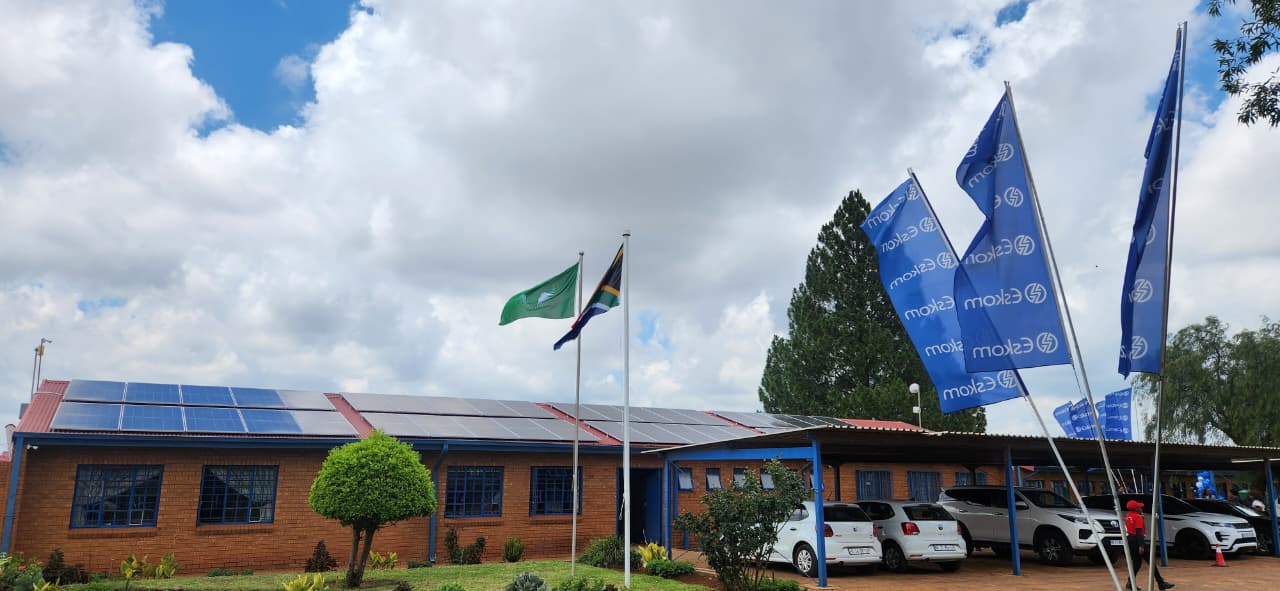
Furthermore, the utility extended a fee waiver for eligible Small-Scale Embedded Generation (SSEG) systems up to 50kVA/kW through September 30, 2026. This concession covers registration, connection-related charges, quotation fees, and metering, including smart meters within specified limits.

Eskom also revised its technical sign-off requirements. It no longer demands sign-off from a professional registered with the Engineering Council of South Africa (ECSA) for residential solar PV and battery installations. Instead, Eskom accepts documentation that includes:
- A valid Certificate of Compliance (CoC)
- An NRS097-2-1 inverter type-test certificate
- A basic Embedded Generation Installation (EGI) test report
The EGI test report can be signed by a person registered with the Department of Employment and Labour, such as an Installation Electrician or Master Installation Electrician. Additionally, Eskom has withdrawn earlier threats to fine or disconnect residential customers solely for failing to register their installations.
Exemptions for Off-Grid Systems
Properties that operate completely independently of Eskom’s network receive an exception from the registration mandate. Customers with fully off-grid systems that have no connection to Eskom’s network are not required to register. However, these property owners must declare their systems and provide proof of independent operation.
Remaining Disputes Over Safety Disconnections
Despite these concessions, a key point of contention remains surrounding network safety. Eskom maintains that it retains the authority to cut off electricity supply to any residential customer whose solar PV or battery installation is deemed “unsafe,” regardless of deadlines.
OUTA challenges this position, arguing that Eskom lacks the lawful right to disconnect a residential customer who holds a valid Certificate of Compliance—which serves as legitimate proof of technical and safety compliance—simply based on a generalized assertion of being unsafe. According to OUTA, the utility would first need to prove that the CoC itself is invalid or was unlawfully issued before taking disconnection action. Eskom has routinely justified its broader regulatory framework by citing the Electricity Regulation Act, NERSA’s regulatory authority, the South African Grid Code, network safety, quality-of-supply risks, and the System Operator’s need for data on installed rooftop solar capacity.
Keep reading

Big Tech faces funding strains amid market turbulence on Oct 26, 2026
As Dow Industrials rose more than 140 points, markets faced divergent sector pressures on Monday, October 26, 2026.
Audi boss Gernot Döllner under fire in Germany for Trump rally appearance
Audi chief executive Gernot Döllner faced sharp backlash in Germany on October 26, 2026, after appearing alongside U.S.
ABS-CBN Wins 7th ACGS Golden Arrow Award
ABS-CBN Corporation secured its seventh ASEAN Corporate Governance Award on October 26, 2026, receiving a Golden Arrow Award...

Ghana Gold Board Rejects Allegations of Endorsing Illegal Mining
The Ghana Gold Board has rejected allegations that its chief executive endorsed illegal mining during an engagement with...