
European diplomats are closing the door on long-term talks with Britain until Prime Minister Andy Burnham decides whether he wants to reverse Brexit, The Guardian reported Friday.
The message from Brussels ahead of a summit there this Friday is blunt: work out what you want domestically before coming back to the table.
One EU diplomat put it plainly to The Guardian: “Don’t come back until you know what you want. Work out what your options really are and then come to negotiate.” Another warned the bloc will only invest effort if it knows a deal will not “change down the line.”
The summit this Friday
Burnham travels to Brussels for a reset summit expected to produce agreements on food and agriculture, emissions trading and a youth mobility scheme. Negotiators were still racing to finalize the text as of Monday, with the highest jeopardy centered on “Made in Europe” legislation.
The EU wants the UK to align with its trade defense measures — specifically tariffs on Chinese electric vehicles — in exchange for inclusion. The UK is pushing for a weaker commitment only to “aim to protect supply chains consistently,” The Guardian reported.
The Prime Minister has written for The Mirror on how the Tory Brexit agreement has done more harm than good and why we are fighting for a better deal👇🏻https://t.co/MJVWbOAORL
A Cabinet Office source called the Made in Europe language the most likely part of the talks to go “down to the wire.”
Youth mobility numbers settle near 100,000
The two sides are expected to settle on a quota of about 100,000 people a year allowed to work, travel or study in each other’s territories. The UK had originally pitched 50,000, then 80,000, while Brussels consistently sought a higher number, according to The Guardian.
The Telegraph added that a cap may be imposed on the number of Britons who can work in individual EU countries based on reciprocity, meaning some young Britons could be turned down even if the overall UK quota is not met. Britons would also be limited to working in one named country, not traveling around Europe on the scheme.

A pause for reflection
Senior EU diplomats say the current piecemeal approach — “mini deals” designed by Keir Starmer — will quickly “reach its limits.” One diplomat compared it to a buffet: “you can choose to nibble on one or two dishes to start, but at a certain point you have to go for the whole of the buffet.” After Friday’s summit, a “pause for reflection” is expected.
Burnham is not expected to set out the full range of options — status quo, customs union, single market or full rejoin — until he announces his 10-year plan in December. Sources told The Guardian the government is considering a year-long “national conversation” in 2027, including town halls and citizens’ assemblies, before deciding a route ahead of the next election.
My response to Andy Burnham’s first big speech on Britain and Europe… https://t.co/9IDRTzKFW9
The domestic pressure
That timeline alarms Brussels. One EU diplomat told The Guardian: “The government would spend the year making evidence-based arguments about each of the four options, while Boris Johnson and Michael Gove and Nigel Farage will spend it shouting about traitors.” A new pro-Brexit campaign group, Stay Out, launched recently by architects of the Vote Leave campaign, caught EU officials off guard.
Burnham faces pressure from within his own party to slow the pace of closer ties. GB News reported he delayed setting out his long-term vision amid fears of a Labour civil war. The Prime Minister had previously promised to lay out the options when meeting EU chiefs Friday, but said Monday he wants to discuss with Brussels first.

Senior Labour figures push for rejoin
Former Foreign Secretary David Lammy and former Business Secretary Peter Kyle have broken ranks to argue Britain’s future lies back in the bloc. Lammy wrote in The Times that only membership answers the three questions of growth, influence and rules.
Kyle said Burnham should fight the next election on a promise to rejoin, with a referendum on the outcome — despite having said in June that rejoining would not fix Britain’s problems. Former Chancellor Rachel Reeves has also said leaving made the UK “poorer, weaker and less secure.”
“The customs union doesn’t deliver major growth on its own. The single market without EU membership gives Britain economic growth but with little influence over the rules we follow. Only membership answers all three questions,”
“The only way through the challenges of the domestic political debate was for the government to offer voters the choice to accept or reject any agreement,”
The economic and security case
Burnham used a Lord Mayor’s Banquet speech this week to argue that Brexit isolation is “what our enemies wanted,” citing Russia’s desire for a weaker Europe and disunity within NATO. He said Britain is “not in a position” to turn its back on a deal that could add up to 0.4 percent of GDP.
The Independent reported one clause in the food and agriculture deal stipulates that if a future government pulls out, it will be forced to pay a penalty worth several million pounds.
I agree. “I think in the end all the options turn into two,” said one European diplomat. “You can talk about joining a customs union or the single market, but in the end I think it will come down to muddling along like now or rejoining.”https://t.co/axlWw8POyj
An EU diplomat from a large member state told the BBC: “The UK alone is a middling power in a field of giants. With China on the one side and the US on the other, the UK will be trampled underfoot if it stands alone.”
Michel Barnier, the EU’s former chief Brexit negotiator, told the BBC that as long as Britain remains outside the bloc it cannot cherry-pick benefits, warning the single market is the “jewel in the crown” Brussels will not devalue.
Burnham has laid out three tests for any revised agreements: sticking to Labour’s manifesto red lines — no free movement, no rejoining the EU, customs union or single market — bringing Brexit closer to what people thought they voted for in 2016, and passing his “Makerfield test” by delivering tangible benefits. He insists voters will be “the boss” of any changes.

The European Partnership Bill covering Friday’s deals is expected to be introduced before Christmas, with legislation possibly laid as early as next week. Tuition fees for European students coming to the UK have been kicked to a later date, though some member states attempted to link that debate to ratification of the whole reset deal.
The reset summit happens Friday. The 10-year plan drops in December. The national conversation, if it happens, starts in 2027. Burnham has bought time — but Brussels has made clear the clock is ticking.
Time to begin mending all the damage done by Johnson & Gove "Burnham says Brexit has dramatically diminished Britain’s global standing. Prime minister signals Labour could drop its Brexit red lines in major foreign policy speech"https://t.co/iPAaCQDAO3
Worth a look

WHO: DRC Ebola Outbreak Still Not Under Control, Over 11,000 Cases
Six months after the Democratic Republic of Congo declared its 17th Ebola outbreak, the Bundibugyo virus is still...

Eczema Tied to 28% Higher Odds of Sleep Disturbance in Children
Children with eczema face a 28% higher likelihood of diagnosed sleep disturbance, according to a study presented at...
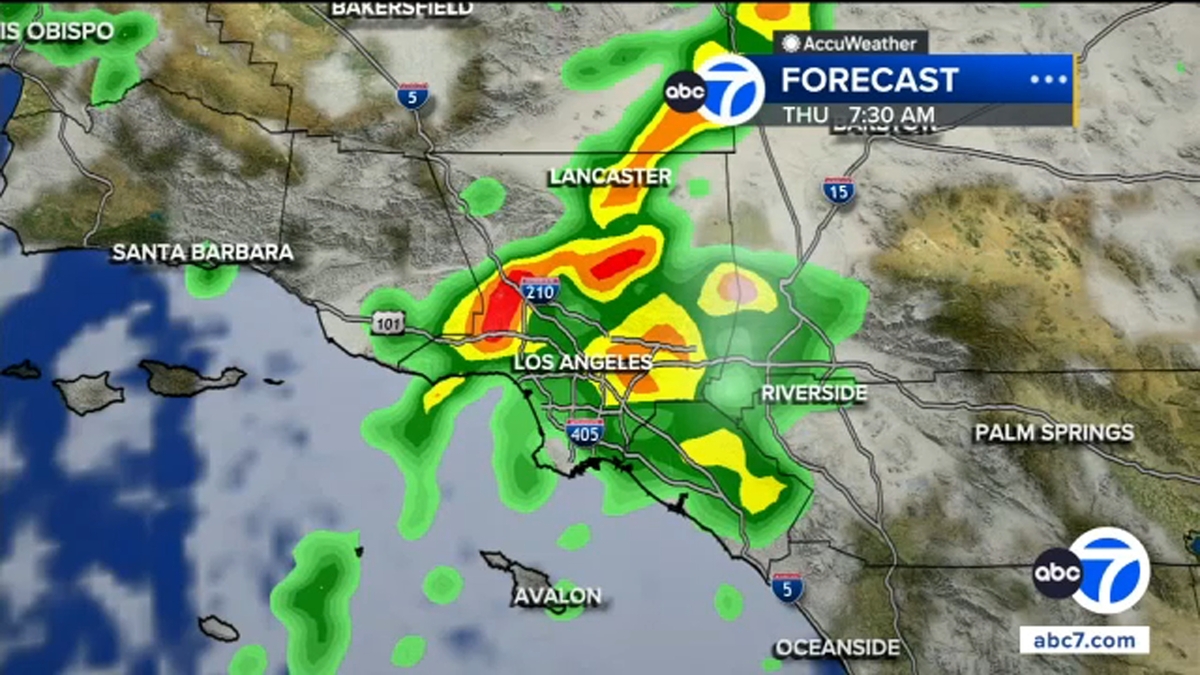
Los Angeles Officials Issue Evacuation Warnings for Burn Scar Neighborhoods Ahead of Atmospheric River
Los Angeles officials have ordered evacuation warnings for neighborhoods below the Palisades, Hurst and Sunset burn scars effective...

Meta-Analysis Links Rituximab to Lower One-Year Mortality vs Cyclophosphamide in ANCA Vasculitis
Researchers in New Zealand and Australia published a systematic review and meta-analysis on Wednesday in Seminars in Arthritis...