
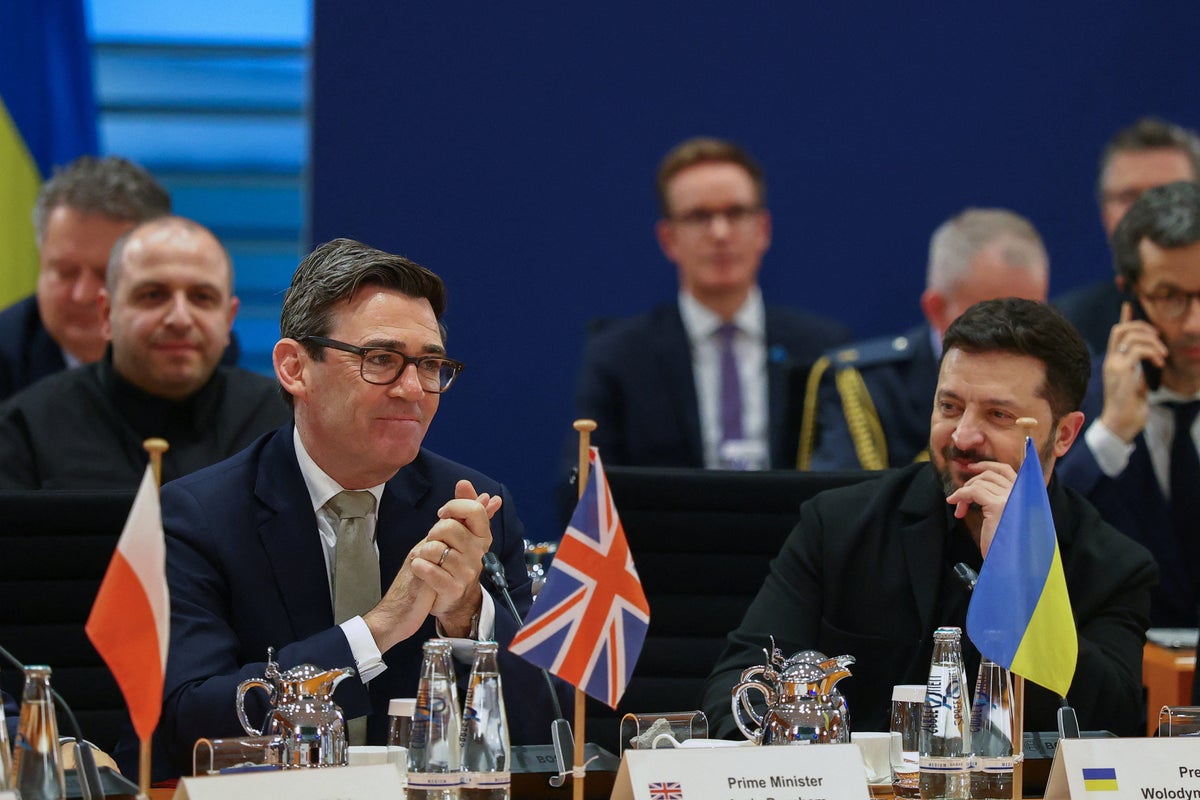
European leaders declared themselves ready to negotiate with Russia on ending the war in Ukraine at a Berlin summit of the Coalition of the Willing on Thursday, even as Moscow sent mixed signals about whether it would accept a European seat at the table.
UK Prime Minister Andy Burnham, German Chancellor Friedrich Merz and French President Emmanuel Macron appeared alongside Ukrainian President Volodymyr Zelensky and US envoy Jared Kushner. Burnham said Europe had a “clear and consistent and united negotiating position”, while Merz insisted that Moscow’s “maximalist demands are not realistic”. Both said any security talks with Russia must come only after a peace agreement with Ukraine.
Kushner upbeat, European leaders cautious
Jared Kushner told reporters that the US president believed peace is achievable.
Putin invites Europeans to Moscow to set negotiation format
At a press conference after the Shenzhen talks, Putin said the Americans were “insistently” asking Russia to allow European participation. “That is why, through diplomatic channels, we have invited the Europeans to come to Moscow in order to determine their positions. And after that, we will decide in what format we will continue the dialogue with Ukraine,” Putin said. He added that Russia heard “every day” that European leaders were talking about a war coming in 2030.
“But we are not planning to attack anyone… Is that normal? I do not think so,” he said. Putin also said Russia understood that “discussing issues linked to security in Europe is pointless without the Europeans”. Kremlin aide Yury Ushakov later said a “great deal” would have to be done before the format could expand, suggesting several more rounds of talks first.
Violence continues during diplomacy
As delegations met in China and Germany, Russian drones struck Kyiv’s historic centre, killing one person in the Podilskyi neighbourhood and damaging the Dutch and Austrian embassies and Saint Volodymyr’s Cathedral. Putin vowed Moscow’s response to a Ukrainian strike on the Crimean Bridge would be “considerably more painful” and said he had discussed a “possible ceasefire in a number of areas” but decided against it after the bridge attack.
Tonight, @alexstubb and I discussed the peace talks between Ukraine and Russia. Europe will closely engage in this process through the E5 + EU format. In the meantime, we'll ensure maximum support for Ukraine and maximum pressure on Russia. I'm thankful for Finland's tireless…
Putin said he was “interested” in ending the war and ready to make compromises, while claiming Ukraine and Europe were not. “I assure you, we have no desire at all to continue this armed conflict,” Putin said. Russia launched its full-scale invasion of Ukraine in February 2022.
European negotiating team takes shape
EU Economy Commissioner Valdis Dombrovskis said on November 9 that Kyiv’s projected 2027 budget shortfall of 70 billion euros ($78.3 billion) would be partially bridged by a new 45 billion-euro ($50.4 billion) EU loan, on top of a separate 45 billion-euro pledge from the 90 billion-euro ($100.7 billion) loan package agreed in April 2026. European leaders are expected to discuss Ukraine’s 2027 financing needs at the European Council on November 26–27.

EU Enlargement Commissioner Marta Kos revealed on November 15 that Ukraine and the European Union have settled on measures to speed up essential reforms required for EU accession, targeting the fulfilment of critical democracy and rule-of-law benchmarks by the first half of 2027.
Merz said the US could “rely on this teamwork as long as we pursue the same goal” — a just, lasting peace for Ukraine and security for Europe. Whether Moscow agrees to a four-sided format remains the open question; Ushakov’s comments suggest the Kremlin wants more bilateral rounds with Washington first.
Austrian and Norwegian initiatives
Austrian Foreign Minister Beate Meinl-Reisinger said the focus must shift from the “who” to the “what”. In a 15-point paper shared ahead of a foreign ministers’ meeting on Monday, Austria spelled out confidence-building measures, proposing limited or partial ceasefires to pave the way for a wider truce, and offering to set up an international forum to monitor any peace agreement.
“The proposal amounts to an offer to all 27 [EU countries] to work towards a common position,” Meinl-Reisinger said. She spoke during the United Nations General Assembly in New York on September 24, 2026.
Chancellor Friedrich Merz, born in 1955 in Brilon, North Rhine-Westphalia, returned to frontline politics in 2018 after a near-decade absence, having left the Bundestag in 2009 to work as a corporate lawyer and serve on the board of BlackRock Germany. He won the CDU leadership on his third attempt in December 2021 and became Chancellor on 6 May 2025, requiring two parliamentary rounds to secure the office — a first in German history.

Although excluded from Europe’s formal negotiating team, Norway has maintained direct channels with Russia and is putting forward proposals to reduce tensions. Foreign Minister Barth Eide urged Ukraine’s supporters to study Cold War precedents for managing acute East-West confrontations, highlighting the 1975 “Helsinki Accords” which laid out principles for state-to-state relations.
“NATO deployments in NATO countries, for instance, is not a question to discuss with Russia” but Cold War deals on arms limitation “must be relevant in the post-war scenario,” Eide said.
Keep reading
- ICJ Finds Myanmar Had Genocidal Intent Against Rohingya
- Iran Struck U.S. Military Facilities in Bahrain and Kuwait With Drones This Week
- Trump, Xi and Putin hold landmark trilateral summit in China to discuss nuclear arms and Ukraine war (newsarchyuk.com)
- NM GOP Outgoing Committee to Elect Leaders on Jan. 9, 2027 (world-today-news.com)
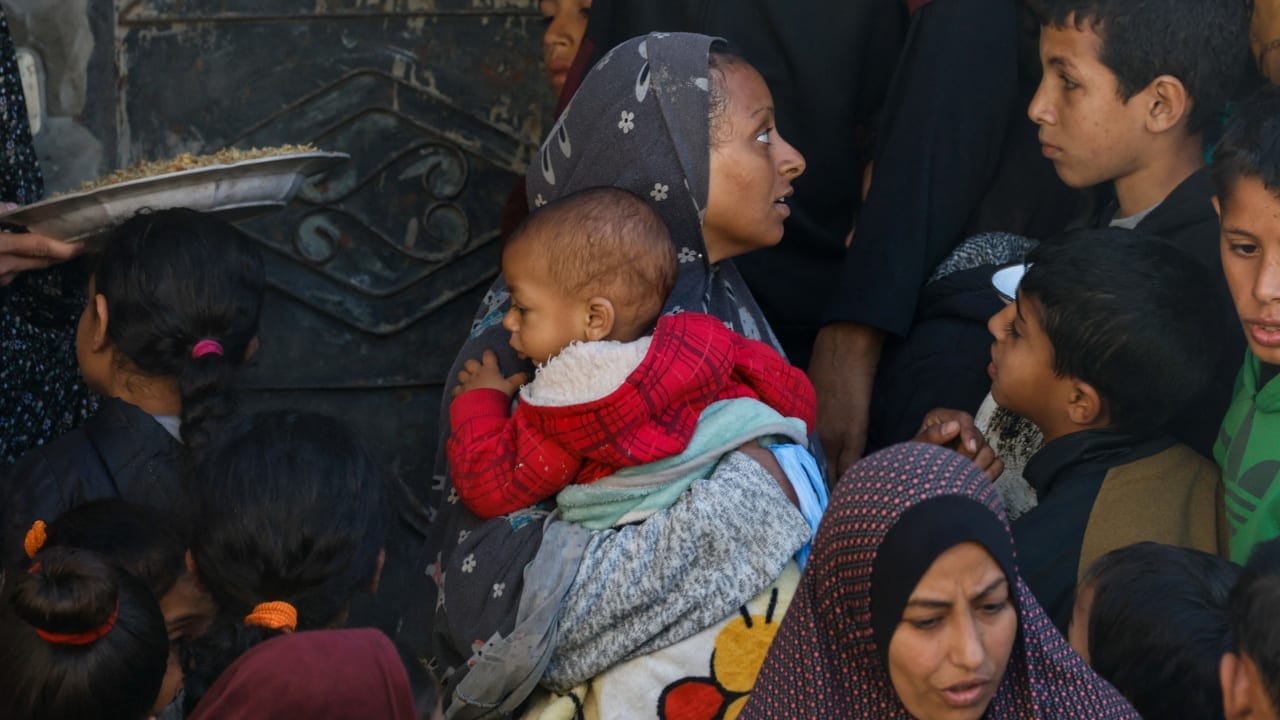
ICJ Finds Myanmar Had Genocidal Intent Against Rohingya
The International Court of Justice ruled Thursday that Myanmar committed genocide against the Rohingya, the first time in...

Iran Struck U.S. Military Facilities in Bahrain and Kuwait With Drones This Week
Iran struck U.S. military facilities in Bahrain and Kuwait with drones this week while a U.S.

Trump, Xi, Putin Hold First Trilateral Meeting in Shenzhen, Issue Declaration on Nuclear Risks
President Donald Trump, Chinese President Xi Jinping and Russian President Vladimir Putin met Thursday in Shenzhen for the...
International Court of Justice Rules Myanmar Committed Genocide Against Rohingya
The International Court of Justice ruled Thursday that Myanmar committed genocide against the Rohingya, the first time the...