The International Court of Justice ruled Thursday that Myanmar committed genocide against the Rohingya, the first time in its 80-year history the UN’s top court has held a state responsible for the crime.
Presiding Judge Yuji Iwasawa read the 9-6 decision in The Hague. The court found Myanmar’s security forces killed thousands of Rohingya civilians, perpetrated widespread sexual violence and extreme violence against children, and attacked fleeing Rohingya during 2017 “clearance operations” in northern Rakhine State.
The court concluded that “the only reasonable inference that can explain Myanmar's actions is an intention to destroy a substantial part of… the Rohingya population in northern Rakhine State.”
An attack on the @IntlCrimCourt was never just an attack on one court. Reports that #USA could sanction judges of the @CIJ_ICJ over a possible genocide ruling against Myanmar should set off alarm bells everywhere. Independent judges must be able to interpret and apply…
The judgment marks only the fourth time since the Nazi Holocaust that an international court has ruled the legal threshold for genocide was met. Gambia brought the case in 2019 with backing from the 57-member Organization of Islamic Cooperation, arguing Myanmar breached the 1948 Genocide Convention.
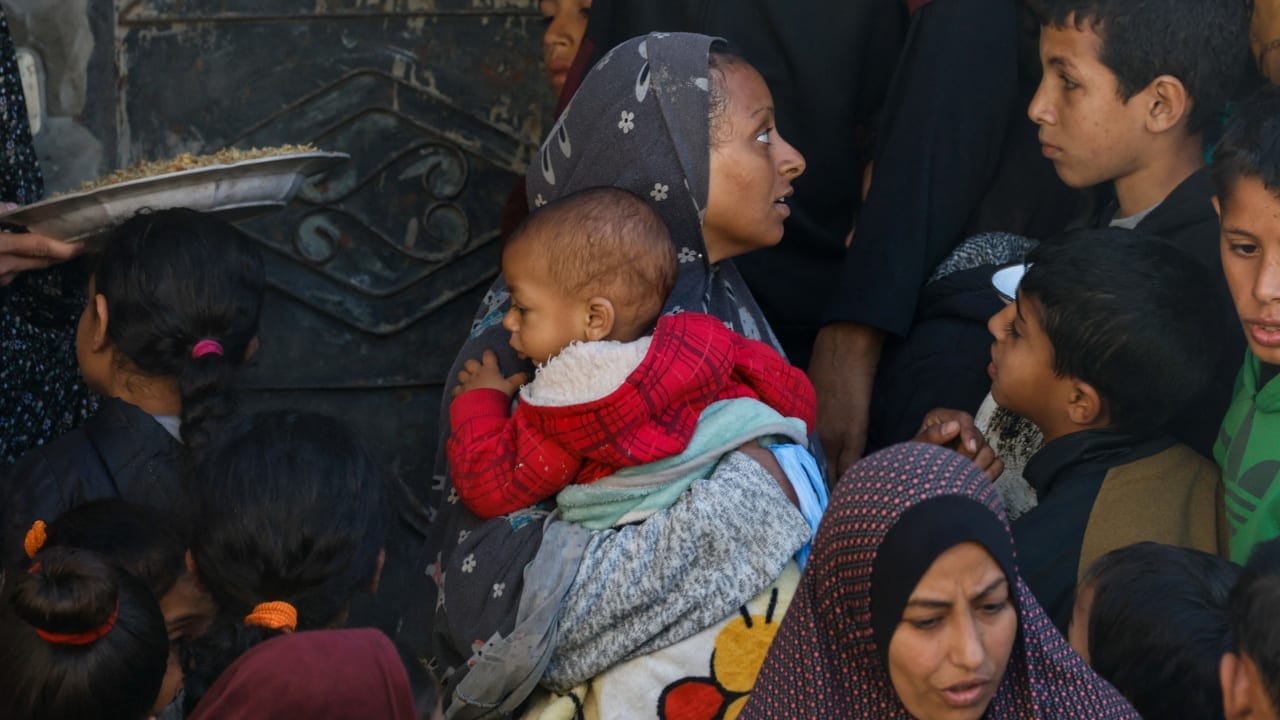
“This is a big, important, meaningful time for the Rohingya, genocide survivors where 1.2 million Rohingya are in the Bangladesh refugee camps,” Tun Khin, president of the Burmese Rohingya Organisation UK, told ABC minutes after the verdict. “Nine years now they are still in the camp.”
MULTIMEDIA: View photos and videos of the reading of the #ICJ Judgment in the case concerning Application of the Convention on the Prevention and Punishment of the Crime of Genocide (The #Gambia v. #Myanmar: 11 States intervening).https://t.co/oRTwbZIESg pic.twitter.com/y4LqB5ORfv
What the court ordered Myanmar to do
The ICJ ordered Myanmar to allow and facilitate the “safe, voluntary and dignified return to their place of residence and the reunification of families for the Rohingya displaced as a result of Myanmar's wrongful acts,” and to provide reparations and restitution.
The order includes returning or replacing collective property, facilitating searches for the disappeared, ensuring proper burials, and providing physical and psychological rehabilitation for victims. Myanmar must also investigate and prosecute individuals suspected of involvement in the crimes.
LEARN MORE: The full text of the #ICJ Judgment in the case concerning Application of the Convention on the Prevention and Punishment of the Crime of Genocide (The #Gambia v. #Myanmar: 11 States intervening).https://t.co/IEAfHOc2Te pic.twitter.com/Ny8sCWLU9P
UN human rights chief Volker Türk said the ruling “clearly concludes the State of Myanmar stands responsible for one of the most egregious crimes known to humankind.”
Why the ruling matters for the Israel-Gaza case
The decision carries immediate implications for South Africa’s genocide case against Israel at the same court.
The ICJ rejected Myanmar’s argument that its operations were a legitimate counterinsurgency response to armed group attacks, finding the scale and nature of the military’s conduct “could not be adequately explained by its stated security objectives.” Legal analysts say that reasoning could undermine Israel’s defense that its Gaza operations are driven by security imperatives rather than genocidal intent.
What survivors and advocates say
A displaced Rohingya living inside Myanmar told The Guardian he hoped the judgment would “help end decades of persecution and discrimination. We are not asking for sympathy alone. We are asking for justice, recognition, equal rights and a future in which our children can live safely and with dignity in their own homeland.”
The @CIJ_ICJ judgment finding Myanmar responsible for genocide must be a turning point for justice for the Rohingya. Their suffering is a stain on the conscience of humanity. https://t.co/dQjeqWhfBm pic.twitter.com/HHEbbaNqfA
The enforcement gap
The ICJ has no enforcement arm. Myanmar’s military government, which overthrew the elected administration in a 2021 coup, has historically ignored international rulings. The court’s order connects to other accountability avenues. The International Criminal Court has already requested an arrest warrant for Tatmadaw leader Min Aung Hlaing. National courts may pursue prosecutions under universal jurisdiction. Compliance remains uncertain.
Myanmar, a nation of about 51 million people bordering Bangladesh, China, India, Laos, and Thailand, has been shaped by decades of military rule since a 1962 coup. The country, known as Burma until the military government renamed it in 1989, gained independence from Britain in 1948 but has since endured one of the world’s longest-running civil wars involving numerous ethnic armed groups.
A brief democratic opening after 2011 ended when the Tatmadaw seized power again in 2021, triggering a wider conflict that has displaced over 3.5 million people internally and created more than 1.3 million refugees and asylum seekers, according to the UN.
“Unless the broader conflict dynamics in Rakhine state improve or credible guarantees of safety are secured from all armed actors, the prospects for displaced Rohingya to return to their homes remain bleak,” the UN human rights office warned.
Earlier coverage: International Court of Justice Rules Myanmar Committed Genocide Against Rohingya
More on International Court of Justice
Related reading

European Leaders Ready to Negotiate With Russia on Ukraine War, Berlin Summit Says
European leaders declared themselves ready to negotiate with Russia on ending the war in Ukraine at a Berlin...

Iran Struck U.S. Military Facilities in Bahrain and Kuwait With Drones This Week
Iran struck U.S. military facilities in Bahrain and Kuwait with drones this week while a U.S.

Trump, Xi, Putin Hold First Trilateral Meeting in Shenzhen, Issue Declaration on Nuclear Risks
President Donald Trump, Chinese President Xi Jinping and Russian President Vladimir Putin met Thursday in Shenzhen for the...
International Court of Justice Rules Myanmar Committed Genocide Against Rohingya
The International Court of Justice ruled Thursday that Myanmar committed genocide against the Rohingya, the first time the...